
There is a lot that goes into speaking: timbre, resonance, timing, tone, pitch, delivery, and the list goes on. But you don’t have to know what all of these things are to be a memorable speaker. It helps, but it’s not necessary by any means. There are a handful of things you need to know to be great.
1. First and foremost, confidence
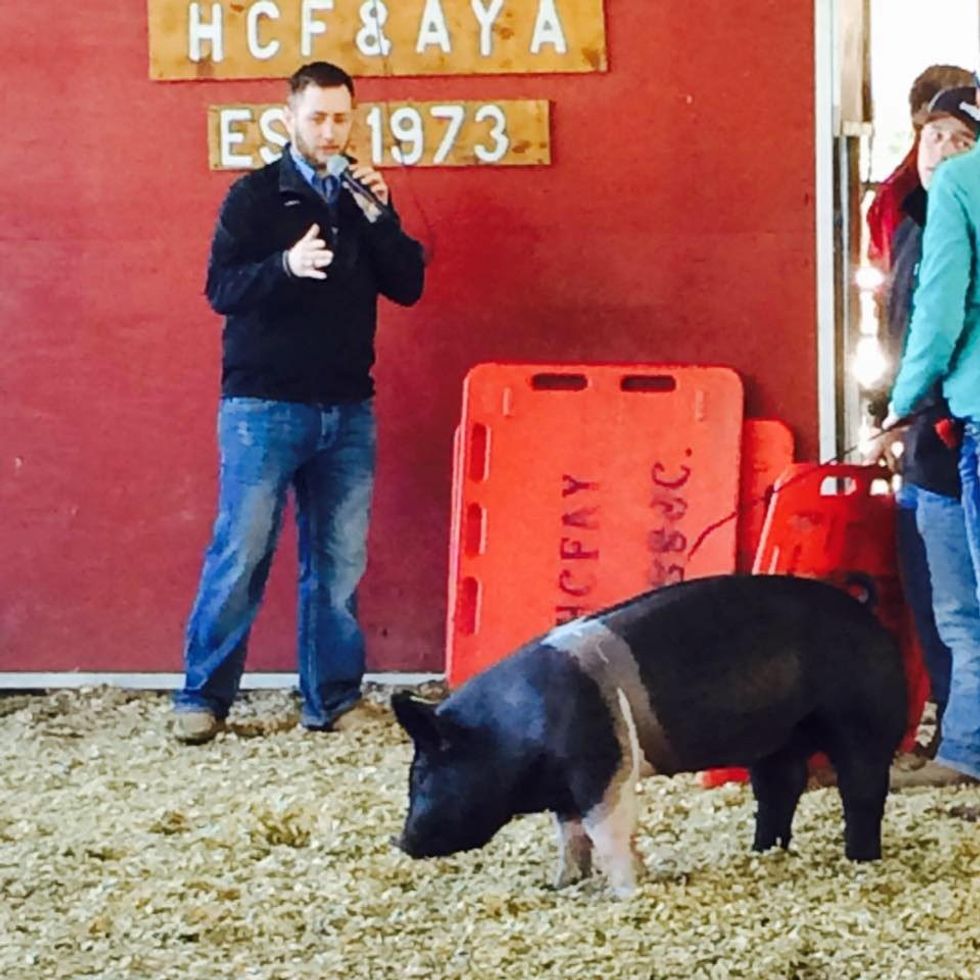
I was terrified the first time I judged a livestock show on my own in McKinney, Texas. But the parents and exhibitors didn’t know that. They could have thought I had been doing it for years. Was it perfect? Absolutely not. But once I found my rhythm, it was like I was a pro.
2. Confidence
You bet it’s number one and two. That’s how important it is.
3. Flow
Giving a set or a speech is mainly about how well you can get through it without stopping to say “uhm” or regroup yourself if you lost your train of thought. If you can roll through it, you are now giving your audience more time to think about what you are saying and less time to think about how you are saying it. Use this as an advantage.
4. Know your audience
I can give a presentation over the anatomy of the ruminant gastrointestinal tract, break down a feedstuff from consumption to mechanical, enzymatic, microbial digestion to absorption on the molecular level at any time during the day or night. That presentation is useless to a bunch of middle school kids as it will be filled with jargon that they can’t even comprehend yet. Know who you are presenting to and modify your style to fit them. If you are presenting to a bunch of old cowboys at a cattleman’s conference, an upbeat or bubbly style probably won’t work well. It would work in a class presentation though as college students are more likely to appreciate something less boring.
5. Dress the part
Do not go to a presentation for class in a T shirt and sandals unless you have tenure. Look like you care about how you look and you automatically gain the initial respect of others.
6. Practice, practice, practice.
Get out there and practice for everyone. While I was on judging trips and my mom would call to see how I was doing, I would practice my set to her on the phone. It was said in "Whiplash," a fantastic movie, that the worst words in the human language is “good job.” While I think that is a little harsh, there is a point to be made. Give your presentation to the people that are as harsh as possible. People that hate you. They will be the most critical about your performance and ultimately push you to be the best. Your friends that say “Oh good job, there’s nothing that I would fix,” are lying to you. There is always something to fix to be better.
7. Work on your voice
You cannot go in front of an auditorium with a subtle, cute, and mousy voice and expect to be heard. Sorry. It’s not going to happen. You have to command the room. Own it. That is your room for those few minutes that you’re speaking and no one will have the stones to try to take it from you. That’s the authority that you need to portray in your voice. Or in simpler more scientific terms, speak from your diaphragm, not the back of your throat. Speak deep from your chest and you will instantly be louder and more respectable.
8. Know your topic
This one seems like a no-brainer, but it’s often overlooked. Don’t just know what you are presenting. If you are giving a presentation about the taxonomy of Perciformes, don’t just know that specific tree. Know every branch that leads up to them. The diversity within the group. Know every species that comes from that clade. You have to be prepared to have a member in your audience that is smarter than you. If you can know more information that than person is prepared to ask you, then you’ll be seen as an expert.
9. Know the room
This one is short but sweet. Know how loud or quiet you need to be in a room and stay within that realm the entire time. This can be accomplished by simply asking, “How are yall today?” Measure how you sound in your head and roll with it.
10. Tempo
This one is crucial. If you blow through a complex presentation in five minutes, no one understands what you just said. But if you take 20 minutes to tell a group the sky is blue, then you’ve bored them to tears. You have to know what your time limit is and practice within that frame. The usual profession research oriented presentation is about 12-15 minutes. Most lectures are at least 50 minutes. Establish what you want to say, and then alter your tempo to fit the time constraint.
11. Body Language
A lot goes in to this one. Hiding behind a podium portrays that you are scared. But running around the floor like a wildman will essentially take away from your message. Be subtle yet meaningful with your actions. I am notorious for playing with my college ring while I’m in front of people. To fight this, I have to lock my fingertips together (which signifies wisdom and confidence) to stop this bad habit. Move to different spots in the room when you move to different ideas. This will correlate a specific space or location to that specific idea, which improves the memory in the audience drastically.
12. Emotion
Sell your idea! Make people understand how passionate you are about your topic, without being cheesy. Use varying tones and even some mannerisms that get your audience pumped about your speech. A little emotion in your face and affection in your voice goes a long way in persuading people.
These are hardly all of the rules or tips that go into speaking publicly. They will however give you a leg up if you are thrown in a pinch. I am not the greatest speaker you have ever seen. But I have never lost a research competition in which presentation has been a factor of the score, and I get paid to speak publicly, be it in the classroom or judging a livestock show. Know these rules. Write them down, put them next to your bed, memorize them, whatever you want. Being a great speaker isn’t just about winning or losing a competition. It’s about getting remembered by someone important in the future. That important someone might be your ticket to a career one day.