


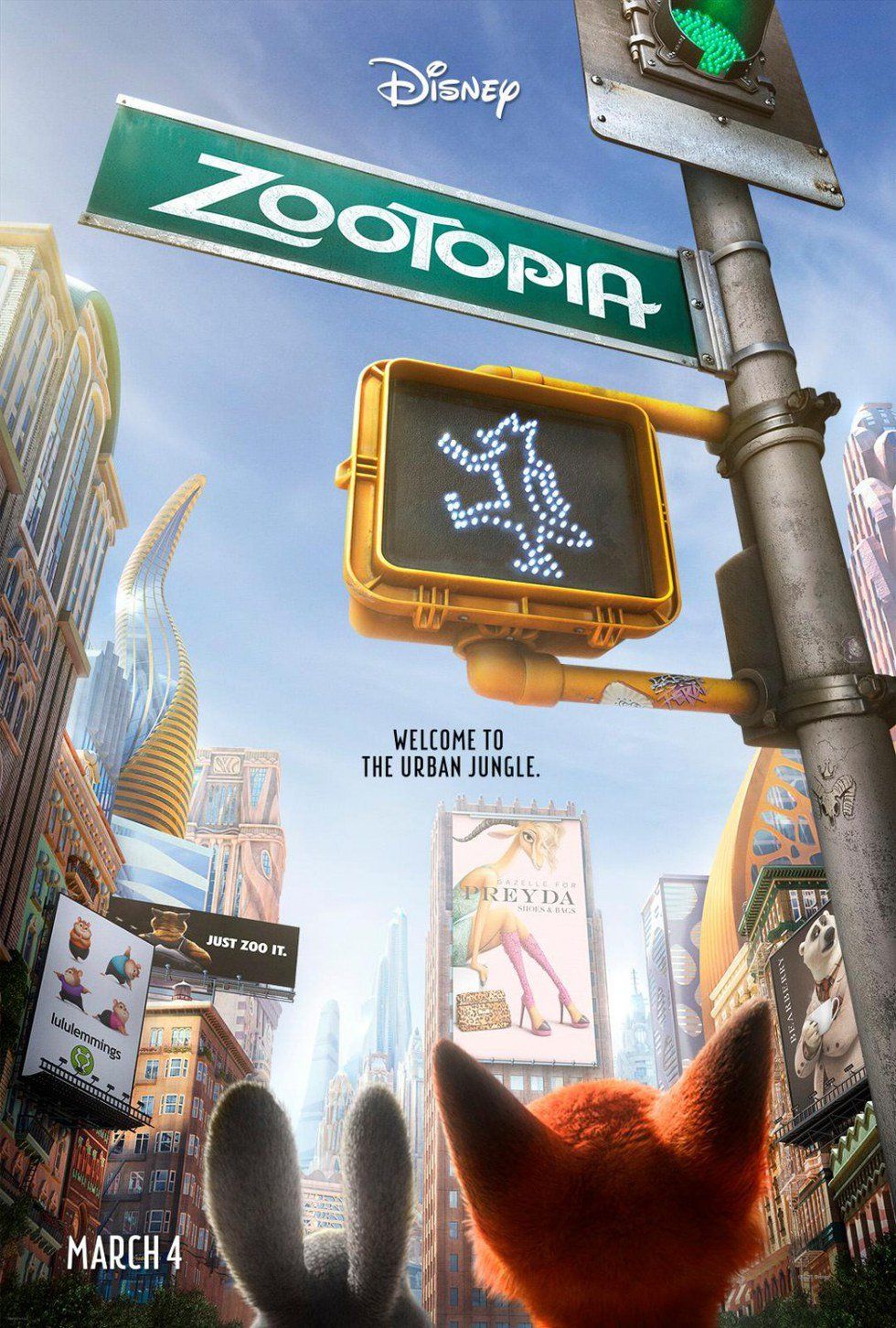
Ahh, nothing better than a movie centered on the struggles of life for your everyday anthropomorphic animals, right? I enjoy this type of thing, but some people just can't take talking animals seriously regardless of how profound their words are--but that's none of my business. After watching "Zootopia," I felt inspired by the unexpected depth of this movie; it was extremely clever. Because it's about animals, I didn't think there would be much of a deeper meaning of it, but there was. The plot ended up being very well developed, resembling a crime-fighting cop show. Entertaining for both kids and adults, this movie is a winner. Good job yet again, Walt Disney Studios.
As soon as the movie ended, I couldn't stop thinking about it and in the car ride home, I had an epiphany: the movie's message is that drugs are bad. So, showing this film to your kids could also act as method to teach young kids that drugs are bad. Of course, that would suck all the fun out of movie night, so using the movie as a reference when the drug talk is being given would be just as effective while making a boring subject more fun and relatable.
This movie was very engaging, and the audience had to stay on their feet so they didn't miss anything. There was even a "Breaking Bad" reference. I don't watch the show, but I know enough about it to know there was a subtle reference to it. The fact that the masterminds behind the evildoings were sheep was quite interesting. Usually sheep are thought of as being unintelligent followers. In this movie, though, they were leaders -- but corrupt. Could it be because they are following a popular path in society of using drugs? Maybe the director just really doesn't like sheep. Or maybe they are convinced that sheep are putting on the facade of innocent, puffy cloud animals that are not very bright so no one suspects that they are the culprits. It could also be a biblical reference, but it all depends on your perspective. It could be vague enough that any of these could apply. I certainly was not expecting the cute little secretary sheep to be an antagonist. I would expect the polar bears or some other vicious creature to be the culprit, but in fact, they were innocent.
Other than the fact that the sheep were the villains of the movie, the roles played by each type of animal were very fitting. I am convinced that every single worker at the DMV is a sloth disguised as a human. The bunnies were carrot farmers, and the foxes bullied the bunnies.
This movie really shows the struggles of stereotypes--specifically, animal stereotypes --and it also pushes us to examine ourselves against these. Having this from the perspectives of animals if they were in our position is a very interesting and effective way to get a point across. Of course, the main purpose of this film and films like it are to entertain, but it is always pretty cool when, through some deep message, you can discover hidden themes and signs. Many of the aspects of this animal society are relevant to human society. The title itself is a play on the word "utopia," which refers to human societies. One of the main issues of animals returning to their natural instincts could be loosely tied to race and the stereotypes often related to it. These stereotypes are definitely not true, because Judy became the first bunny to become a police officer, even when everyone told her she couldn't, because she was a bunny. (Way to battle those stereotypes, girl). One thing I found odd was that sheep are usually prey to animals like lions, so why would they want to make animals go savage and return to their natural instincts? Maybe they want to feel powerful despite their fluffy appearance --again, fighting the stereotypes. Maybe Donald Trump should watch this movie, but he doesn't strike me as the type of person who would enjoy animated movies about animals who talk. Oh well.















