
Author's Note: While this article contains no big plot spoilers, it does reference particular scenes and lines that are much more fun as a surprise. Read at your own risk.
I recently went to go see "Zootopia" in 3D, and besides the usual 3D headache, I walked away with an abundant amount of excitement and passion for the film and its many messages. "Zootopia" is a kid's movie that I can really jive with, not just because it is adorable and animated, but because it contains a lot of important messages about society, about individual spirit in the face of adversity, about oppressed groups, about power struggles and about the ability to transcend society's bullshit and connect with people who are different than you.
In short, Disney is getting their stuff together. Finally, after an entire generation's childhood of classic gender roles, of gendered toys, of white heterosexual main characters, of damsels in distress and of romantic love being regarded as most important, they are starting to change their ways. "Frozen," while being more than just a global phenomena, stressed the importance of strong female characters and of family. "Zootopia" follows in this same vein, but attacks society much more dynamically and directly.

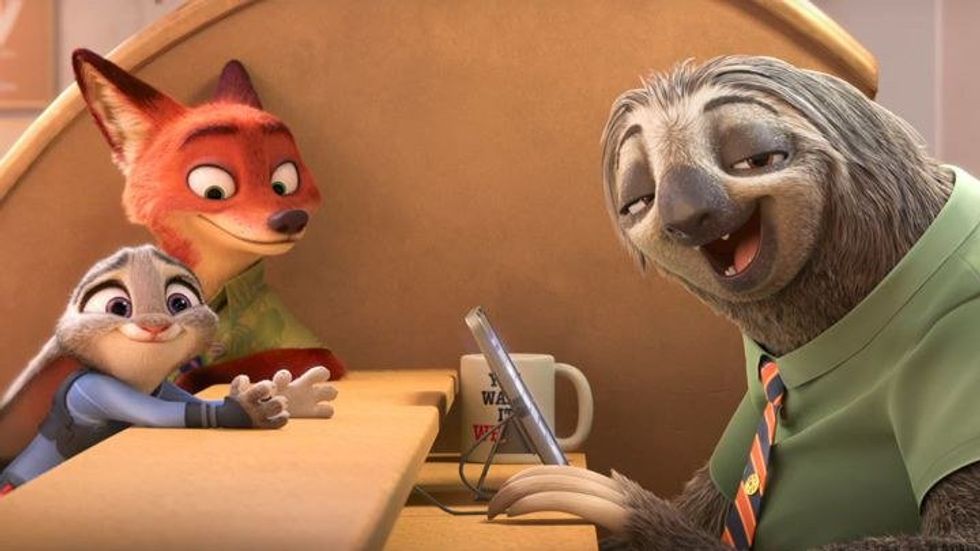
It's protagonist, Judy Hopps, is a brave, strong, powerful, determined female. She faces a lot of adversity, being the first cop in Zootopia who belongs to the group of "prey." All of the other cops are big predators like lions, tigers, rhinos and elephants. Everyone in her life underestimates Judy because she is small and "cute," because she's different and because (this one isn't as obvious) she's one of the only females on the force.
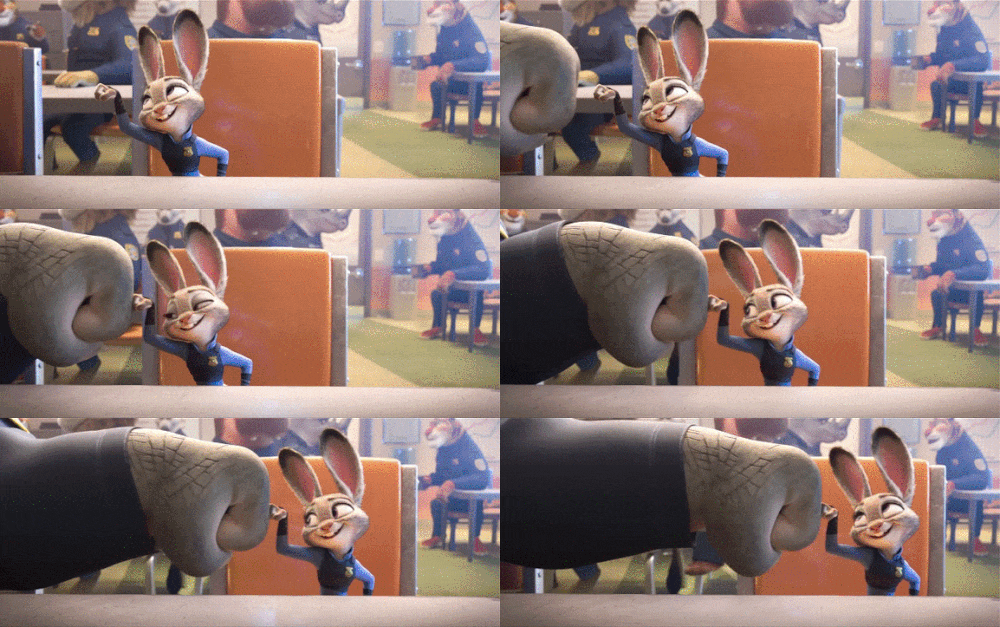
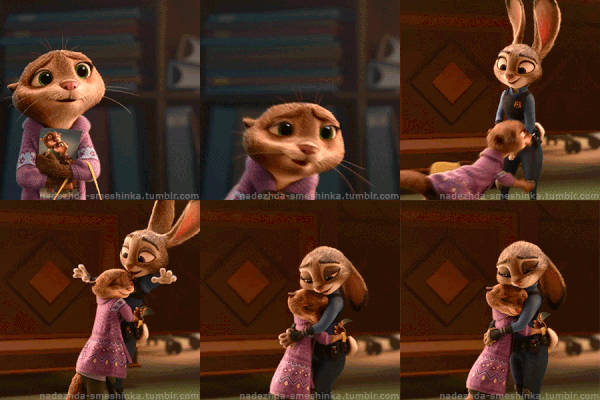
The most important qualities about Judy become very clear throughout the movie, and they quickly transcend her physical disadvantages. She's extremely kind and caring. She joined the police because she wants to help people and because she honestly cares about each and every citizen she represents.
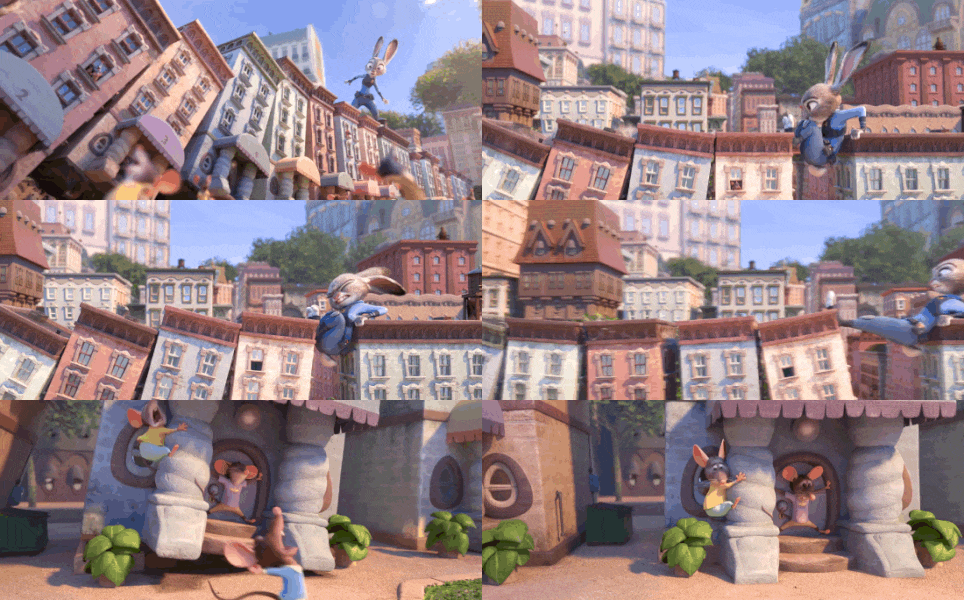
She works extremely hard to get into the police force despite the size and strength difference between her and her classmates. She graduates at the top of her class by using her agility and wit to outsmart and outmaneuver typically stronger opponents. Throughout the whole process, people continually tell her to give up, and each time she pushes a little harder to overcome and to prove them all wrong. Her own family doubts her and cheers when she is made a meter maid instead of a "real cop" because they worry for her safety and would rather she work a safe job, like carrot farming. She proves everyone wrong, however, with her unbreakable enthusiasm and desire to stand up for the (proverbial and literal) little guy.
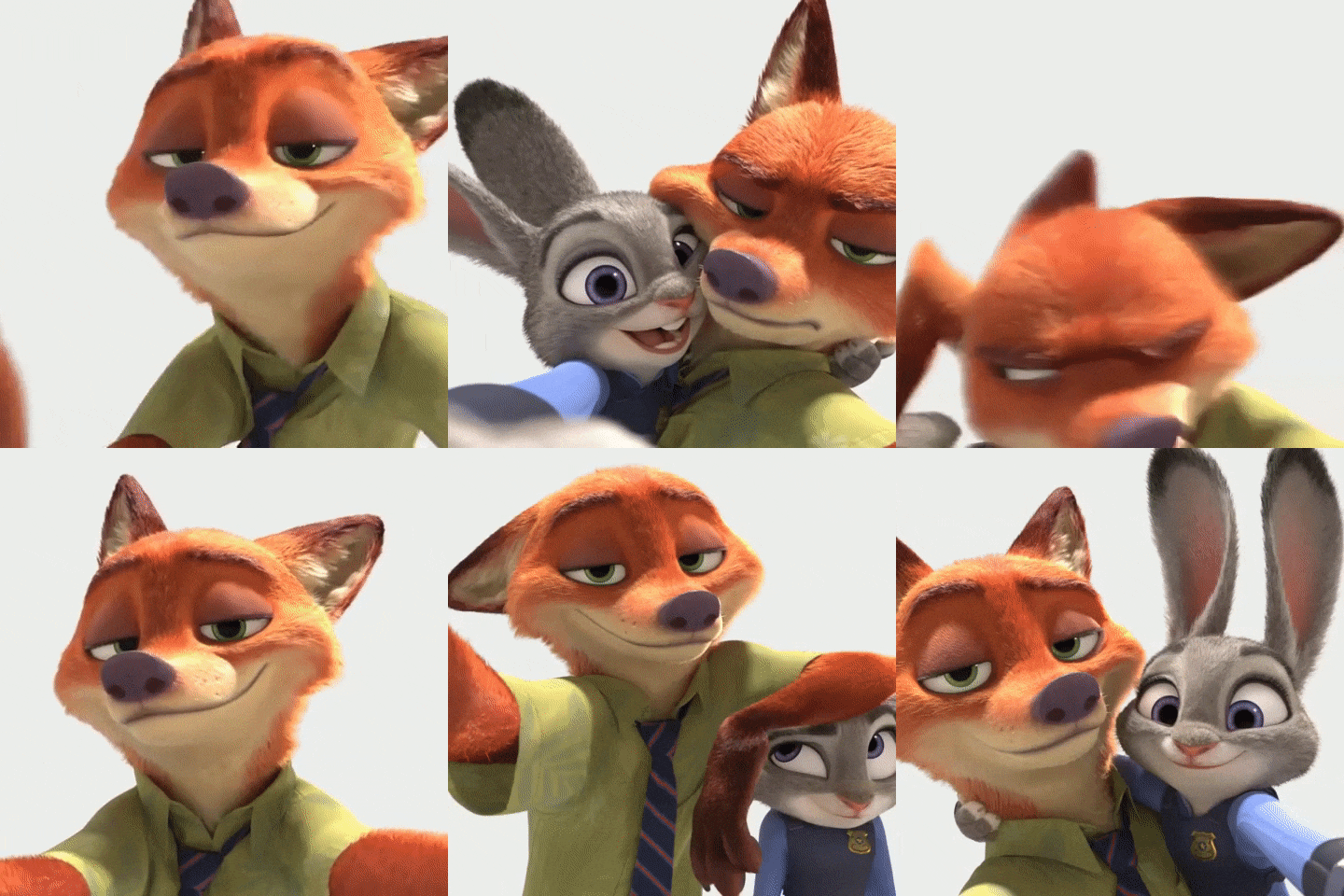
She isn't without her downfalls. One of them being her fear of predators (especially foxes) which is based on a problem with a childhood bully who was a fox. In the movie her unlikely sidekick, a grifter named Nick, is actually a fox. This dynamic forces both characters to overcome the things that society has taught them about predators and prey and about where they should belong based on society's expectations. Nick teaches Judy that predators are not any more prone to violence than prey, and that essentially all animals just want to be seen as individuals and praised for their personhood rather than their arbitrary classification. Judy teaches Nick that just because society sees him as a shifty, untrustworthy fox doesn't mean that he can't prove them wrong. Their lives, at times, depend on each other, which helps them to bond.
"Zootopia," through these two characters as well as the greater plot, attacks society's strange categorizations and power dynamics. The movie praises treating everyone with kindness and valuing all for their individuality rather than judging people based on preconceived notions you have about them, especially those based on appearance. It references current societal issues, and doesn't shy away from real problems. The movie even touches on microaggressions, like when one police officer calls Judy cute and she says that, while it's OK for bunnies to call each other cute, it's their own term and it isn't OK for non-bunnies to use it to describe them. Remind you of the n-word too? The cop responds, "I am so sorry! Me, Benjamin Clawhauser, the guy everyone thinks is just a flabby donut-loving cop, stereotyping you." Zootopia even references how black people often feel about non-white people touching their natural hair, because it's different.
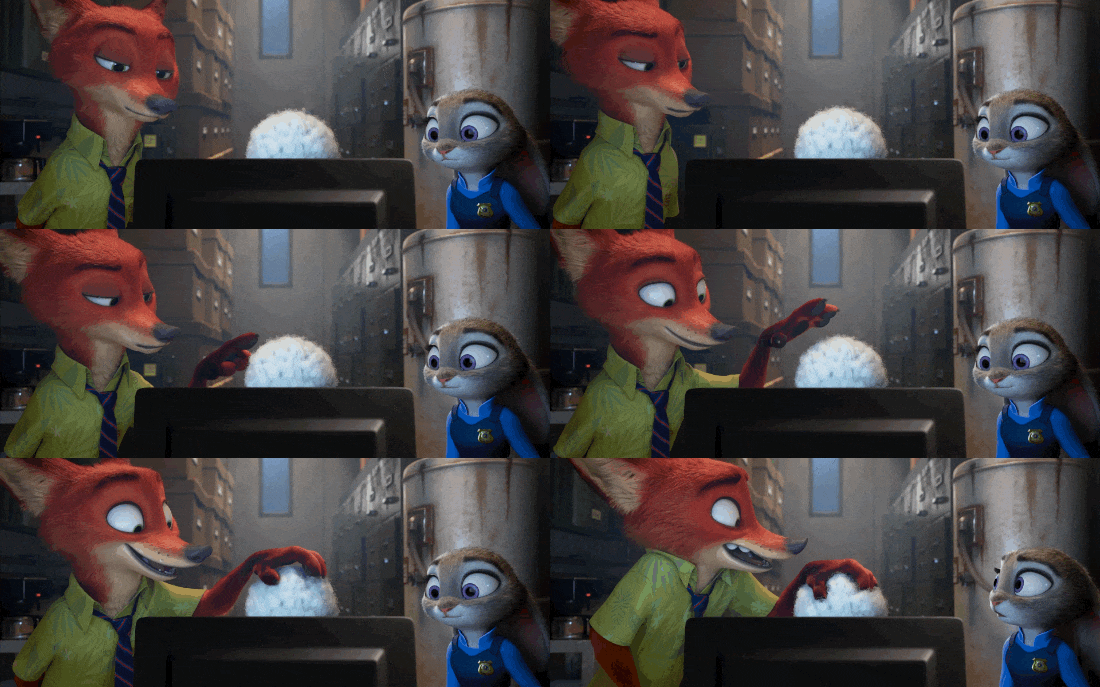
"You can't just touch a sheep's wool!" - Judy
"It's like cotton candy!" -Nick
The movie references other points in the issues of sexism and racism, like when Nick says that bunnies are more emotional than other animals, and that they are seen as worse drivers (common beliefs held by sexist and racist people about specific groups). There are many other instances of references like this, delightful comments on the real impact of microaggressions. The movie has a clear theme that society is broken and that the ideas people hold about each other based on arbitrary differences hurt everyone, not only the oppressed but the oppressors as well. Predators, the "straight white male" equivalent in the story, face very real stereotypical problems as well, namely that they are to be feared, that they need to be strong and dominating, and that they go feral more easily. Sound familiar?
Of course, the movie is not all heavy social commentary. It is a deep and moving story about friendship love, about celebrating differences and about proving haters wrong. The plot is interesting and the movie is pretty hilarious altogether. It will teach the children who watch it that bullying people for their differences is wrong, that they can do anything they set their mind to as long as they work hard and that the ideas society holds about them based on their race, sexuality, gender, size or any other arbitrary category, should not affect them and have no bearing on their worth as a human being. It will teach children to be kind, and that when they make mistakes and hurt people, that they should not only apologize but learn from it.
Disney killed it.
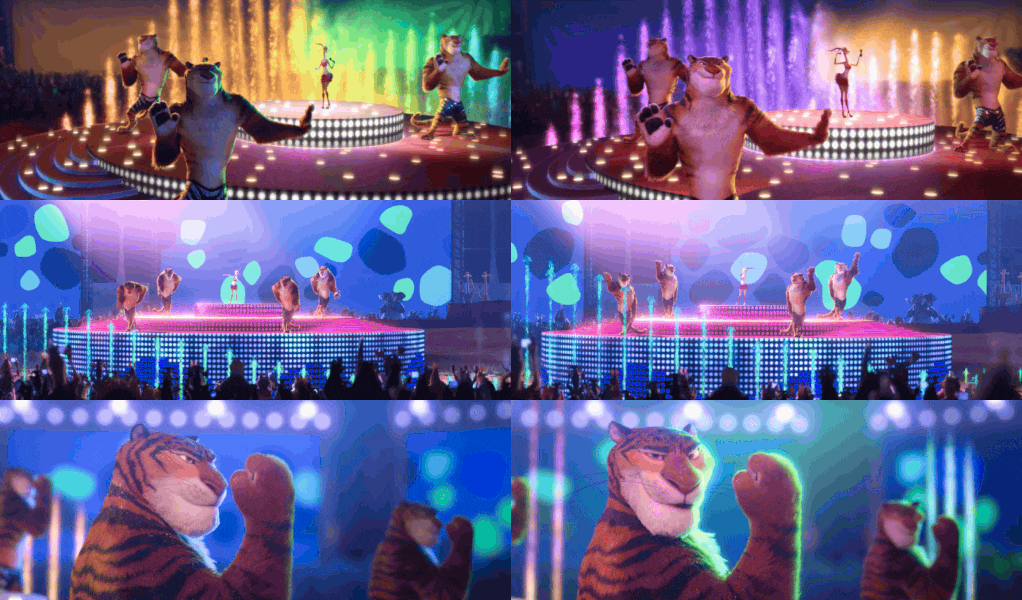
In short, go see it, if you haven't already. I hope that I didn't spoil it for you. Long live Judy Hopps. If you need me I will be at the theater watching it again, and probably still crying at the end.
"I thought this city would be a perfect place where everyone got along and anyone could be anything. Turns out, life's a little bit more complicated than a slogan on a bumper sticker. Real life is messy. We all have limitations. We all make mistakes. Which means, hey, glass half full, we all have a lot in common. And the more we try to understand one another, the more exceptional each of us will be. But we have to try. So no matter what kind of person you are, I implore you: Try. Try to make the world a better place. Look inside yourself and recognize that change starts with you. "
-— Judy Hopps