
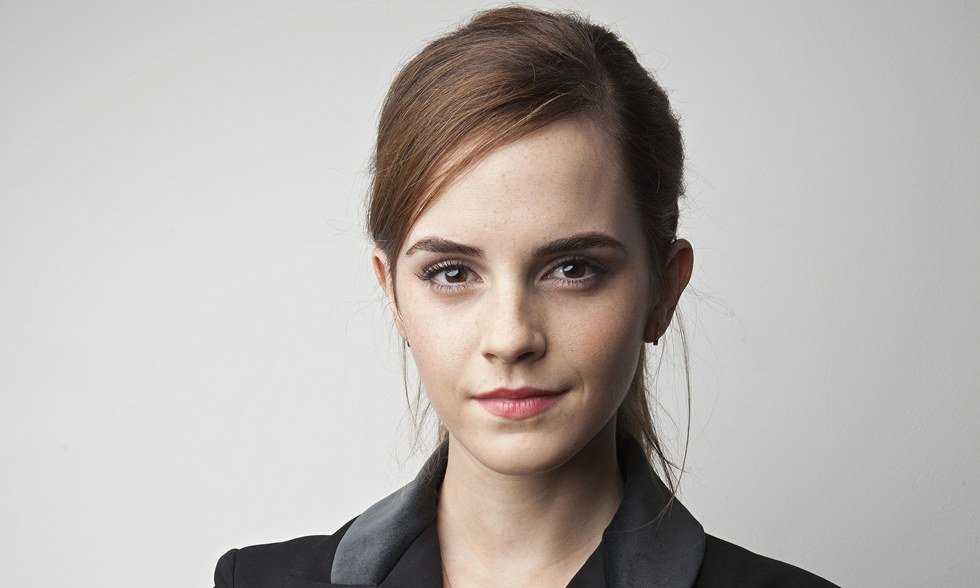
The word “feminism” has recently become an unpopular word and has created quite a bit of controversy in the media. Although I didn't had anything against those who identify as one, I'd never really considered myself a feminist until recently. This is because I didn’t have a strong enough understanding of what feminism is really about. Society has an unfortunate tendency to associate the word with overly demanding women who hate men. But that’s not an accurate portrayal of true feminism. After Emma Watson’s recent efforts to share her feminist perspectives, I now know that feminism can be essential to establishing equal rights for both men and women.
Last fall, TIME reported that Emma will take a break from acting in order to learn more about feminism and will continue to advocate for the HeForShe campaign—which has already been influential in improving gender equality. This decision is one that has been widely criticized. Emma recently said in an interview with Esquire Magazine that she has been called a “diva” and a “feminazi." Before learning more about her advocacy goals, I may have thought the same. I had the opportunity to watch her United Nations speech (where she launched HeForShe and explained its purpose and relevance). The speech is full of incredibly powerful perspectives that aimed not to change minds, but to open them.
An important theme in this speech is that feminism is not all about women. In fact, feminism is defined as, “The belief that men and women should have equal rights and opportunities. It is the theory of the political, economic, and social equality of the sexes.” Men face gender-based stereotypes just as women do. For example, Emma explains that, at 18, she noticed her male friends were “unable to express their feelings.” And it’s true. Men often aren’t comfortable being sensitive because we have this stereotype in our heads that vulnerability is something that’s reserved for women. The American Foundation for Suicide Prevention reports that men commit suicide three and a half times more often than women. Men frequently suppress their emotions and, when facing psychological issues, they are more likely to be afraid of asking for help. This is just one example of gender inequality affecting men.
Because gender inequality affects both genders, Watson emphasizes, through her speech, the importance of remembering to include men in the conversation about feminism. In order to truly achieve gender equality, everyone needs to be involved in change. Feminism isn’t about creating a group that opposes men and puts women on a pedestal—division between genders is the last thing we need. It’s about uniting to support change that will have a positive impact on both genders. And equal rights will most certainly not become a reality unless everyone is committed to working toward change.
We must still keep in mind that a major goal of feminism is to promote the idea that women should be given the same basic rights. In many respects, this is still not happening. As Watson points out, there is currently not one country in the world where women are given all of the same rights as men. In the United States, we tend to criticize those who value feminism because many of us feel like we are pretty well off as a society. But this movement is about women across the world who can’t vote just as much as it’s about women here that don’t get paid the same for doing the same work. Watson explains that at current rates, it will be 2086 by the time all rural African girls will be able to receive secondary education. In other countries, girls are not allowed to attend school at all. 18-year-old Nobel Peace Prize winner Malala Yousafzai was shot in the head at a school in Pakistan for advocating for her right to receive an education. Although I am fortunate enough to attend college here in the U.S., this is my issue, too. No one should have to be afraid to stand up for these rights.
If Emma Watson has taught me anything, it’s that this word doesn’t mean anything if we don’t do anything to change inequality. Whether or not you choose to call yourself a feminist, I think most of us can agree that it’s time to make a change instead of just talking about it. I would encourage everyone to visit HeForShe.org to become involved with this movement and to learn about ways that you can be involved. We all need to be actively involved in working toward gender equality and now is the time to start.