The assault happened early this morning when my friend from high school came to visit me in my neighborhood for coffee. While busying myself awaiting for her arrival, I read a book and checked the time. Ten minutes past the time she said she would arrive, I got a frantic phone call from her asking me to meet her at the subway stop because a man was “trying to snatch” her. I immediately left my house, running down the city streets and picked her up at the Mcdonald's where she sought refuge.
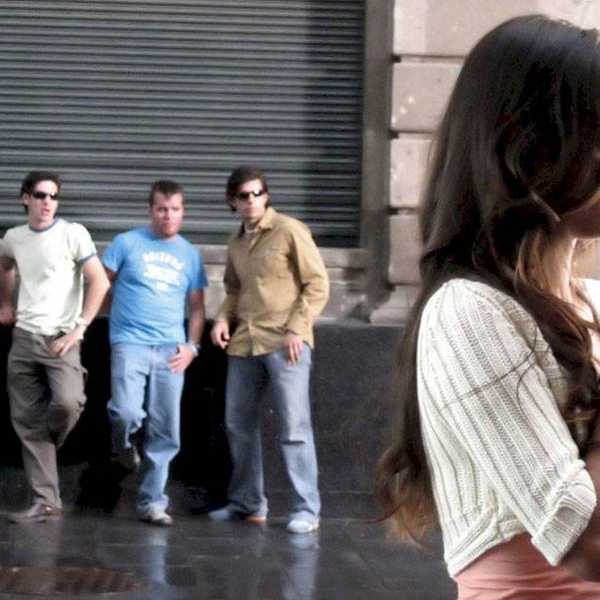
Crystal greeted me with a worried smile. She was wearing a trendy outfit as usual; a tight pink tank top without a bra, natural hair pulled into a puff and denim high-waisted shorts. The man, she said, had grabbed her arm and tried to take her somewhere. She pulled herself loose and walked away, but he kept following her, grabbing her arm in silence. She told me that there were people watching the scene but nobody came and helped her.
One woman even moved away when Crystal hid behind her from the harasser. After calming her down and glancing up and down the sidewalk for the perpetrator, we made our way back to my house together and discussed the event. I asked her why she didn’t call the police and she responded that the thought did not occur to her because the police would probably blame her for what she was wearing. Especially, she said, because she is a person of color and is even more sexualized because of her race.
“In the eyes of white police officers,” she said, “white women are associated with purity, but I am associated with someone who doesn’t need protection.” We recollected the time that I was also harassed, just two weeks prior, when a man stalked so close behind me I felt his breath on my neck. I also sought refuge, hiding in a pizza shop until Crystal snuck me out the back door. I did not think to call the police either, not for the same reason as Crystal, but because I was so used to being silent about harassment that calling the police would seem “too extreme.”
Used to the constant male gaze and victimization towards us, our conversations about street harassment never lasted more than an hour until the initial fear dissipated and we returned to our normal lives. Until Crystal’s situation, it did not dawn on me that the harassment which my friends and I face daily is ignored. It is ignored by other people on the street, and it is ignored by us ourselves.
After being harassed countless times since pre-teens, a woman can only get desensitized to the perpetual maltreatment and oppression she faces. I regret not calling the police now which would have helped me gain my power back lost from the harasser.
No matter what we dress as, what we look like, we as women face such dehumanizing comments and actions towards our appearances. Crystal heatedly ranted that whether she dresses in a tight summer shirt or is bundled in the dead of winter, a man on the street will say or do something that sexualizes her. The frustrating part, she tells me as she tightens a fist, is that there is nothing she can do about it but be afraid.
Whenever I am catcalled I gather the courage to raise my middle finger high while passing, only to be faced with threatening, shouted curses that go along the lines of the fact that I am “ungrateful” and disrespectful” towards them.
We finally reached the block where I live and our frustrated remarks slowly died after we realized that vexing would get us nowhere. As we walked in silence, a woman suddenly turned the corner, walking gracefully without a bra and her breasts were flying free under her dress. As we got closer to her, all three of us silently studied each other. When the woman reached us, she looked at both of our chests, her mouth spread to a grin, and exclaimed “free the nipple!”
Crystal and I responded with a laugh and digested her remark until we got into my apartment.
Once inside, Crystal turned to me, her youthful energy slowly reviving and said, “I appreciate girl compliments more than boy compliments.” I smiled back, nodding my head. I told her that it feels good to be surrounded by a community that sees a woman as a person, whether her breasts are free, legs are showing or if she is fully covered by a winter coat.
Unfortunately, a community that sees women this way is mainly comprised of other women. I want women to feel as comfortable around men as they do with women, but in order to feel that way men need to see women as equals instead of inferior. I no longer want to be desensitized to the struggles I face every day, whether that means calling the police, getting the surrounding people to participate in the situation, or keeping that finger raised high, because I am tired of being ashamed for simply being a woman.