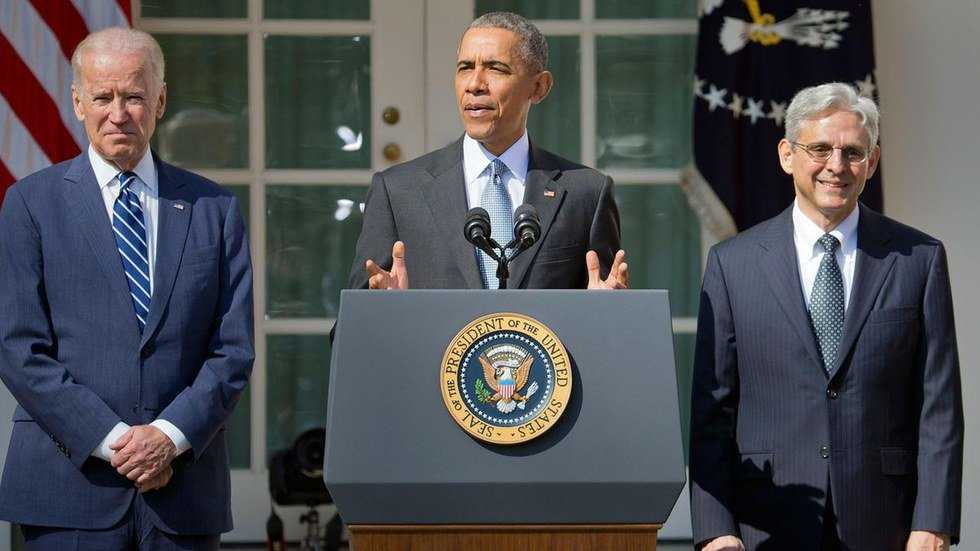
On March 16 at 11:00 a.m. EST, President Barack Obama announced his appointment to the United States Supreme Court, which has been missing a justice ever since Justice Scalia passed away earlier this year. This announcement came after a massive preemptive attack from Republicans. Mere hours after Justice Scalia died, Majority Leader in the Senate (the body that approves the President's appointment) Mitch McConnell said that the next president should pick the appointee and that President Obama should let the appointment lie until the people have a say. This early strategy, however, will only likely make it easier for the President to push his nominee, Merrick Garland, through the Senate.
There are many reasons why Mitch McConnell's swift preemptive conclusion about the next president making the appointment can be considered a tactical error on his point. The first is that he did it so soon after Justice Scalia's death. Many were still reeling from the very sudden death, but it was the Republican Party, not the Democratic Party, who politicized the sad day. Instead of waiting for Obama to say that he was going to appoint someone, the Republican Party immediately jumped into the fight. Even many Republicans, such as presidential candidate John Kasich, said that politics had entered the fray too soon. This also had the unintended effect of making the issue come up much sooner. Presidential candidate Donald Trump famously summed up the Republican strategy by saying, "Delay, delay, delay," but this was after McConnell brought the issue to the forefront hours after it came up. If he had waited until the president made a statement, then accused him of politicizing the death of a great man, it would have bought the Republicans at least two weeks. So when the Republican Party spoke of "letting the people decide," their argument lost credibility. After all, as Senator Elizabeth Warren articulated perfectly, "they [the people] did—when President Obama won the 2012 election by five million votes." This leads to, perhaps, the most pressing issue that McConnell made for the Republican Party—the 2016 election.
It is very common knowledge that people are sick of politicians not getting anything done. The theme of the past five years of budget fights has been, "We're not the obstructionists, they are!" But to most of the populace today, it is hard to see what the Republican Party is doing, except obstructing the system; it is practically the name of their strategy! Most poignant are the other Republicans, like Lindsey Graham, who say that their party is stopping the system. As President Obama continues to quote the duties of the executive to appoint people to the Supreme Court, which is explicitly laid out in the Constitution, the Republicans continue to advocate for waiting for the next president. This argument, though, can be,and is being boiled down to "We won't do our job." Certainly the President used his decision to appoint Merrick Garland to help support this rhetoric. Garland is a moderate liberal, who has already been vetted and approved as an appointee by the Senate and currently resides as the Chief Judge of the United States Court of Appeals for the District of Columbia Circuit. He is, in a word, qualified. It now becomes the burden of the Republican Party to convince the American people that, despite the fact the the President has the right and duty to appoint someone to fill the hole on the Court, they are doing the right thing by stopping the Constitutional process from going forward, which may be easier than you'd think.
Many polls have shown that most of America supports Garland getting, at the least, a hearing before the Judiciary Committee, but the GOP is hoping they can distract voters away from the issue. In fact, GOP advisers agree that there is a large majority of people support the nomination, especially because Garland is so moderate. But whenever these same people are asked how much they care about the nomination, most have a low intensity level. Voters are, understandably, more concerned with the economy and foreign affairs. So while Democrats might have the easier time convincing voters, it is up to them to make those same voters care about the issue. This will be where the real fight will lie, not in getting the GOP to consider the nomination, but convincing voters that it is an issue they should care about.