
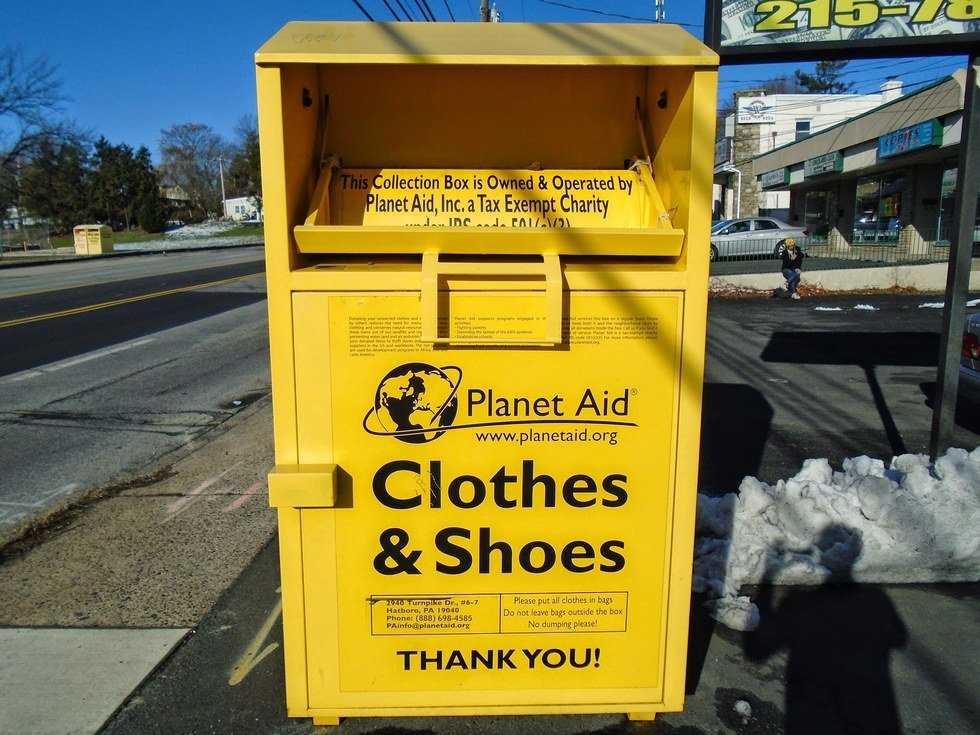
What do you do with your old clothes when you’re ready to get rid of them? Do you call your close friends to check out your hand-me-downs before you throw them out for good? Or do you opt for the more charitable route, sending all of your unwanted clothes to Goodwill or The Salvation Army? Maybe you’ve taken bags of your old clothes to one of those big yellow bins that dot parking lots across the country, eager to free up some space in your closet while contributing to the greater good. These bins, owned and operated by a humanitarian organization called Planet Aid, recycle and repurpose hundreds of thousands of pounds of used clothing by utilizing over 20,000 donation bins across the U.S. Recycling and repurposing your old clothing items sounds like a fantastic alternative to throwing perfectly reusable materials in the garbage, right? On paper, Planet Aid’s business model seems smart and generous, fueled by the spirit of charity and frugality. Recent investigations, however, have revealed that the seemingly harmless humanitarian organization has cult-like roots, a history of fraud and scams, and a fugitive leader. What reads like a Hollywood movie is actually just a day in the life of the Teachers’ Group, the hottest Danish cult you’ve never even heard of.
On May 23rd, Reveal News published a lengthy article titled, “US taxpayers are financing alleged cult through African aid charities.” With such an intriguing title, it’s no surprise that the article quickly drew a LOT of attention. As I scrolled through my Facebook feed last week, I came across a video shared by one of my friends showing the darker side of Planet Aid based on Reveal’s article. This video had already accrued hundreds of thousands of views and shares last week, promising plenty more as shock and outrage continues to ripple across the country.
So what exactly did Reveal News reveal about Planet Aid and its other related organizations? As it turns out, the organization as well as its related organizations (Humana People-to-People is one) serve as money-makers for a Danish cult called Tvind (the Teachers’ Group). Originally founded by 77-year-old Mogens Amdi Petersen in the 1960s as an antiwar commune for teachers, Tvind gradually transformed into more or less a cult. While the Teachers’ Group focuses on humanitarian aid and collecting used clothing for people in developing nations, the cult-like organization uses these front-groups to finance a luxurious lifestyle for the group’s founder and a select few others. Though the group adamantly denies any present ties to Petersen, plenty of reports prove otherwise.

So what makes the Teachers’ Group like a cult? Members are allegedly encouraged to give up their belongings and transfer all of their personal income to a group fund. Members of the group live together and, according to Tvind’s website the group, “is a unique formation of people who give hands on a deal that they stick together through thick and thin - for some indefinitely, the other for an agreed period, for example 2 or 5 years.” The website states (after translating to English) that, “TG is a term for a group of people, each of which has considered like that would be part of an organized community. The common basis for the TG is the common principles, common time, common economy and common distribution. TG is a way to live his private life. It is not a legal entity, it is not any organization, association, foundation, agency or in the sense of anything that exists a category.” If that doesn’t sound like a cult, I’m not sure what does.
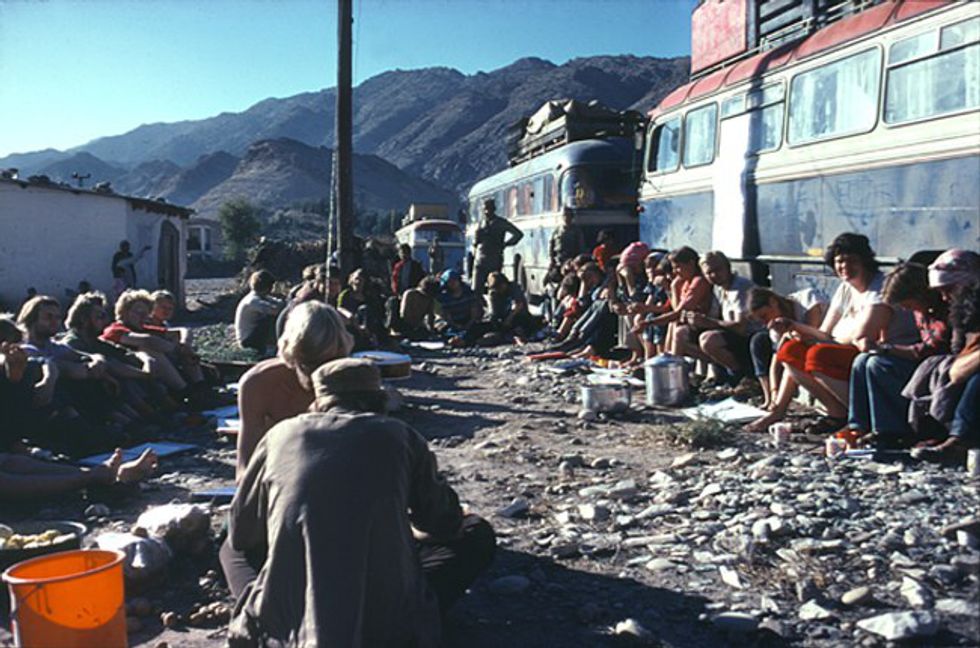
Several Danish hippies transferring their incomes to a group fund and living together doesn’t seem all that destructive, especially for the people of America who could likely care less about what happens in Denmark. However, there are hundreds of poor Africans members of the Teachers’ Group who are forced to give anywhere from 20-100% of their salaries to the organization, transferred and laundered until it falls into the hands of the privileged few who live lavishly off of their hard work. One former Teacher’s Group employee in Africa shared that the organization received bigger grants if its employees reported having higher salaries. Even though the Teachers’ Group reported their employees as being salaried, many were not. This extra money was transferred to a private account, and not used for charitable purposes. One early employee even recalled transferring money from Africa on her stomach in the eighties, an activity that sounds more fitting for a drug cartel rather than a humanitarian group.
Even in the U.S., Planet Aid employees have reported strange cult-like qualities in the workplace; one woman began working for the humanitarian group in 2013 with the hopes of helping people in need and improving the environment. Instead, the woman was required to attend distant training camps that she said gave her an eerie communal vibe. Planet Aid also took about 20 percent of the employee’s salary to fund the training camp, although she said she was eventually repaid. Teachers’ Group members in Africa haven’t been so lucky. The contracts the employees are forced to sign make them promise not to ask for the withheld amounts to be returned.

Planet Aid raises enough eyebrows with its questionable charity model, which doesn’t actually outfit impoverished people with your used clothes. Instead, Planet Aid reportedly recycles about half of the used goods by selling them to textile factories. The charity turns a profit on your used jeans, and the textile factories recycle them into industrial rags. The rest of the clothes either wind up in thrift stores or overseas in secondhand shops where your pair of designer jeans might sell for $7 in Africa. The problem is that these secondhand American clothing stores have adversely affected the indigenous economy in some areas, meaning that our cheap, used goods are causing local merchants to close their doors—for good.
Although the FBI investigated the Teachers’ Group in 2001 warning the USDA about the group’s general shadiness, our government has given over $33 million to the disreputable humanitarian group. The FBI reports revealed years of money laundering, Swiss bank accounts, and fraud, culminating in the group’s mysterious leader bailing out on Denmark entirely for a safe haven in Mexico, a multi-million dollar estate where he lives with several others.

So why does the USDA keep giving so much money to the Teachers’ Group’s various “humanitarian” organizations? Government officials claim the group checks out, but Reveal’s article leaves more than just a bad taste in the mouths of current and former donors to the charity. As the story of Planet Aid continues to spread via social media, environmentally conscious donors will soon opt for safer, more honest charity organizations to donate their used clothes to. Alternatives to the big yellow bins are The Red Cross, Goodwill, The Salvation Army, and homeless shelters (to name a few). Think twice before you donate your used clothes, because you probably don’t want to be funding the luxurious life of a few Danish cult members under the guise of charity.
To learn more about the Teachers’ Group and its questionable practices at home and abroad, read Reveal’s article here.