
What if I were to tell you that you can't actually like your favorite singer unless you wrote them love letters every day? Or what if I said that you can't really like eating at your favorite restaurant unless you went there for lunch on Tuesdays? Would you think to yourself, "Well poot, I must not actually like Katy Perry or Chipotle since I don't do those things Marshall mentioned," and walk despondently into your bedroom to start writing a love letter? No, because you recognize that I am not in any position to tell you what things you can or cannot like; you decide that for yourself. Although I commonly see people make statements like the ones above regarding what qualifies you as a true fan of a particular band, I see them made much more frequently about what qualifies you a true member of a certain religion when it relates to politics. I hear people say things like, “You can't actually believe the things you claim to unless you vote for this person!" or, "You aren't really a member of this religion unless you are against this policy!" Although I do think most people who say these kinds of things mean well, I believe that, by making statements like this, they fail to recognize the limitations of human knowledge, are inadvertently prideful and serve to negatively impact others’ perspectives of both religion and spirituality.
The limitations of human knowledge.
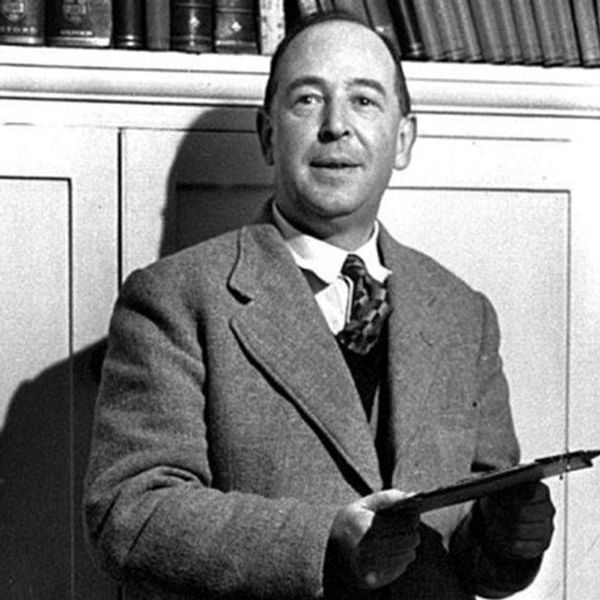
People have spent centuries, millennia even, disagreeing about how to interpret religious texts and debating what it really means to live out one's faith in different religious contexts. Figuring this out is no simple matter, and when it comes down to it, your conclusions about what you believe and how you think you should live your life in regards to your religion are not matters of fact, but of personal perspective. As prominent 20th century author and theologian C. S. Lewis said in a BBC radio talk he gave on the subject of faith, “…take what I say with a grain of salt – as something offered, because it may be a help, not because I am certain that I am right.” Lewis’s statement illustrates his understanding that, when it comes questions of textual interpretation and faith conscious living, all we have is what we think are the answers; we do not and cannot know the answers for, if we could, there would be no such thing as faith. Those who say things like, “You must vote for this person if you’re of this religion” are claiming to know these unknowable answers and failing to recognize that their understanding about what is the best way to live out one’s faith is merely their own personal perspective, not fact. Keep in mind that it was Albert Einstein who said, “A true genius admits that he knows nothing.”
Inadvertently prideful.
In his nonfiction book, "Have a Little Faith", Mitch Albom transcribes a conversation he has with Rabbi Albert L. Lewis in which the rabbi says, “You should be convinced of the authenticity of what you have, but you must also be humble enough to say that we don’t know everything. And since we don’t know everything, we must accept that another person may believe something else.” Humility, according to the rabbi, is an understanding that, even though you might be confident that your religious viewpoint is aimed at truth, you cannot be certain. Those who proclaim that others must vote a particular way or agree with a specific policy in order to be true members of a religion do not seem to just be convinced of the authenticity of their beliefs, but also certain that they know what is true. In my mind, they must feel absolutely sure that their understanding is correct, or at least more correct than that of the people to whom they are speaking, in order to think that they are in a position to say that others’ beliefs and understandings of how to live out their faith are illegitimate. I do not believe that the people who say things like this are necessarily prideful individuals, but I do think that they are inadvertently presenting themselves as such by implicitly claiming to possess knowledge that no human can.
Negative impact on others’ perspectives.
When people say that you are not a “real member of this religion” unless you vote for their candidate or agree with their position on a policy, it seems reasonable to suspect them of exploiting their religion in order to further their political agenda. I don’t think everyone who does this means to exploit their religion; I believe many of them do have honest intentions, but I think it can across that way. Because of this and because of the prideful implications of their statements, I believe that people who say these things ostracize rather than influence.
Conclusion.
I believe that expressing our personal perspectives with humility and conveying them as opinions rather than facts will result with a much more productive, honest conversation. In the words of Mahatma Gandhi, “It is unwise to be too sure of one's own wisdom.”