

When I first acknowledged my interest in politics I was 11, the nation was deep into the 2008 election, and my parents proudly paraded messages of ‘Hope’ and ‘Change’ right up until the last vote was counted and we felt like we had finally found an ally in the White House. Unfortunately, It was that same night that California voted ‘yes’ on proposition 8, turning down marriage equality in one of the most controversial votes in any states history. Since then, politics have not slowed down, and while there have been a lot of social gains and the weight of the recession has started to subside substantially – sectionalism is at an all time high.
America has become the couple on the block that just can’t make it work, and no matter how hard they try; the idea of cohabitation seems hopeless. From this understanding, I made an effort to turn to my more conservative relatives for insight on their side of things. Even putting our differences aside and coming from a place of genuine curiosity I rarely got more than a two sentence response, and a nudge from my parents, ushering me out of the conversation for fear of an argument at the table. As I grew up, I instinctively wanted to test the waters and see just how far this notion of ‘not at the table’ would stretch. I always assumed ‘adult conversation’ would have more substance, or that my becoming a college student would give me a more relevant voice as a young person in a crowded room of senior citizens. I assumed we were all mature enough to look past our differences and use this dialogue to become more engaged and invested in the issues that matter most. However, I found myself mistaken as I analyzed my interactions with those at the table that think Obama’s birth certificate is a forgery, or that being gay is fine until you ‘threaten the sanctity of marriage’. It becomes an internal battle trying to keep my opinions to myself, and as a result, can start to feel competitive and confrontational.
As the conversation heats up, a ‘me vs. you’ scenario begins to take shape, which (for me) regularly ends with an extra glass of wine and a pat on the back from a family member trying to keep the peace. Not that I have anything wrong with talking about ‘The Bachelor’ or how good the food is on this particular occasion, but I believe that politics should be an open conversation, and that avoiding it only divides us further and keeps us from working together cohesively. The competitive atmosphere this type of communication incites holds us back and emboldens the lines that keep us separated and sorted into the liberal coasts and the conservative center. Nobody wants to listen to you when they feel like you’re against them, or that you are too busy planning your next move to be an active and attentive listener. I get it, after a certain amount of time listening can seem pointless, especially after having put up with not being heard for decades upon decades of intolerance and prejudice.
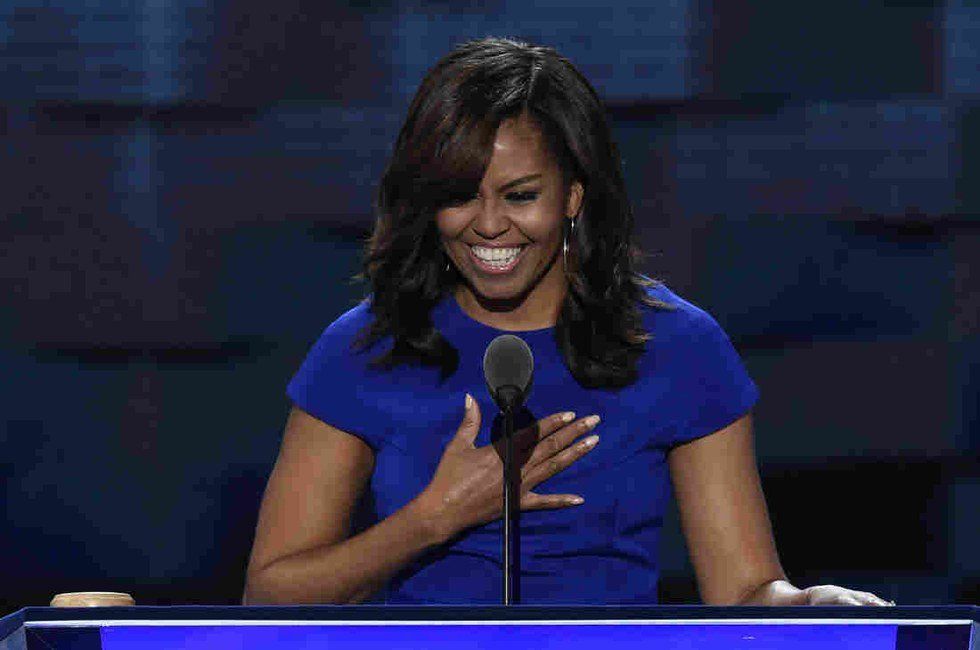
However, look at the last eight years for guidance on how to treat Trump during the next four. Look at Barack and Michelle, who endured years of scrutiny under the public eye and greeted every adversary with open arms, inviting Donald and Melania into the people’s house with hope that such a move would unite our two halves into a whole. Watch Michelle talk, and openly engage with those on both ends of the political spectrum. Then watch how her sympathetic ear and active participation keeps the peace and allows for a productive, informative dialogue between people who think very differently from one another. Upon your second viewing, take note that the space between what’s said can sometimes be just as informative and central to understanding our leaders as the transcript of any speech the President or First Lady have made over their career in public service.
Becoming an active listener can do nothing but empower you, keep you on your toes, and give you room to exercise your political voice, watching it evolve for years to come. Don’t be afraid to talk to those who might differ from you - empathy comes from being able to look into every corner of human life and put yourself in someone else’s shoes. Whether it’s at your next family dinner, on Facebook tonight, or in class tomorrow – go high, and motivate those around you by showing them what it means to be as thoughtful a listener as you are a speaker, writer, or thinker.