Last fall, I left cozy Duluth, MN to begin the next phase of my life. I left for a new home and a new community, or at least for the next few years of my life, at Hamline University. In my first few days, I found myself sitting in Walker Fieldhouse with the rest of the Class of 2019 Hamline Pipers. On stage was Hamline's new president, Dr. Fayneese Miller speaking about the values that brought our class, 500 strong, together. She quoted John Wesley, saying “Do all the good you can do. By all the means you can. In all the ways you can. In all the places you can. At all the places you can. As long as you ever can.” She spoke of why Hamline is the school for those who want to change the world, the school for those who care. That, there, and then, was the very moment I fell in love with my school.
My desire to be involved in social justice, activism and advocacy was what pushed me to attend college. Throughout my study of history, I always found myself sucked into those fundamental, revolutionary and exciting times in history where young, driven, engaged college students joined together to say “Enough!” to the status quo, organized and changed their world. From large, historic Vietnam War protests at Kent State and across the country, to the work and advocacy of groups like Students for a Democratic Society, the American Youth Congress and the Campus Antiwar Network. When my father spoke of his time in college, he always mentions the student activism that forced Macalester College to divest from apartheid South Africa in the late 1980s. I entered Hamline with the strong belief that through student activism lies the potential to empower myself and my peers to change our world.
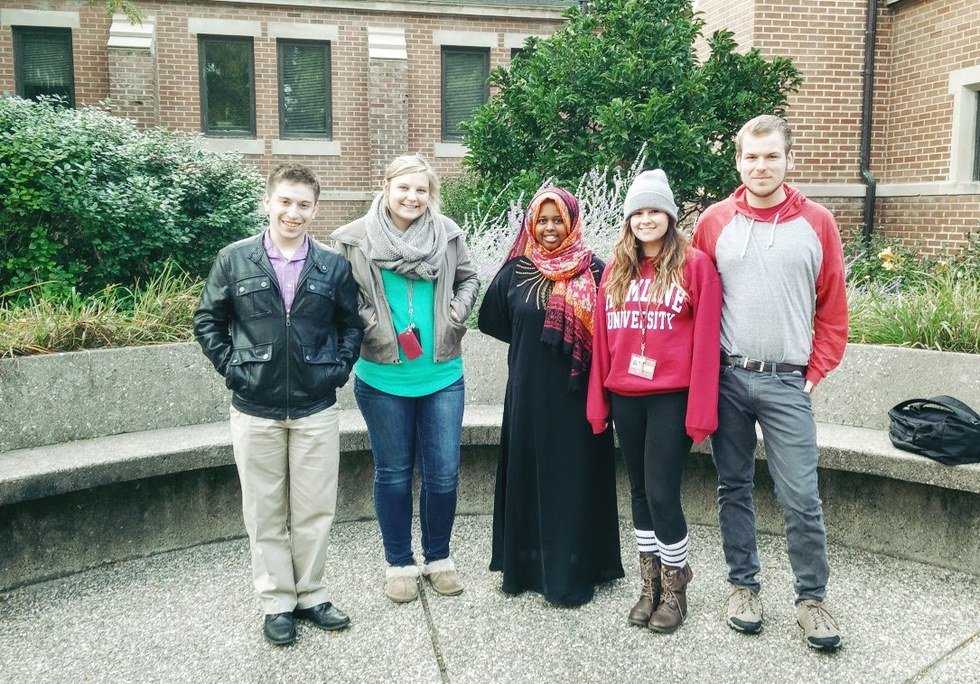
In my first month at Hamline, I made connections with an organization called Students for Sensible Drug Policy, and that day began the process of starting a chapter at my campus. Although originally unsure of what we wanted to advocate for, change, or really, do, we jumped headfirst into the world of drugs, drug policy and harm reduction. One of the questions I frequently was, and still am, asked is the big question. Why? Why drug policy? Why SSDP. Here’s why:
1. Drug use and how we handle it is still a taboo subject

America is still, like it or not, a country with heavy puritan undertones. Taboo subjects, like drugs, sex, etc. are topics that many people shy away from speaking about, or from allowing honest, accurate and age-appropriate education on the matter. Just like communities that don’t have comprehensive sex ed are proven to have higher rates of teenage pregnancy, STI transmission and sexual violence, shying away from dialog and education on drug use leads to increased overdoses, undereducated experimentation and riskier behavior.
No amount of prohibition has been effective in stopping illicit drug use. It’s time to try a new approach for how we look at drug use in America.
2. We are the DARE generation

Many of us can remember back to grade school when the local police department would come teach classes about drugs as part of the Drug Abuse Resistance Education program. This nationwide program has been cited again and again as a complete and utter failure in preventing youth drug use. In fact, students who went through the DARE program are more likely to use illicit drugs than those who did not.
Why is this? The program is filled with lies and misinformation, especially on the topic of marijuana use, saying things like “Marijuana is more dangerous than alcohol”, “One hit of marijuana will cause addiction”, and “Using marijuana will immediately and permanently lower your IQ, and make you crazy”, all statements that can not be backed up by any scientific studies.
Yet, when these children become teenagers, and these teenagers try marijuana, as many do, it causes them to dismiss all they have been told about drug use by authorities, giving weight to the “gateway drug” theory, a result of our societies reaction to drugs, rather than attributes of the drug itself. We, the D.A.R.E. generation, have the potential to shift from the “Just Say No” model, to a “Just Say Know” approach.
3. Drug policy is changing for the better, and faster than ever before

It’s a very exciting time to be working in drug policy. As of today, 5 states, Colorado, Washington, Oregon, Alaska and DC have all legalized recreational marijuana use, and 23 states have some form of medical marijuana program. For the first time in U.S. history, we have a viable presidential candidate who publicly admits that the War on Drugs is a failure. Research is showing promising results in looking at psychedelic drug use as a treatment, or even a cure, for mental illness, rather than a cause of it. As the opiate epidemic is now plaguing affluent, predominately white communities, rather than poor communities and communities of color, politicians are looking for a new approach towards the issue.
Next week, for the first time in 20 years, the United Nations is holding a special session on drugs and drug policy, which has the potential to radically alter the issue of drugs on the global landscape. There’s no better time to get involved with a complex issue that surrounds all of us, where there is this much potential for us to accomplish our goals.
4. The uncomfortable truth, “Young people use drugs”

It’s such a simple statement, yet it’s so hard for many in positions of power to grasp. Our demographic, teenagers and young adults in our twenties, are statistically the most likely to experiment with and consume illicit drugs. As such, our voices are incredibly important in the discussion about how our world handles the issues of drug use and continued prohibition. Students for Sensible Drug Policy recognizes the importance of our voices and gives us accesses to resources, training, skills and a network to use our voices to do the most good we can do.
5. My hometown is the perfect example of why we need this reform
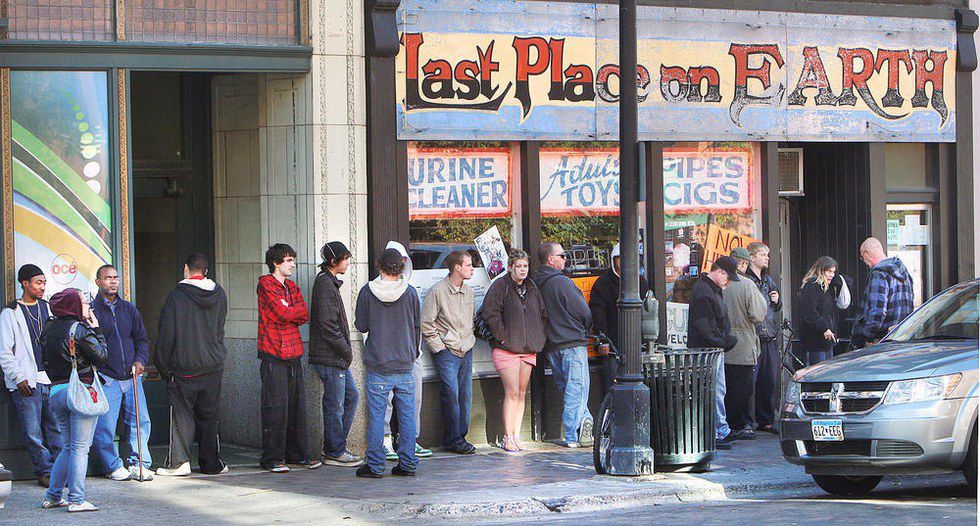
I grew up in Duluth, MN, a sizable city on the shore of Lake Superior. Many know Duluth as the ideal summer vacation destination that it is, but when it comes to the issue of drugs, Duluth is far less innocent than its appears. Located at the northern end if I-35, which extends south all the way to the American-Mexican border, being a major international shipping port, and being located only 150 miles south of the Canadian border, Duluth is unintentionally a major party in the distribution network that feeds America’s drug habit. As a result, drugs in Duluth are cheap and easily obtained, and drug use is highly visible and widespread. Duluth has made national headlines in recent years regarding “The Last Place on Earth” a now defunct head-shop located downtown that was infamous for selling legal high products like K2 and Spice, attracting long lines of customers on a daily basis.
The legal high problem escalated as policymakers tried to fix the problem with increased prohibition, yet as chemicals were banned, they were simply substituted with new, more dangerous chemicals, making the “Last Place” problem worse. Most consumers of these synthetic drugs would prefer not to use them, but choose synthetic drugs because the Drug War creates conditions where the use of their drug of choice is not an option. Watching these events unfold, destroying the lives of my peers and neighbors and permanently scarring part of Duluth’s downtown district fully and completely convinced me that prohibition must end to make my hometown all it has the potential to be.
6. Harm reduction works, yet is widely unavailable

In recent years, and especially in more progressive nations like Portugal, the Netherlands, Switzerland and Uruguay, lots of work has done to reduce the health hazards associated with drug use. The implementation of drug decriminalization has made it easier for people struggling with addictions to enter treatment programs without fear of being outed as a societal outcast, and, contrary to popular national dialog, decreases the use of dangerous illicit substances, especially when looking at rates of use among young people.
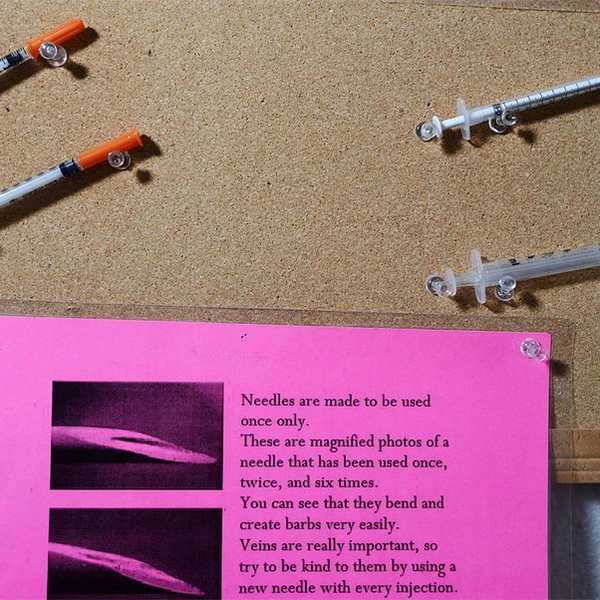
Free, confidential needle exchange programs have drastically decreased disease transmission among IV drug users. A new type of harm reduction program is now expanding, called Safe Injection Sites, which give IV drug users, especially those who are homeless, a safe, supervised environment to get their fix, a much better alternative to use in public or in public bathrooms. These safe injection sites almost always carry Naxoline, a fast acting opiate overdose antidote that program staff can use to intervene and potentially save a life.
Yet, many communities are scared to allow these programs over fears that they normalize and legitimize the use of dangerous drugs. For a local example, Saint Paul, MN’s city code explicitly bans the operation of needle exchange programs, yet has a growing problem with needle-spread illnesses as Minnesota's opiate epidemic continues. The solution to these problems is simple and sensible.
7. Exposure to and connections with amazing activists

As I write, I'm preparing to fly to DC for #SSDP2016, a weekend conference of student activists from across the country. Although I've not yet met any of these amazing individuals in person yet, through social media I've been able to follow the awesome work they've been doing over the past year. By doing activism work that plugs me into a global network, I've been able to stay motivated and seek advice when facing challenges and hardships. These people, my peers and colleagues in policy reform keep me doing the work I'm doing, and quite frankly, I don't know I'd still be a part of this movement without them. Belonging to such a large grassroots organization is allowing me access to opportunities I could only dream of, including being chosen to be a panelist at a national convention of my peers, and being nominated to run for the Board of Directors of a non-profit organization that I love. If you're even slightly interested in joining our network and our movement, I highly encourage you to just do it.
To find a Students for Sensible Drug Policy chapter on your campus, or for information about starting your own chapter, visit: http://ssdp.org/chapters/