

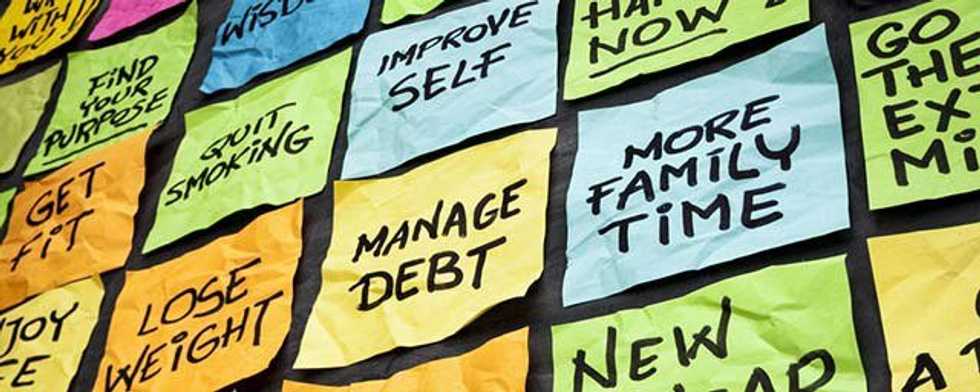
With the new year comes a sense of renewal. A moment that signifies the end of 2015 and the beginning of 2016 also symbolizes the opportunity to start over for a lot of people. A new year, a fresh start. Sometimes, people need a reason or opportunity to make a change in their lives that they have been wanting to make for however long. If this is the case, New Year's is the perfect chance to begin the new year with a clean slate.
Personally, though, I don’t like the idea of New Year’s resolutions. Okay, I like the idea of making resolutions for self-improvement or achieving goals. The part I’m not particularly fond of is the New Year’s aspect. For several years, I struggled coming up with a resolution on New Year’s Eve. I would procrastinate until about 11:30 p.m. before making something up to satisfy my sense of obligation to have one. And every year, like most people who make these resolutions, I failed or cheated or quit not long after the first of January.
On the years I didn’t procrastinate on coming up with a resolution, I would think of something I needed to improve or wanted to change in my life sometime in November. Knowing I wouldn’t be able to think of another, I would save this to be my New Year’s resolution. My problem with New Year’s resolutions, then, is this: we shouldn’t need a reason to make a change, and we shouldn’t wait for the perfect opportunity to start over. Every week, every day, every minute is new and is a chance to alter the way we live our lives. When something doesn’t seem right, why wait until a new year to change it? For me, life is too short to wait for the right time to take the action needed to better my life.
If you don’t like how things are going, change it. There doesn’t have to be a reason or an occasion to improve. When we make resolutions that emphasize the beginning of a new year, we make it more difficult on ourselves to stick with healthy lifestyle changes. “Slip-ups” are seen as failures. We’re humans and we make mistakes, but when we set reasonable goals and make plans to achieve them, we can expect to be successful. What we have to remember is that very rarely will we get it right the first time without any setbacks. We have to accept the inevitability of errors, allow room for cheating or deviating from a strict plan of action, and learn to forgive ourselves whether we make a small mistake or we don’t succeed at all.
New Year’s resolutions are rarely successful, and at the first mess-up, we tend to assume failure and admit defeat, saying, “There’s always next year!” Instead, we should be making small resolutions every second of every day to be the best versions of ourselves that we can be. That is how real results are achieved.
So if you do choose to make a New Year’s resolution this year, let me encourage you to make this your resolution. Resolve to be a better you in whatever aspect of your life you deem necessary. But if you mess up, forgive yourself. Don’t wait until next year to try again. Every day is a new start. Every second is an opportunity.