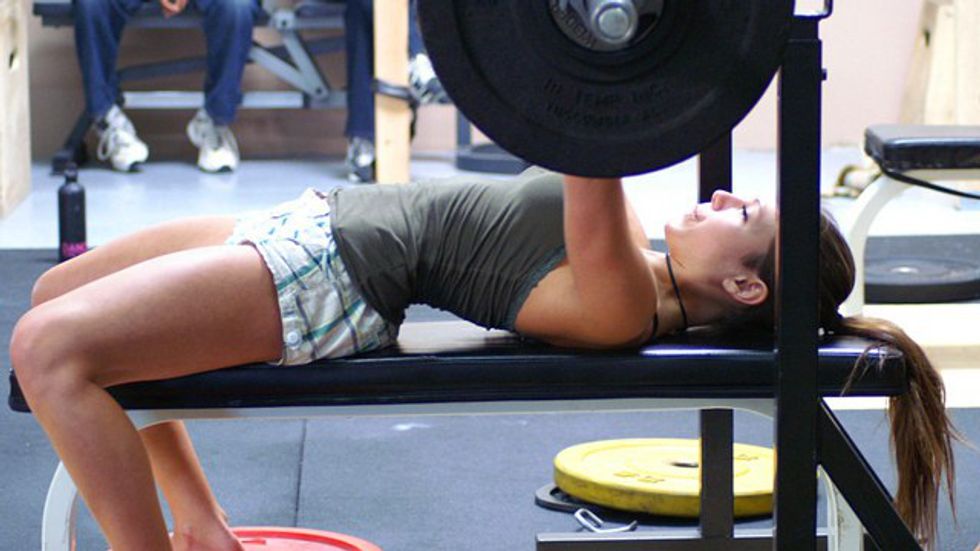
The internet is full of articles telling women how they are supposed to look, what they are supposed to eat, and what workouts they should do. I don't pretend to have the answer to every fitness challenge you face, but I can honestly say that starting to lift weights has been the best fitness decision I have ever made.
Before I started lifting, I was physically and psychologically a mess. I'm not exaggerating. I danced my whole life, and picked up running in high school, but at the beginning of my junior year, I began having chronic back pain that affected every area of my life. I became cranky, tense, and anxious. Two orthopedists and four physical therapists couldn't tell me what was wrong, and I missed six seasons of running and stopped dancing altogether. Without sports, I didn't know what to do with myself, and my already poor self esteem was lower than ever.
Eventually, I found a orthopedist that specialized in adolescent back pain. He determined that I had a degenerative disk in my spine and sent me to a new physical therapist. My previous physical therapists were all about massage, E-Stim, and stretching, but this was completely different. Twice a week I spent an hour performing core exercise after core exercise. At first, the pain was terrible but by the end of a month, my plank time had increased from 12 seconds to a minute. By the end of two months, I ran my first pain-free mile in over a year and a half. It was at that moment that I realize how integral strength is to a healthy, pain-free life.
Unfortunately, despite the many benefits of strength training to both women and men, I met a lot of resistance when I started lifting weights. Below are some common myths about weight lifting, as told by my own fears and the misconceptions of those around me.
My parents (and myself): "Aren't you worried about getting hurt? What if you injure your back again?"
Fear of injury prevents many people from lifting weights, but in reality, strength training is one of the best ways to prevent injury. Some studies have found that full body resistance training is far more effective in decreasing chronic back pain than aerobic training. Others have found that resistance training increases flexibility, a crucial aspect of injury prevention. It is now commonly accepted that a balanced weight training program improves joint health by strengthening the muscles that support those joints and increasing their ability to absorb impact. Core strength (this includes your abs, lower back, and butt) is especially important to injury prevention and improving performance in just about every sport, from dance to rugby. Since I started lifting, I have been able to get back to the activities that I love, and train at a higher intensity than ever.
(It is important to note that weight training with bad form can absolutely cause injury, so make sure you go to the gym with someone who is experienced the first few times, be it a friend or personal trainer.)

My female friends: "Aren't you worried about getting too bulky?"
This is a common misconception about lifting, and it's completely understandable. When you think of weight training, the first person that pops into your head is probably either The Rock or Arnold Schwarzenegger.
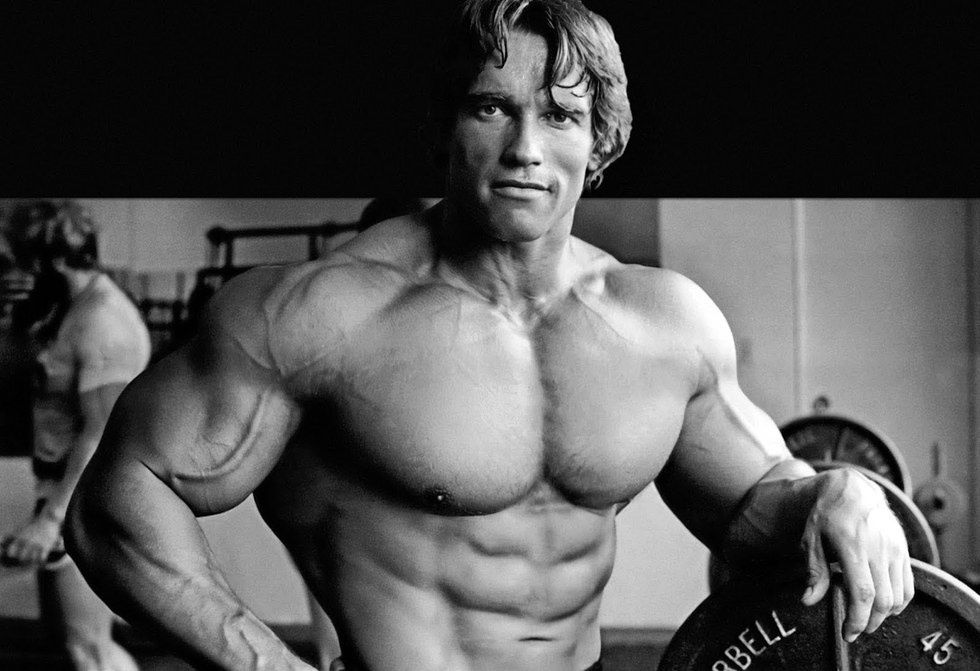
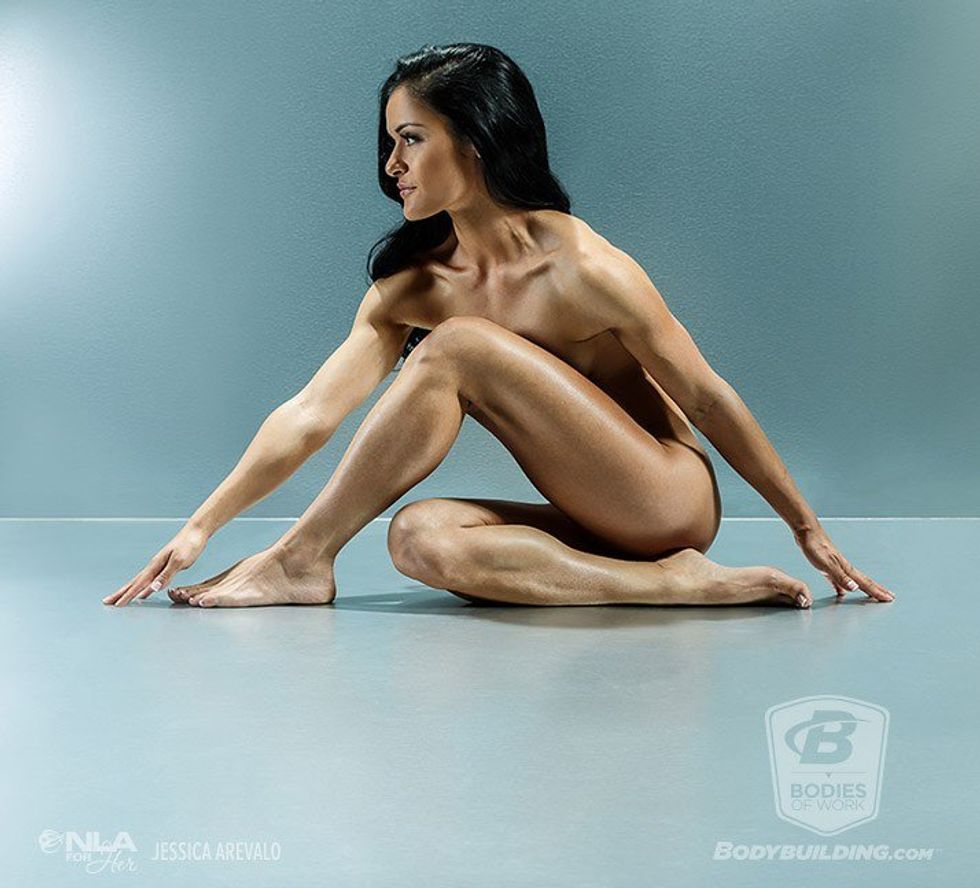
Yes, they are massive, but you can't build mass without testosterone, and males have exponentially higher levels of testosterone than females do to begin with. Additionally, a good portion of the big names in bodybuilding are most likely helped along by hormone supplementation. Any strength athlete will tell you how hard it is to gain a significant amount of weight in muscle, and you are not going to do it accidentally. Unless you are on a diet plan (and hormone regimen) that is specifically designed for this purpose, you will not start looking like a bodybuilder from squatting above your bodyweight. What you will do is change the ratio of fat mass to muscle mass in your body and improve your overall health. Want proof? This is Jessica Arevalo:

She is an IFFB Bikini pro and prep coach. Her job is literally to lift weights, eat healthy, and help other people do the same, and she is muscular, yes, but definitely not bulky.
My own fear: "If I am lifting more and running less, won't I gain weight?"
While many believe that the key to weight loss is doing hours of cardio each week, research is now showing that weight training is an important element in losing weight and maintaining a low body fat level. Weight training increases your daily energy expenditure and the amount of fat you burn, and combined with cardiovascular exercise greatly increases the success rate of weight loss attempts. Personally, I actually do weigh more than I did in high school, but despite the fact that I eat more and have stopped skipping meals, am the same clothing size or smaller, depending on the brand, and am much happier with how I look.
(Some of) my guy friends: "I wouldn't want to date a girl with a lot of muscle."
I hear this a lot, and I try not to get offended because everyone has their preferences. The fact is, resistance training helps women feel strong and powerful. It improves self esteem and can reduce anxiety and stress especially when combined with cardio. Not only that, but I personally love the independence of being able to move myself into my apartment without help and carry my own groceries. So while I appreciate you holding the door for me or offering to grab some groceries because I have eight bags and it's the polite thing to do, if your requirement of me as a girlfriend would be that I need you to lift everything for me, I probably don't want to date you either.
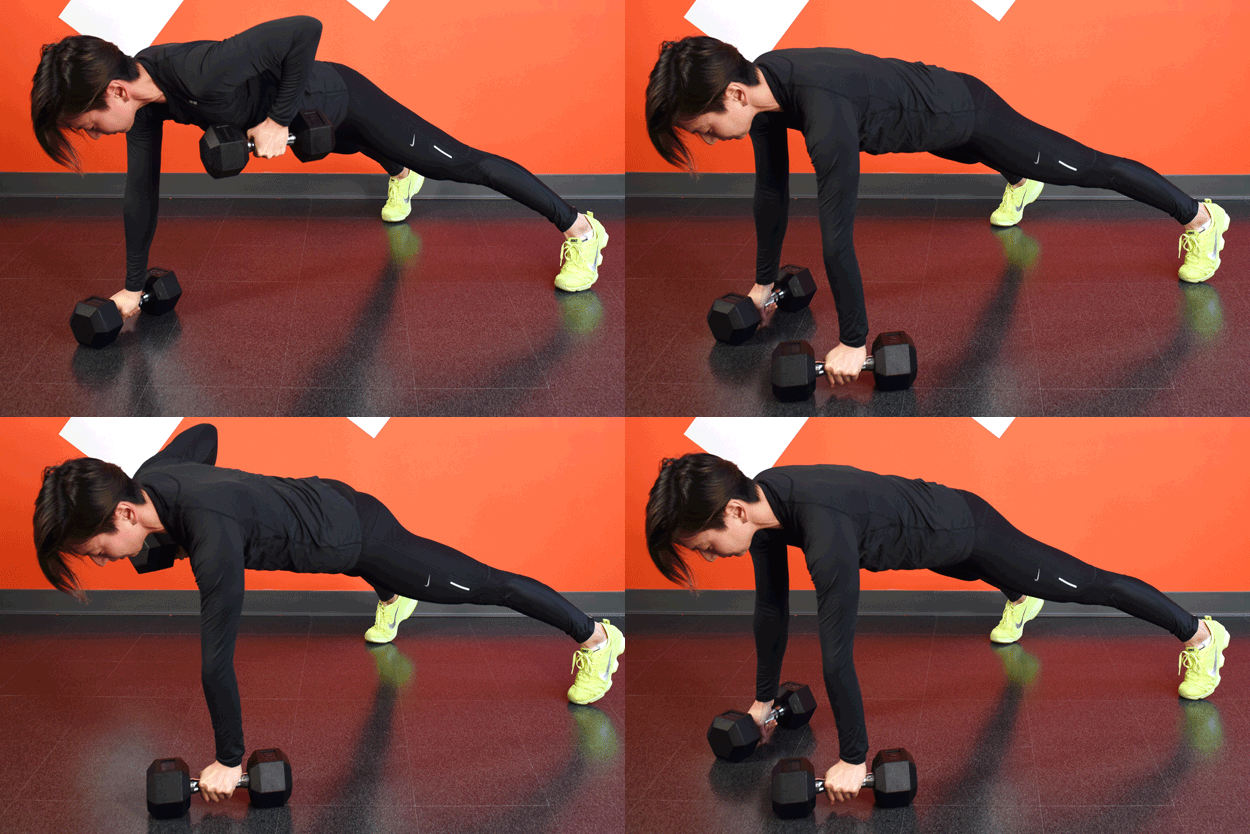
Everyone I've ever met who doesn't already go to the gym: The weight room is too intimidating.
I get this, I really do. I still get intimidated by people at the gym sometimes. I've realized that the majority of the people there aren't there to judge you. Occasionally, someone decides to be a jerk, but more often than not, people are just proud of you for trying to get healthy and want to help you on your way. For me, it helped to start by going with friends. You might benefit more from a few sessions with a personal trainer who can guarantee that you are using good form and give you a program that is specifically designed to help you meet your goals.
Weight lifting is for everyone.
The American College of Sports Medicine recommends that all adults resistance train at least two to three days per week in addition to cardio three to five days per week, regardless of weight or gender. Lifting weights helps you age healthfully and avoid osteoporosis and cardiovascular disease. No matter what your goals, whether you are trying to lose weight, get stronger, or just be healthier overall, lifting weights can help you get there.