

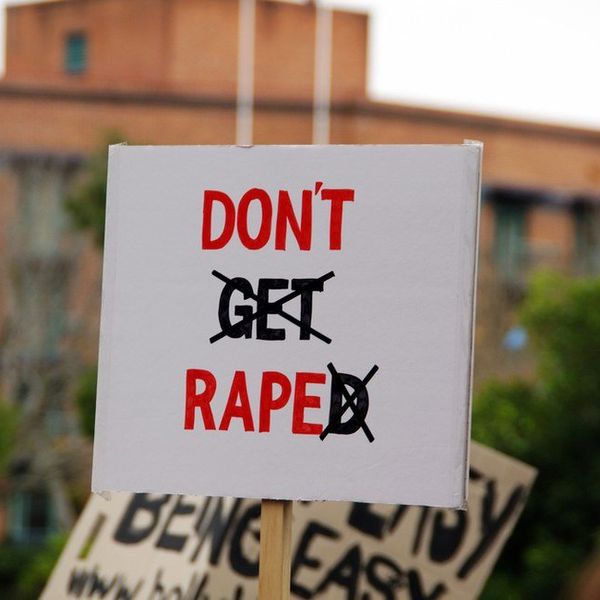
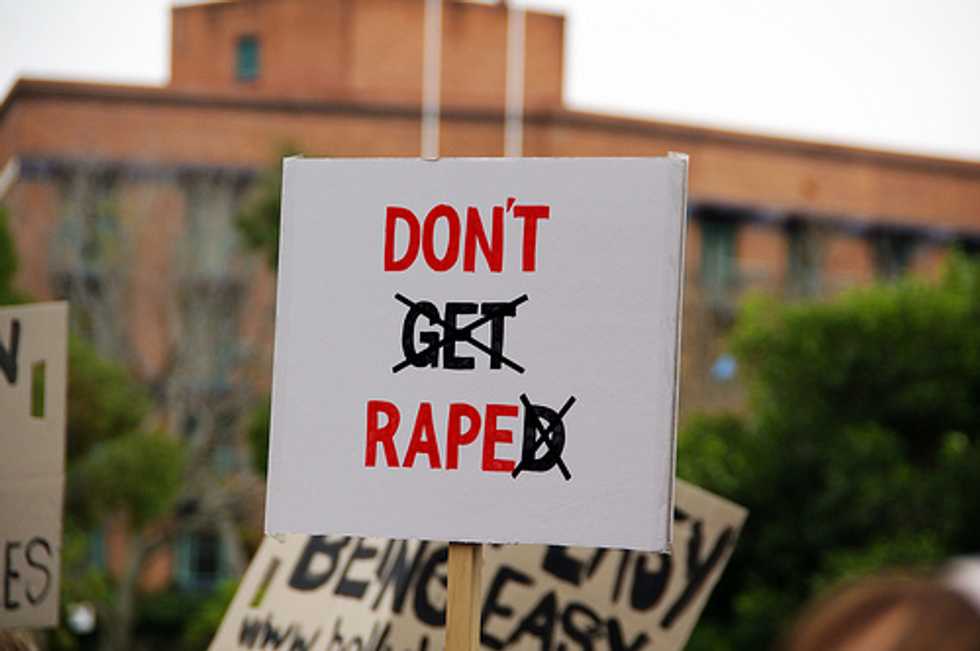
Did you know that 20 to 25 percent of women and 15 percent of men will be sexually assaulted during their time at college? Did you know that 90 percent of victims know their attackers? How about the fact that less than 10 percent of victims report their assault?
These are all statistics that I, as a trained gender violence prevention education, know by heart. I stand up in front of groups of people and rattle off these statistics hoping that they’ll make an impact, but most of the time, they are forgotten just like every other piece of information thrown at them.
Think of it this way. If you are in Greek life that means you might have roughly 100 women in your house. Throughout your 4 years of college, approximately twenty of your closest sisters and friends will be assaulted and you might never know. Outrageous, right? However, did you know that LESS than 3 percent of perpetrators will spend a day in jail?
You might be asking yourself, “How do we let such a horrific crime go unpunished?” First of all, there is a huge stigma associated with being sexually assaulted. If you’re a woman you will be asked what you were wearing before the attack, whether or not you were drinking, and you might even be told that you were asking for it. As a male, you might be called a pussy or a wimp. You’ll be ridiculed for the fact that you weren’t able to fight her off. You’ll be told that “men can’t get raped.”
Due to the fact that most victims know their attacker means that few assaults are actually reported. Despite the high percentage of students who are supposedly getting attacked, according to Lehigh University’s Crime Statistics Log, only 7 people reported their assault in 2014. I doubt that Lehigh is just an incredibly well-mannered school where less than 1 percent of the population is being violated. Unfortunately, people are afraid of coming forward. Not only is there a fear surrounding reporting but, this lack of reporting might also come from the strong rape culture that exists at this, and many schools.
Rape culture is a culture in which, “cultural ideologies , media images, social practices…support and condone sexual abuse by normalizing…male violence against women and blaming victims.” On Lehigh’s campus, there is incredible amount of alcohol consumed. When there is alcohol, there is sexual activity and often, those actions are not consensual. According to the legal definition of consent, when two people are drunk, neither party can consent to any sort of sexual behavior. That is not to say that every single hook up that occurs on college campuses is an assault, but it definitely creates a huge grey area. Again, this goes back to the notion that woman, if they report an assault are actually blamed for the event occurring because it is popular opinion that they should have been more careful. This is where the problem of identifying a “rape culture” comes in.
While the overall idea of a rape culture is a powerful one, the phrase seems to have a paradoxical effect. Blaming rape culture for the vast problem of sexual assault on college campuses takes away the blame from the individual at fault. In my opinion, saying there is a rape culture only takes away from the severity of the crime. It’s as if putting a name to this “thing” that may exacerbate the number of assaults, is saying it is inevitable. It’s as if saying that because this culture exists, rape and assault is going to happen and that not much can be done. However, there are no excuses for assaulting another person. I could never condone using a rationalization such as this to harm another human. The fact of the matter is the problem of rape does not come from a culture, but from a person.
We have to step away from the culture in which we live and look at what is really the issue. It is not the presence of alcohol or a huge party scene that causes sexual assault to happen. It’s the fact that there are people out there who think it is okay to not ask for permission before having sex with someone. It is the fact that there is a lack of education on what consent means and how to ask for it. To stop sexual assault we need to start smaller; focusing on a more individualized approach will allow students to learn how to be safe and how to respect others. It starts with us and we should start now. In my opinion, consent is sexy because consensual sex is the best sex.
















