

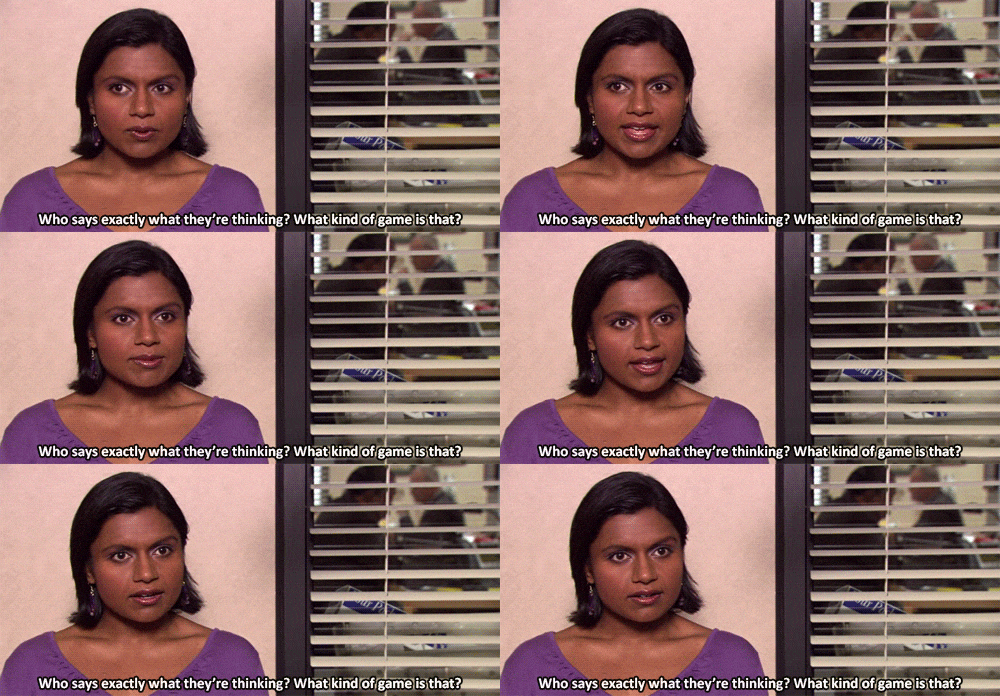
Relationships are difficult. Whether it's your relationship with a roommate, best friend, or significant other, communication can be tricky, especially when you don't want to hurt the other person's feelings. However, we're all guilty of it -- trying to spare someone's feelings by avoiding an uncomfortable topic or not responding to a text. But here's what I've come to realize: the fear of hurting someone else creates more problems than flat-out saying what's on your mind.
Nobody likes mind games. Nobody likes guessing what the other person is thinking (especially over text). I can't imagine anything more frustrating than trying to figure out if the person I'm dating is actually interested or not or if my friend thinks I'm annoying for not coming to Happy Hour last night. These guessing games end up wasting my time, brain power, and emotional energy.
I think a majority of miscommunication stems from the widespread use of technology. We can hide behind our phones when we don't want to respond to someone's question, blaming our lack of communication on our busy day. It also stems from our desire to take on a lot of responsibilities, like being the president of your organization, having a full-time job, and taking a full class load. We are afraid of the word "no," whether we're saying it to someone else or someone else is saying it to us. We don't want to be seen as weak, and we also don't want to hurt another person's feelings or change their opinion of us.
Well, guess what? Sometimes, you might have a job you don't like or you realize a relationship isn't working for you anymore. Would you give up your own happiness to preserve someone else's? Maybe, but you shouldn't. Looking out for your own well-being isn't selfish -- it's kind.
I've found that the inability to communicate directly is most prevalent in the dating scene. Before I continue, you have to watch this clip from one of Aziz Ansari's stand-up routines. He describes our struggles perfectly.
Although you may think it's harsh, it's actually nicer to just let someone down easily with a "Thank you, but I don't think this is going to work for me!" (or something along those lines) rather than leaving them guessing by not responding. It may hurt at first, but people can actually take and understand a "no thank you" because it stops them from wasting their time.
In all, effective communication comes down to having the ability to say "yes" or "no" politely and with confidence. We need to stop hiding behind our phones and thinking we're sparing each other's feelings. Instead, we should take charge of our own lives and understand that people need to take charge of theirs, too. Start communicating directly and you'll feel a sense of power, freedom, and relief.