

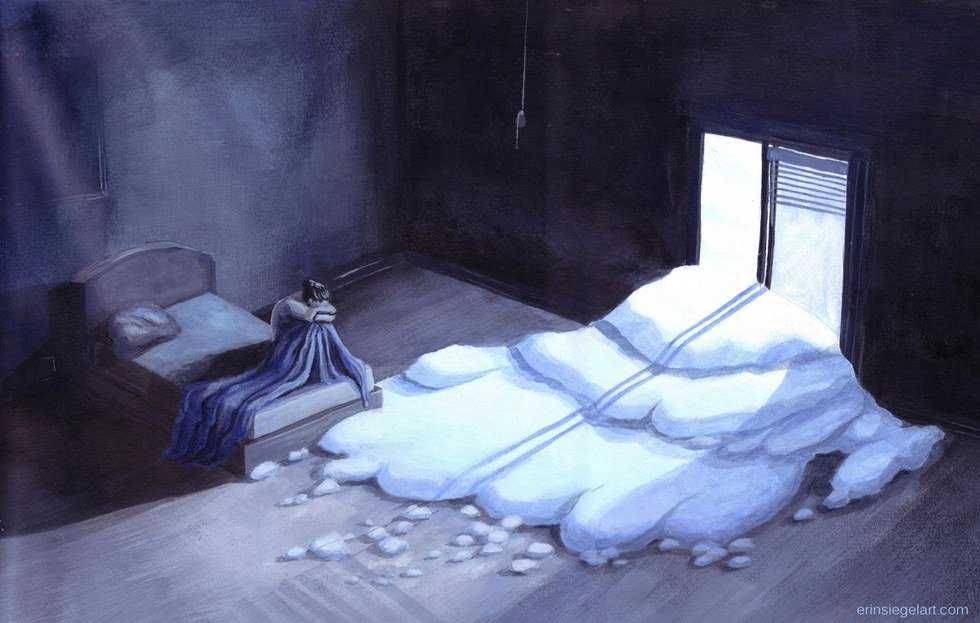
It was late in October 2014 when I got the news. No one had accompanied me to the office. I was alone, cold, tired and had been feeling this way for the past six weeks. I was done with thinking everything was normal. I was right to do so.
“You have Seasonal Affective Depressive Disorder, commonly known as SAD.” The doctor was so nonchalant in his tone, not even looking me in the face as he perused my file, scribbling nonsense here and there. I had undergone a series of physical tests, lab tests, and blood tests, but this was all it came down to? I had no clue as to what he was talking about but I couldn’t bring myself to ask him any questions about my new affliction. The silence on my end caught his attention.
“Is there a history of depression in your family?”
“I don’t know.” Liar, yes you do.
I knew there was. This wasn’t the first time I was being told that I was depressed, and I knew it was a family trait that I couldn’t escape. There was no compassion in my doctor’s eyes as I watched his face. His mouth was moving and his hands were gesticulating calmly, but I couldn’t hear anything. I just wanted to leave.
“Thank you, Doctor. I’ll call to make a follow-up appointment to discuss treatment options.”
My voice came out more reserved than I felt. Even I was surprised at how calmly I put on my coat and gathered my belongings. The only things amiss – that would shine a light on how not okay I was – were my trembling hands.
What in the blazes is SAD?
According to MayoClinic.org, Seasonal Affective Depressive Disorder, also known as seasonal depression, is a type of depression that's related to changes in seasons. It starts and ends around the same time every year and affects most of its victims during the fall and winter. It is rare to experience SAD during the spring and summer months, but not impossible. In either case, the symptoms start out mild and gradually increase in severity as the season progresses.
I couldn’t fathom the outpour of information I found on the web. The facts jumped out at me and made me dizzy. SAD is most commonly diagnosed in young females with a history of depression or bipolar disorder in their family. I hated being part of this statistic. I loved the fall season. I loved watching the leaves change colors. I loved sweater weather! How could my favorite season cause my depression? Even though I didn’t understand what was happening to me, the symptoms sounded an alarm in my frantic head.
Irritability? Check.
Feeling hopeless/worthless? Check.
Having low energy? Check.
Losing interests in hobbies/activities? Check.
Hypersensitivity to rejection? Check.
Oversleeping? Check.
Heavy limbs? Check.
Changes in appetite and weight? Check.
Sluggish or agitated? Check.
Difficulty concentrating? Check.
Frequent thoughts of death or suicide? Check.
My next step was to identify why this was happening to me – it was seemingly out of the blue. As it turns out, the actual cause of SAD is still unknown to doctors and researchers today. However, some of the causes can be linked to reduced sunlight exposure, which results in drops in serotonin levels in the body which affect mood, as well as drops in melatonin levels which also affect mood and sleep patterns. It was all laid out in front of me; everything that I had been suffering through for the past couple of weeks finally had a name. However, this fact didn’t make it go away.
I never called the clinic doctor back for a follow-up like I had promised. Treatments ranged from phototherapy (light therapy) to medications and psychotherapy, all of which would probably cost me a fortune since my medical insurance didn’t provide the best support. Instead, I opted to fight it on my own. Now, I’m not tooting my own horn. This isn’t some happily ever after tale where I tell you I beat my affliction from sheer willpower and dedication. Nope. I wish I could tell you that I put on a cape and sucker punched my depression in the face, but I didn’t. I’m human. I wallowed.
There were happy days when I didn’t feel as hopeless or tired or sad as I usually would. I didn’t overindulge on these days. I’d run errands with my mother, play with my dog for an hour or so, catch up on episodes of "The Walking Dead," actually do my homework – simple, mundane things. I also made a point to write down how I was feeling in the moment so I could look back on the entry during my low days, to remember how it felt to be ‘okay’. Unfortunately, my happy days were few and far between. The winter’s cold was very adept at seeping into my mind and chilling me from the inside out. On the low days, nothing could get me out of bed, let alone wake me up. I would sleep 12 hours straight and still be able to take naps throughout the day. When I was awake, my days would consist of wrapping myself in a blanket burrito while staring off into space, mentally cursing myself over not doing the school work that had to be done or even trying to act human. It had gotten to a point where I started calling out of work because I couldn't bear the thought of leaving my room. Television would only serve as background noise and any music I played matched my mood too well, taunting me. My appetite was nonexistent. A handful of cashews or a pop tart was sufficient enough for a day, as I couldn’t bring myself to stomach anything larger than that. All I could do was sleep and think, think and sleep. Everything was always so dark and gloomy, but in my dreamless slumber, I had no awareness of anything.
The ending of 2014 followed this pattern until prospects of spring began to appear. It wasn’t an immediate remedy, but a gradual one. I found myself having more energy and smiling again. My hair wasn’t dull and my eyes seemed brighter, or so my mother would say. The outside was defrosting and so was I. My thoughts turned toward looking forward to long days spent with my sister and warm drives around town in the sunshine. Because of my spring hopefulness, I didn’t even mind that my allergies were appearing as well. I was desperate to chase away bad winter memories and embrace new warm ones.
Ignorance is bliss, of course, but the warm season did not magically make me forget about my affliction. There were days where it would hit me that I was now in a never-ending routine with SAD. I often thought, 'Is it worth being happy now, just to be sad again later?’ Thoughts similar to these would render me in a summertime sadness, not to quote Lana Del Rey, but I couldn’t let this disorder control me and my life. I had to cope, and thankfully I knew I had people who cared and would support me 100 percent. This past winter proved to be a lot less severe than 2014. My SAD was still present but not as much so (possibly because it was almost 80 degrees on Christmas). Even so, every day is a battle, but I am looking forward to the warm weather and the many adventures I have planned with friends and family (even though the weather is messing with me since it’s hailing as I write this).
Life is hard. There are so many responsibilities people prioritize over their health, especially mental health. This needs to stop. Mental health is as important as any other aspect of life, if not more so. If you’re feeling anything besides 100 percent, get help. Talk to someone. If someone you know is feeling down, talk to them (don’t tell them to “just get over it”; they can’t and it’s not their fault). Don’t stand idle. Symptoms of mental illness don’t just disappear, they progress until they are unbearable. Mental health needs a great deal of attention, even though it is often pushed aside in our society. It takes a healthy body and mind to make a healthy person. Don’t fight your battles alone. Reach out, we’ll catch you.