

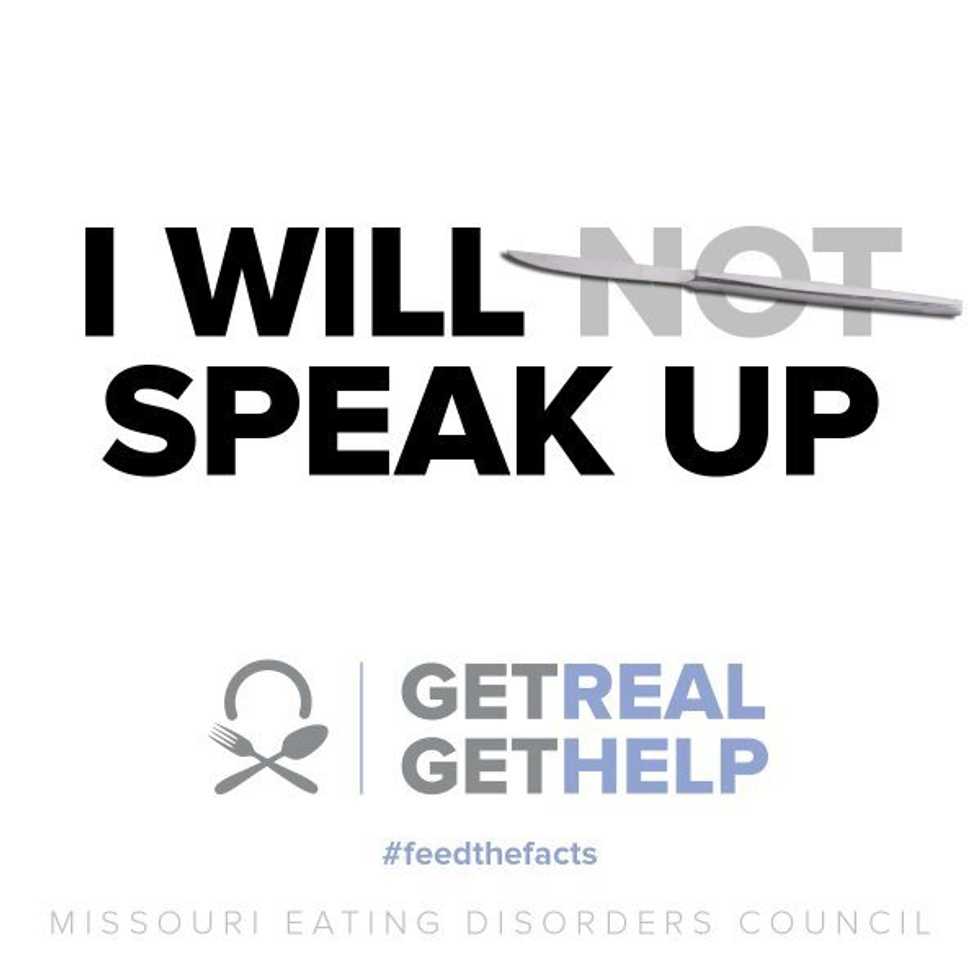
We’ve all heard it or said it before; “I shouldn’t eat that” or “This is so fattening.” To most people, this is just normal garble and joking humor. But for those with eating disorders or body image issues, it’s a knife piercing the skin. The comment is automatically internalized and applied to the individual who heard it. The cookie or piece of cake is transformed into an evil concoction designed to make one fat and unfit, but the cookie will not, in fact, make one fat or less fit. It will not go straight to one's hips or cause one to run slower tomorrow. Instead, the cookie will dance on your taste buds, slide down your throat, and crumble in your stomach. It will taste even better paired with a glass of milk or a warm cup of tea.
The drive to be thin is reaching children of younger ages as, “81 percent of 10-year-olds are afraid of being fat.” In addition, a study published by the National Association of Anorexia Nervosa and Associated Disorders stated, “5 – 10 percent of anorexics die within 10 years after contracting the disease; 18-20 percent of anorexics will be dead after 20 years and only 30 – 40 percent ever fully recover.” With such startling statistics, each person needs to be more aware of the words and feelings they associate with food. Food is food and it’s that simple. Each person needs to eat to live. There are no “good” or “bad” foods. Having an eating disorder myself, my dietitian once told me that an individual can eat three Oreo's or a handful of pretzels and their body will not know the difference. Every food in moderation is healthy. Decisions about food should not be made with the fear of becoming fat or gaining weight, but rather with thoughts of what tastes good and makes one feel good.
Ten-year-old girls and boys should not be concerned with the caloric content, macros, or nutrition of most foods. They should not be adding up numbers and checking exchanges before they dig into their lunchboxes in the school cafeteria. Eating disorders have various causes including genetic, environmental, psychological, and social causes. Environmental risk factors can be reduced and managed if the negative food and body talk is brought to a grinding halt. Food is not the enemy so let’s stop talking about it like it is. Ten-year-old kids have bigger things to worry about, like who they are going to sit next to on the bus and what game they are going to play at recess.
Anorexia has the highest mortality rate of all mental health disorders. Part of taking steps to reduce the number of individuals afflicted with eating disorders is changing the way society thinks and talks about food. Therefore, next time an individual makes a comment like the one previously mentioned, speak up. Be a voice for those that have lost their lives because comments like this one stayed with them for life. My mother once told me, “If you don’t have anything nice to say, don’t say anything at all.”