
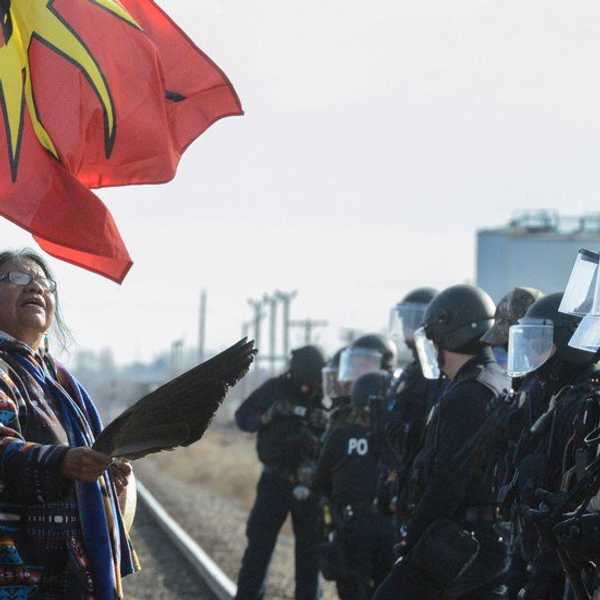

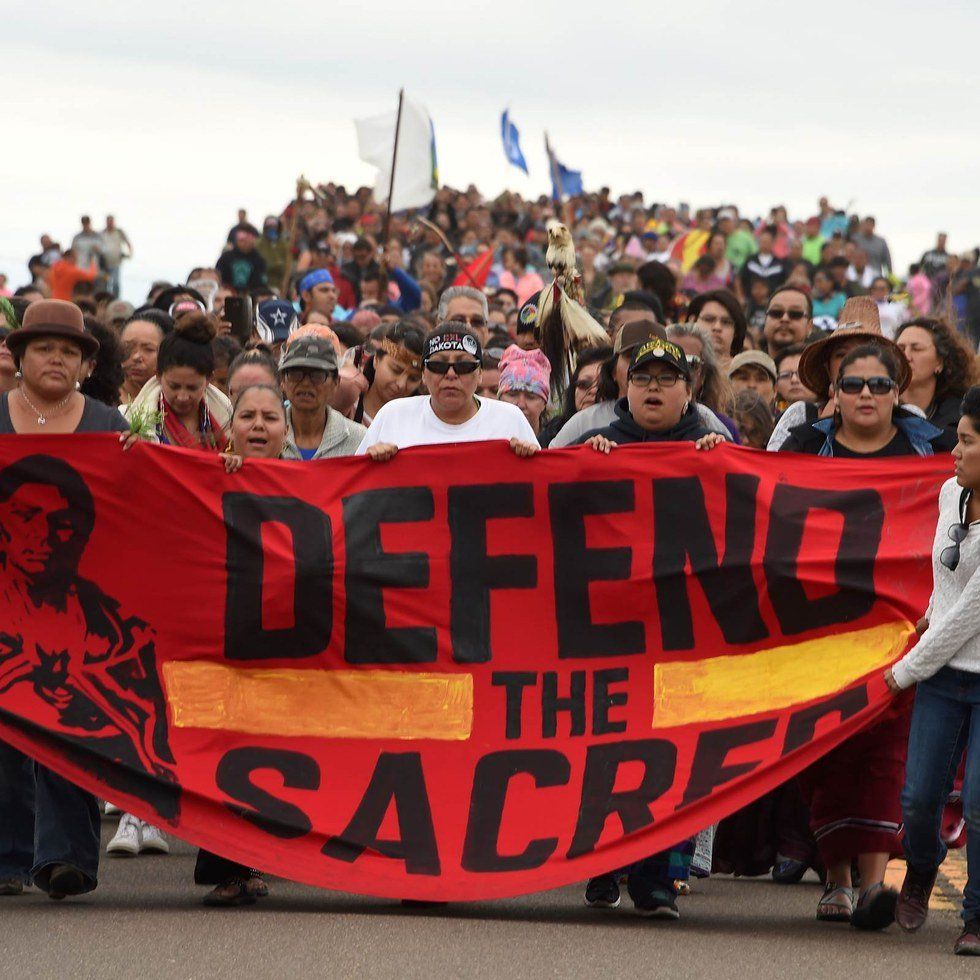
You may have seen some of your friends post on Facebook recently about the Dakota Access Pipeline. When completed, it will stretch 1,172 miles across four Midwest states and will come into intimate contact with the Standing Rock and Fort Berthold Indian Reservations. The pipeline will deliver oil from the oil-rich underground oil deposits found in the Bakken Formation in North Dakota to South Dakota, Iowa, and Illinois. It is believed that within these deposits lie an estimated 7.4 billion barrels of oil.
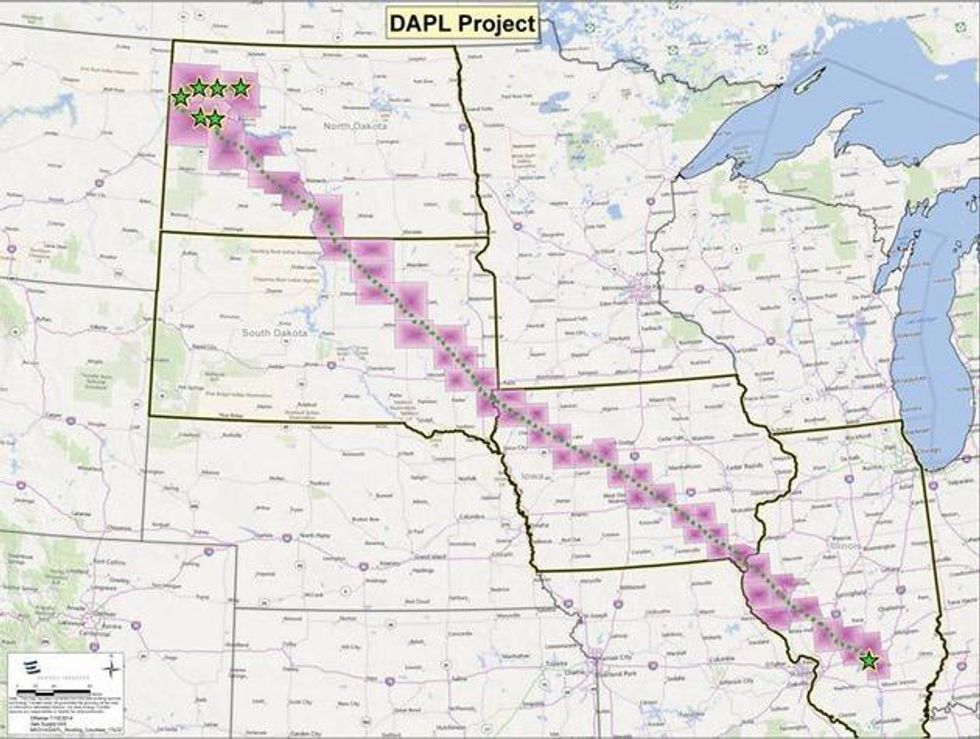
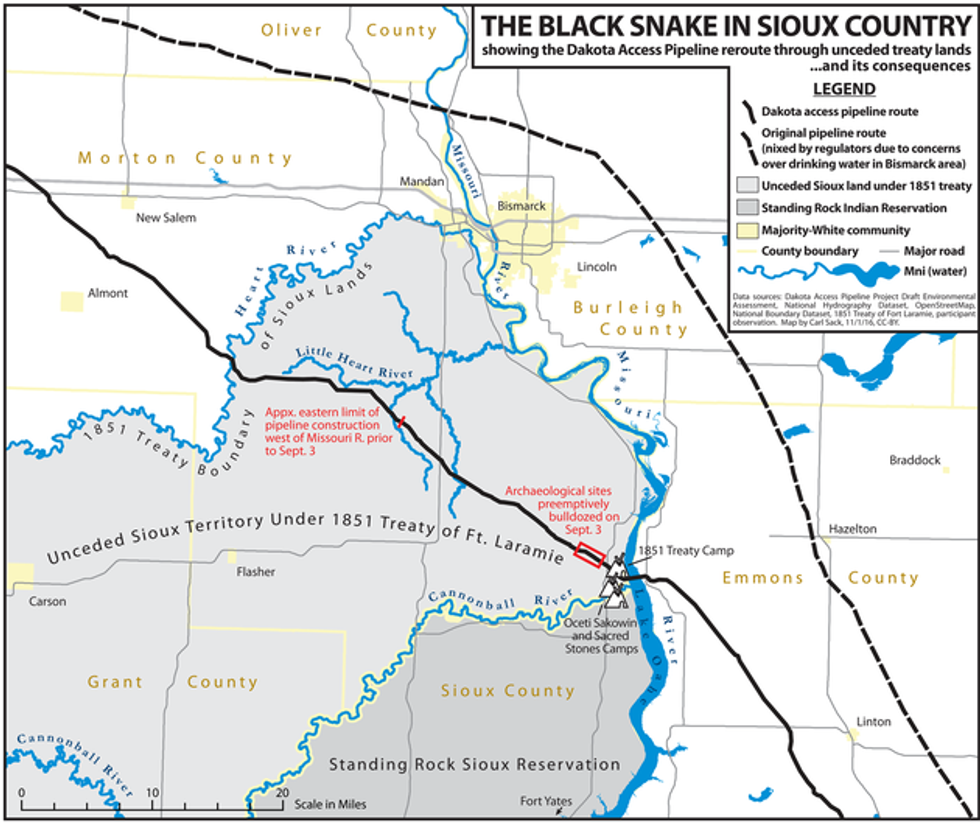
The project was originally commissioned by Energy Transfer Partners, who are currently seeking regulatory permits and approval from federal judges to continue construction. The US Army Corps of Engineers originally approved the project and granted permits back in July. To date, the project is largely completed with the exception of a stretch of pipeline beneath a Missouri River reservoir known as Lake Oahe in North Dakota. The local Standing Rock Sioux Tribe filed a lawsuit to block construction in this area which was denied in September.
Since then, its construction has generated large amounts of controversy and sparked social justice movements across the country. College students are encouraging one another on social media to “Stand with Standing Rock” and stand up to Energy Transfer.
I recently spoke with a student who has plans to go protest at Standing Rock during Thanksgiving break. She had earlier that day posted on Facebook about how she felt the pipeline violated Title VI of the Civil Rights Act. This act is meant to prevent special interest groups that receive money from the Federal government from discriminating on the basis of race, color, or national origin. In August 2011, the act was expanded to include environmental justice in minority and low-income populations. Using these guidelines, she argued, one could make the case that the pipeline was a fundamental violation of the rights that the Standing Rock Sioux have to their ancestral home and burial sites. She also noted that the pipeline would affect white communities to a much lesser degree than it would the Sioux.
Those for building the pipeline argue that it could help move the United States towards energy independence, cut down on transportation costs for fuels, and free up national railways for the transfer of crops. The CEO of Energy Transfer Partners insists that this pipeline will be equipped with the latest technology—“thick wall pipe” and “automated valves”—to prevent leaks. He noted in an interview with William Brangham that no pipeline project is free from risk. He also remarked that there would be no way for crude oil to contaminate Lake Oahe since it is 70 miles downstream.
Opponents, however, note that there is still the risk of breaches in the pipeline and the inevitable greenhouse gas emissions to consider. It has been pointed out that alternative means of transport, such as trucks, also have their risks, having caused disasters in the past such as explosions and fires. Yet pipelines, particularly those built by Energy Transfer’s subsidiary Sunoco, have a disturbingly high rate of failure. Their Keystone One pipeline, for example, leaked 14 times during the year after it was built. One alternative suggestion has been to focus on expanding alternative energy solutions.
Among those protesting the pipeline, the voices of the Sioux tribe are especially prominent and have been making the round on social media. They adamantly refuse to have the pipeline built underneath Lake Oahe and will tolerate nothing else. The Standing Rock Sioux Chairman, David Archambault II, reminded those watching from afar of the true cost to the Sioux. “We’re not opposed to energy independence. We’re not opposed to economic development,” he told CNN reporters. “What we’re opposed to is paying for all the benefits that this country receives.” Now more than ever, other tribes are voicing similar concerns. They are gathering now at a camp close to the Standing Rock reservation to have their voices heard.
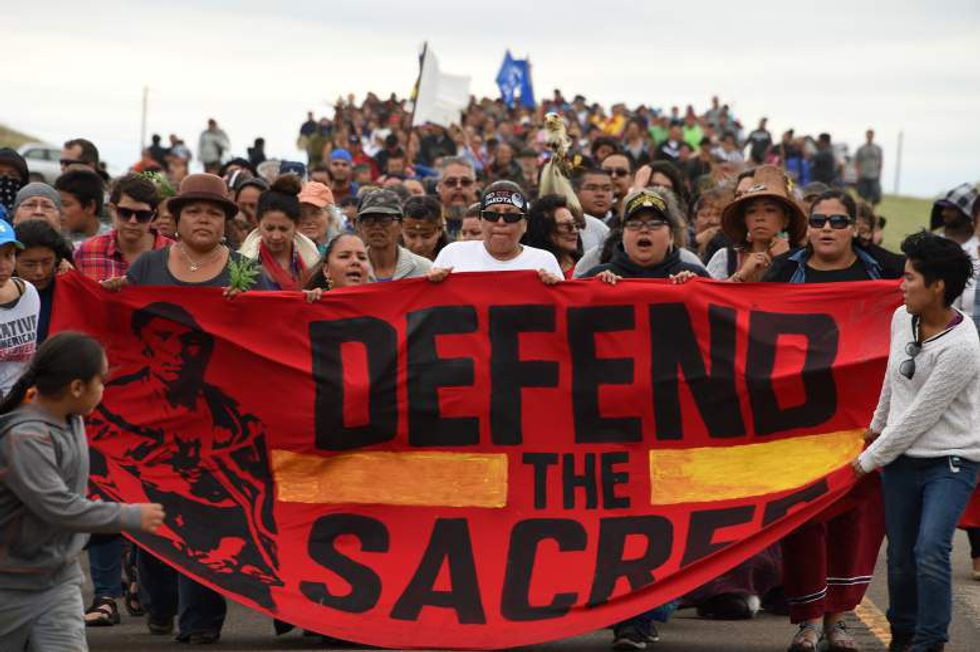
The tension appears to be escalating daily. During the month of August, the local sheriff’s office said the protesters injured 3 officers. Tribal officials said 30 protesters were hit with pepper spray and 12 were bitten by dogs. Protesters have created a roadblock that shut down a highway. Over 141 arrests had taken place by October and there were reports that police used pepper spray, tear gas, and a sound cannon on the protesters.
The United States Departments of Justice, the Army, and the Interior have shown their support for the protestors, calling for an appeal. President Obama urged both sides to work towards a compromise. The end, however, is nowhere near. Earlier in October, the tribe’s request for an appeal was denied. Still, hundreds keep going to Standing Rock to show solidarity with the tribe. Pending approval, Energy Transfer Partners plans to finish building the pipeline with no further plans to reroute it.
Now that you that you know the facts, I encourage you to look further into this issue and decide whether or not the benefits of the pipeline are outweighed by its risks. I’ll include the sites I used to do research below if you want to continue reading. If you want to show your solidarity with the Sioux tribe but are unsure how you can look for and start using the hashtag #noDAPL. Start following the online social justice community and stay up-to-date on facts. Have a conversation with your friends and spread awareness. Share information. Create the change that you want to see happen.
Energy Transfer’s Website: http://www.daplpipelinefacts.com/
ABC News: http://abcnews.go.com/US/wireStory/dakota-access-oil-pipeline-developer-reroute-43638824
PBS News: http://www.pbs.org/newshour/bb/ceo-behind-dakota-access-protesters-building-pipeline/
CNN News: http://www.cnn.com/2016/09/07/us/dakota-access-pipeline-visual-guide/

















