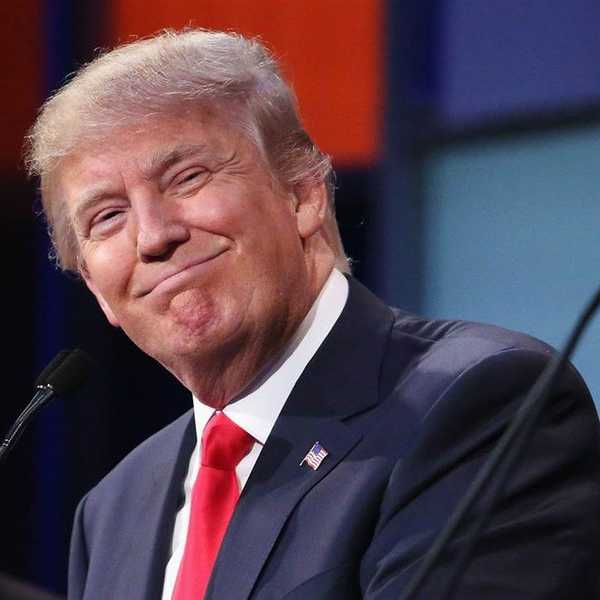
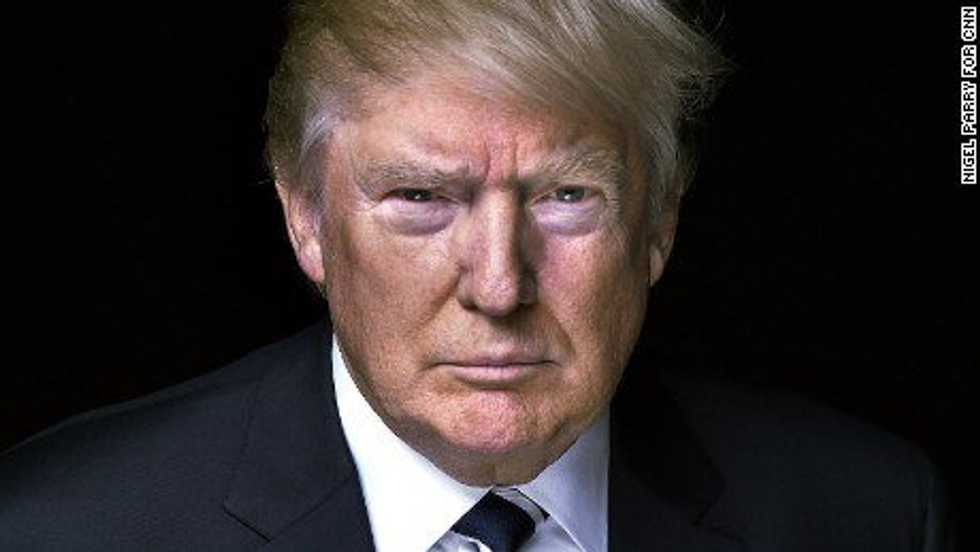
I cannot remember the last time a day passed without absorbing angry commentary on Donald Trump’s rise to power. Given the loud and offensive nature of his social media plays, it's difficult to not be surrounded by reactions to his audacity. Lunch conversations usually eventually gravitate towards his latest Facebook blunder, his name is plastered on every form of entertainment and even professors have expressed their appalled disbelief at his evident prosperity in the political arena. How can a man like Trump, with no political experience, several failures on behalf of his businesses and insulting blips, be the next face of our Republican Party?
Well, the good news is, he isn't. The bad news? He is on paper.
There are only two good things that come from a man like Trump running for president. First, people are talking about the election, which is a hugely important factor in maintaining a representative democracy. (Even basic commentary on his most recent Tweets is an impressive feat for a country with a voting percentage of 57.5 percent.)
But secondly, Trump’s rise to power may implicate interesting ramifications for the Republican Party.
"Why Trump? Why Now?"
Upon attending Real Clear Politics reporter Sean Trende’s lecture, “Why Trump? Why Now?” I developed a greater understanding for the reasons behind Trump’s political affluence. His successful manipulation of the media combined with the population’s frustration about government and politics (and a number of other factors) has fostered a populist movement supporting marginalization and an exclusion of minorities.
Now, there is obviously a difference between populism and conservatism. While conservatives support traditional notions of American liberty and capitalist ideologies, populists are opposed to bureaucratic, political and wealthy elites. Which, given Trump’s elite persona and populist supporters, is a contradiction. Shouldn't frustrated middle class workers dislike the very politician who dug himself a golden grave adorned with failed entrepreneurship and inherited fortune?
Apparently not. But establishment Republicans do.
A brief history of the Republican Party.
The GOP's recent history has revealed brokenness and disunity among Republicans. After the party lost the presidency and Congress to Democrats in 2008, Republicans lacked effective leadership, which, combined with staunch opposition to President Obama's healthcare reform and stimulus package, led to the rise of conservative grassroots activists, or as they are more commonly known, Tea Party Republicans.
Establishment Republicans and Tea Party Republicans began to butt heads in the 2010 midterm elections, when Tea Party politicians strategized to replace moderate Republicans. The once-evident cohesiveness of the Republican party was compromised for the rise of more radical and frustrated politicians. And since 2010, the Republican Party has remained fractured.
But now, a misogynistic, disrespectful and cantankerous bigot represents both establishment and Tea Party Republicans. What a time to be alive.
What Trump means for the Republican Party.
OK, so Trump's rise to power will probably cost Republicans the nomination. And the chances of retaining the House of Representatives. And probably the Senate, too.
But resistance to Trump is strong among establishment Republicans. According to Tessa Berenson, writer for TIME, there are a number of Republicans who will cast votes for Clinton because she is "the lesser of two evils." As former senior official for the Bush Administration, for example, explains, "At least [voting for Clinton is] not going to disgrace the nation on the first day ... I don't support her at all, but Trump is beyond the pale." Red State editor Ben Howe additionally tweeted after Cruz's drop, "I am a fiscal conservative and I am a social conservative. That will not change. But I will not vote for an egomaniacal authoritarian. Nope.” Mike Treiser, a former staffer for Mitt Romney, also adds to the conversation with, "In the face of bigotry, hatred, violence and small-mindedness, this time, I’m with her.”
Given the state of modern political polarization, conservatives' willingness to vote for a Democratic candidate to avoid the wrath of Trump speaks greatly about their frustration with his unwarranted leadership of the Republican Party. Compromise, the foundation of our political structure, is finally materializing again.
And even though Republicans are gearing their vote to counterattack Donald Trump, true conservatism, what has been lacking in spotlight politics since Obama's election, is once more awakening within the party. Desperate exasperation about Trump's face representing Republican values has inspired a conservative backlash fueled by perspectives that reflect genuine traditionalism.
The Republican Party currently consists of two factions: Trump supporters and establishment Republicans (given the decline of Tea Party supporters in the past three years). After Trump loses his place at the head of American politics, his support will dissipate, meaning true Republicans will have a chance to seize the reins and foster traditional conservatism in current politics. Who knew that a racist and pompous showman could lead to the eventual rejuvenation of Republicanism?