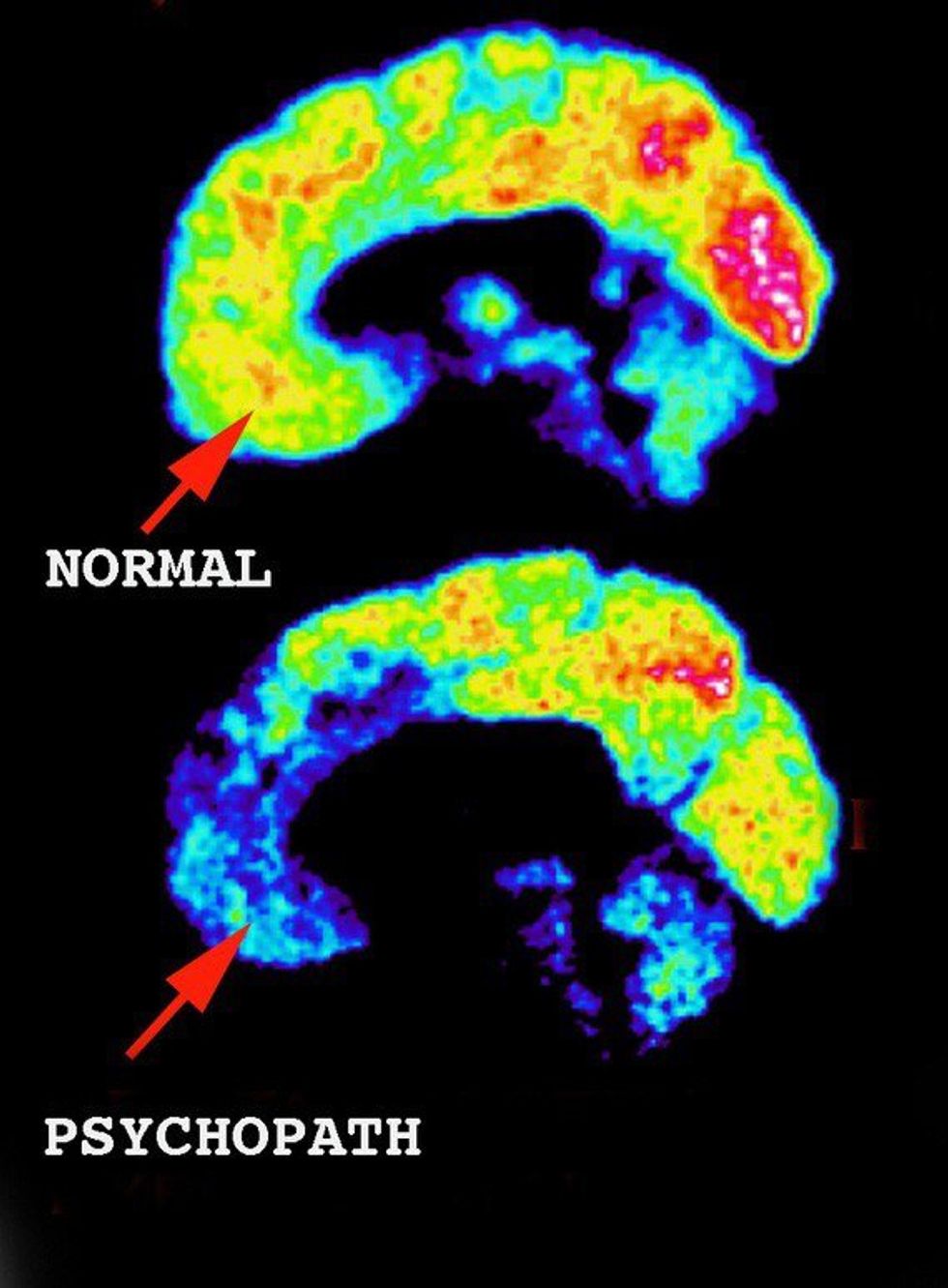
This past weekend, I plopped down on the couch with a friend for a few hours to watch a movie called "Silence of the Lambs," a classic in American cinema today. Personally, I think the movie is pretty good and portrays a new variety of horror by calmly creeping into our inner thoughts and playing with our emotions. By the end of the movie, I almost liked the villain, Hannibal, and was sort of relieved he had escaped. Sick, right? Those are just my feelings towards the movie, but this is not a movie review or spoiler piece. This is about the fascinating question running through my head the last few days: what makes people psychopaths?
About a quarter way into the movie, we paused it to share our attraction to the human brain. What makes me normal? What makes another person disturbed enough to murder people? Does it have to do with their genetics? Childhood? Is it a case of nature verses nurture? What makes people do the things they do? I am not a psychiatrist or any kind of doctor, but I have done a good bit of research and what I have found is amazing and terrifying all at the same time.
There are a multitude of studies I could list for you to explain the reasoning of a psychopath, but the truth is there are way too many to consider when forming an opinion. A study conducted at Vanderbilt University conflicts with the most widely accepted belief about psychopaths. It explains how maybe it's not that individuals are insensitive and lack a conscience, but maybe it is the severe need for it. Joshua Buckholtz, lead author of this study, believes that it is the need for a reward, causing a rise in dopamine in one's brain that makes someone go above and beyond and do just about anything to receive that dopamine high. Ultimately, Buckholtz believes much like substance abuse, a psychopath will do anything and everything to get his/her dopamine fill. For more information, check out the journal Nature Neuroscience, where this study was published.
The more common diagnosis of psychopaths comes from the Diagnostic and Statistical Manual of Mental Disorders (DSM). This manual describes psychopathy as an "Antisocial Personality Disorder." Psychopaths are often regarded as those who are morally depraved, where tendencies are linked to genetic traits. The term sociopaths, frequently misused, refers to those who are less dangerous and become sociopaths due to their environment.
The most interesting thing I've learned from all of this is that more people than we expect have psychotic tendencies. Dr. Robert Hare came up with Psychopathy Checklist-Revised (PCL-R) to further diagnose individuals. Essentially, it is a list of 21 traits an individual has, which makes him/her a psychopath. I won't list them all, but some that stood out to me are glib and superficial charm, criminal versatility, and superfluous sense of self worth. A psychopath would score a perfect 40 on this test, a normal person would score a zero, and a person who scores 30 or above would qualify as a psychopath. Of course, a test like this can easily be harmful if not conducted correctly, which is why it must be led by a doctor. Using this test to diagnose yourself or your friends and family as psychos is probably a bad idea, due to the fact that most psychopaths are good at hiding it. They may be antisocial, however - their cunning instincts can allow them to deceive people by giving off a ‘people person’ vibe. For example, Ted Bundy, one of the most notorious serial murderers in history, though severely antisocial, never disclosed his psychotic tendencies to those around him. He was able to charm and manipulate people into thinking he was an enigmatic guy in order to get his victims to trust him, only to impetuously murder them.
What we need to understand is that not all criminals are psychopaths; many people who commit criminal offenses score below 30, while people who have never committed a crime in their life may have their fair share of psychopathic tendencies. They aren’t easy to spot and may very well never act on their tendencies enough to be acknowledged, but they are all around us. I still don’t know exactly why people may have all the tendencies of a psycho according to the PCL-R, whether it is a switch that is turned off in their brain or whether they chose to be the way they are. What I do know is that there are multiple factors to a psychopath's brain, which I have a much better understanding of now.