
Having anxiety is stressful enough itself, not to mention everything that triggers a person’s anxiety and being worried about what other's think about your anxiety. Some triggers and reasons are easier to pinpoint than others. Sometimes it’s clearly that big chemistry test that’s giving you anxiety but sometimes you wake up in the morning and feel that tightness in your chest for no apparent reason. Regardless of the severity or reasoning behind your anxiety, there are some things that are completely unhelpful for anxious people to hear. Learn what isn’t helpful for an anxious person to hear and what can help.
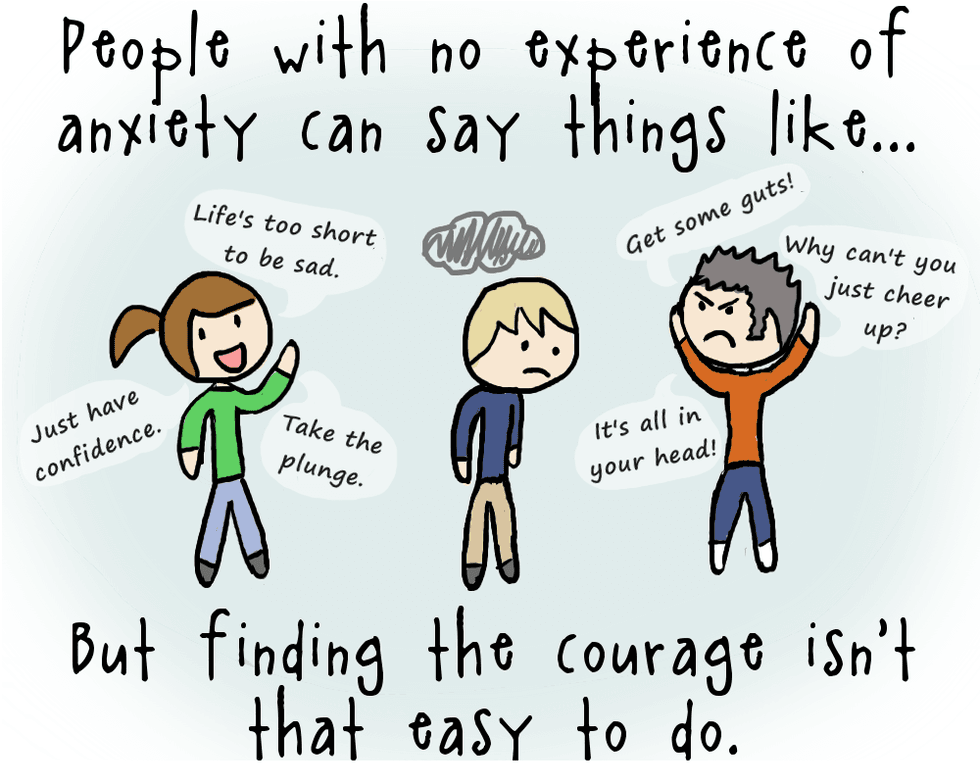
“You’re fine.” – Clearly we don’t feel like we’re fine. Especially when we feel that tightness in our chest or feel like we can’t breathe, being told we’re “fine” feels quite far from the truth. Saying “you’ll make it through this” or a similar reassurance is better than being told “you’re fine.”
“You’re overreacting.” – While we may be aware that we are likely overreacting to whatever is giving us anxiety, it doesn’t help to be told that. We don’t want to feel this way; don’t make us feel guilty about being anxious.
“Just stop thinking about it.” – It’s really hard to stop thinking about something when 50,000 thoughts related to it are flying around our head. That’s kind of the thing with anxiety – it’s really hard to stop thinking about it, hence anxiety attacks.
“It’s really not that big of a deal.” – It may not be to you, but it is to us. Maybe to you that thunderstorm isn’t that big of a deal, but to an anxious person it may be fuel for worries about flooding, loss of power, downed power lines or being struck by lightning. Whether or not something is a concern to you is irrelevant to some who is anxious about that thing; their brain is having a completely different strain of thoughts.
“You’re going to hurt yourself stressing this much.” – If I had a dollar for every time someone told me I was clearly losing weight or having my hair fall out due to my level of stress, I’d be set for life. Yes, some people’s anxiety can take a physical toll on them, such as the aforementioned hair and weight loss as well as things like stomachaches, headaches, chest pains, exhaustion, etc. Anxiety can do a lot of physical damage as well as the mental strain. Telling us it’s physically impacting us isn’t actually going to solve anything and may just lead to more anxiety about having anxiety.
“You’re annoying.” – We realize that it may sound annoying to you but something is clearly bothering us and being told we’re annoying doesn’t help at all. At least you can walk away from it. We don’t want to be annoying but it can be really hard to push out our anxious thoughts. You don’t have to like hearing about our anxieties, but you also don’t have to be rude about it.

Being positive when someone is suffering can be really helpful. Listen to them, hear them out on what they’re anxious about. Don’t put them down. If someone is sharing their anxieties with you, they likely really trust you (because they probably have anxiety about being annoying or bothering people with trivial things). Even better, try to find the root of the anxiety, if you can. If they say that school is making them anxious, ask them what specifically is bothering them. If they can realize that it’s that big project and test being in the same week, offer to help them study or come up an attainable idea for their project. You don’t have to do everything for an anxious person but helping them to focus on progressing can be really helpful.
Another way to be help is to learn their triggers. This can be especially helpful if you live or work closely with the anxious person. For example, if the anxious person has severe public speaking anxiety, it can be very helpful to warn them as far in advance as possible so that feel that they have more time to prepare. Offering to help them practice speaking in front of an audience can also be beneficial in calming their anxiety. Knowing a person’s triggers can help prevent or ease anxieties if you know what they are.
Learning what helps a person with anxiety feel better can be immensely helpful to both you and the anxious person. Some people want space to breathe, some want their favorite food, some want to watch their favorite show. Learning what can help them calm down can be beneficial on both ends, making anxious moments last shorter periods of time.
It is important to remember that people are not their diagnosis. People with anxiety can function and prosper as much as a person not diagnosed with anxiety. How you react to them can have an impact, positive or negative; think before you speak or act