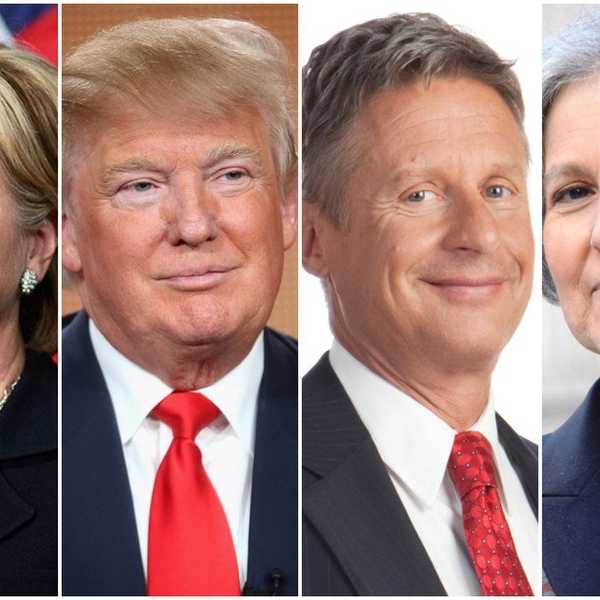
With Donald Trump and Hillary Clinton as the two nominees for the two major parties, some people have considered voting third party instead. Instead of choosing the “lesser of two evils,” they want to vote for someone that they agree with – even if they don’t have any chance of winning. But there’s opposition to third party voters. Opponents proclaim that we are wasting our vote if we don’t vote for a major party. “A vote for not-Trump is a vote for Hillary,” and vice versa, is a common phrase. Third party voters are culprits in this vote shaming, as well, telling Clinton and Trump supporters that they are not respectable individuals because of who they are voting for. As it turns out, everyone is wasting their vote according to someone.
But what is a wasted vote?
To some, voting for Clinton or Trump may be a wasted vote simply due to a dislike of either candidate.
Maybe it is voting for a third party candidate. If they aren’t going to win, why bother, right?
Wrong.
The point of voting should never be about winning; it’s an election, not a bet. Voting is intended to express the public opinion and allows individuals to come together in a collective whole and have their choices represented through that. Voting is about having a say in your government and pushing for change. Women and African Americans did not fight for the right, and in some cases die for it, to be able to choose who they thought would win; they fought to have their voices heard.
Third party voting matches up with the entire idea of voting when one does not agree with the major parties’ candidates. While third parties have never won presidential elections, they do encourage change and have been elected to Congress and other government positions. Historically, by giving people a voice, they have brought about change; the Socialist Party popularized the women’s suffrage movement, the Populist Party paved the way for the Fair Labor Standards Act of 1938, President Abraham Lincoln was a catalyst in changing the major Whig party into the Republican party which can almost be seen as a third party victory.
Another benefit to voting third party is it’s one step closer to having that party represented in the next election cycle. If a minor party candidate receives five percent of the popular vote in the general election, they are eligible for federal funding from the FEC, allowing them to be more present in the future.
There is the argument that third party votes lead to a split in the major parties, equating them as wasted votes by taking away from the two main parties. A split, however, is not inherently negative. The nation did not start with Democrats and Republicans, it started with Democratic-Republicans and Federalists and has been shifting ever since. Third parties demonstrate the people’s desire for a change, bringing about it in the long run. Third parties also increase the involvement of the major parties in some major issues. Historian Michael Bescholss, in reference to Ross Perot’s success as a candidate for the Reform Party in 1992 on the platform for reducing the federal budget deficit, stated:
“By the time Bill Clinton was elected that fall, if he had not done something about the deficit he would have been in big trouble and that was largely Ross Perot’s doing.”
When a candidate from a minor party gains traction, they bring to light some issues that other candidates may not have addressed before.
At the end of the day, a vote is only wasted when it is not utilized for its intended purpose. Voting for who you think will win, especially if you don’t agree with at least a majority of what a major party candidate stands for, or not voting at all, are both wasted votes. Voting is a right that people had to literally die for, it is not to be taken lightly. The right to vote is a privilege that many of us are fortunate enough to have at this point in time because people in the past did what we don’t have to now. Not voting for someone you support is a wasted vote. Using your vote to boost your ego when you vote for the winner is a wasted vote. Voting for someone you can, for the most part, morally get behind and support if they were in office is a fully utilized, purposeful vote.
Whether you vote for Clinton, Trump, or someone else, do it because you truly believe in them as a candidate. Don't waste your vote.