

Mark Twain once wrote, “Travel is fatal to prejudice, bigotry, and narrow-mindedness and many of our people need it sorely on these accounts.”
In today’s society, it is especially important to be globally aware and minded. Traveling is the single greatest educational tool for culture and diversity. Travel provides a learning environment that no classroom could possibly create. There are so many reasons to hit the road.
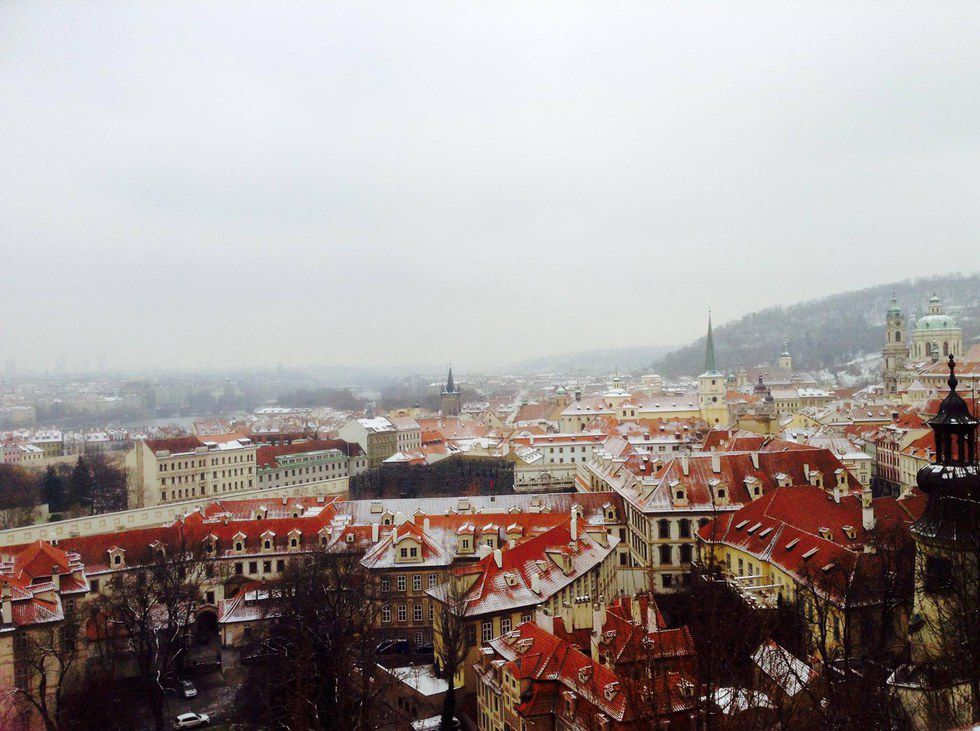
Traveling forces you to become responsible and to make decisions.
I have been fortunate enough to have traveled to countless cities and villages in seven countries and at least 20 different states in my lifetime. Because of these experiences, I have grown substantially as an individual. Traveling forces us to socialize and learn to communicate with people that don’t speak our native languages.
In the Czech Republic and Hungary, it was a great challenge for me to effectively communicate with natives because Hungarian and Czech have zero cognates with English and these languages can not be easily picked up.
Language barriers force us to become smarter in our modes of communications and to be more resourceful.
Because of my experiences in those countries, I learned how to be more confident in nonverbal communication. What I mean is that I learned that even if I only knew a few key phrases, as long as I maintained eye contact, had confidence, and used subtle hand gestures, it could make the difference between getting the Wi-Fi code or ordering a Coke at a cafe.
As far as responsibility goes, when you are traveling in a foreign country, so anywhere in central or Western Europe, you are truly on your own. You have to be responsible for all of your travel documents, shelter, food, and safety.
You become the captain of your own ship, so to speak, which is incredibly scary, but also empowering. The extra alone time when on a plane, in a hostel or on the road also allows for thought and personal evaluation. When you’re disconnected from cell service and Wi-Fi, you are left alone with your thoughts or the words of your travel companions.
Traveling with close friends teaches you more about who they are as people than any coffee break ever could.
Your friendships grow when you travel together because you have to depend on one another to get through physically or emotionally challenging situations. Overcoming these situations while abroad is tremendously rewarding and self-assuring. My self-confidence has grown substantially throughout my travels and has made me both a more competitive young professional and a happier, healthier individual.
According to researchers from the University of Tennessee, life satisfaction improves after traveling and these effects continue after returning home. So, having trouble finding self-fulfillment? Who isn’t, we’re in our twenties. Get on a plane to anywhere but here.
Another important reason to travel now is because it is difficult as young Americans to imagine the socioeconomic situations that a majority of the world lives in.
The culture that our country has developed is seen as the “ideal” or the standard of living that the rest of the world strives for. To me, this is most evident in the show "House Hunters" on HGTV. Bear with me for a minute. If you have ever seen an episode of "House Hunters," you will notice that each couple or individual seeking a home has a “wish list” that needs to be fulfilled before choosing a home.
This wish list normally includes an open floor plan, more than one bathroom, hardwood floors, a gourmet kitchen and if the counter-tops aren’t granite, then it's basically a kitchen out of the Detroit projects. We expect these larger-than-life features in our new homes and we believe that this is the norm for all middle or upper-class citizens of the world.
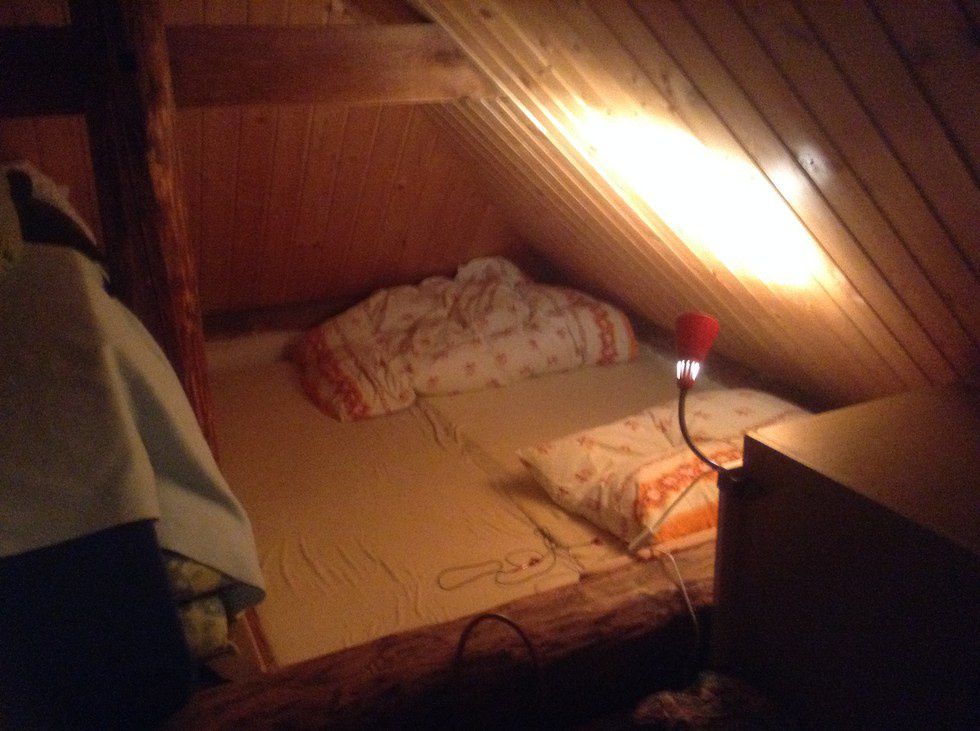
There was a time that I believed this as well, that was until I spent the night in the home of a middle-class family in the Czech Republic. This family of two parents and four kids lived in second floor unit of a duplex. It had one and a half bathrooms, a tiny eat-in kitchen, a living room, one full bedroom, a narrow alcove, and an attic.
The parents occupied the single full bedroom, the three youngest children slept in three varying level bunk beds in the narrow alcove and the oldest daughter lived at the top of a ladder in the attic space. I was shocked that they were so willing and welcoming to host a complete stranger in their home that doesn’t speak their language.
They gave me a soft mattress and bedding in the extra attic space with the eldest daughter, sat down with me to dinner to show me pictures of their family, and the youngest girls showed me their English language homework.
They were so happy, welcoming, and proud to be a family in their tiny second floor flat. No individual bedrooms, one small bath tub, no TV, and no granite counter-tops but they were a happy, middle-class family. Think about that difference. I noticed this difference in class standards as I continued my travels.
I am now so much more appreciative of what I do have and I understand what the word “necessity” really means. After research I now understand that 48 percent of the world’s population lives on less than two U.S. dollars a day, 16 percent don’t have toilets and half of all children in the world live in poverty.
Think about all of that the next time you watch someone complain about the lack of granite kitchen counter-tops on "House Hunters."
Visiting and experiencing foreign cultures teaches us to be culturally sensitive.
Many of us have heard the term “culturally sensitive.” Some of you might have negative connotations associated with that or you may believe that the term means to be politically correct. But being culturally sensitive actually means possessing a set of skills that enable us to learn about and get to know people who are different from us, thereby understanding how to better serve them in their own communities, which is important if you want to be in business within an ever more diverse American culture.
Cultural sensitivity also means being aware that cultural differences and similarities exist without assigning a value, positive or negative, better or worse, right or wrong. This is a skill set that everyone in our world, particularly our leaders, needs in our current cultural crises. There is no doubt that everyone is aware of the terrorist attacks on Paris and Beirut.
It is critical for us to look at these situations with a culturally sensitive approach because the individuals that committed these acts do not represent an entire country or culture of people such as the Islamic population. We cannot assign a good or evil value to this population. This approach is important during every violent situation.
Traveling helps to gain an authentic and personal understanding with how the majorities of each of these cultures behave, most in nonviolent and nondisruptive manners. This authentic understanding makes it easier to find common ground with foreign individuals that work with us here in our own country. Commonality creates unity and with unity comes peace. Traveling helps us become more accepting and productive citizens. Understanding one another aids this road to solidarity.
As the newest generation of leaders, we need to travel the world while we are at the cusp of beginning our professional lives. Getting this experience early on in our careers will help us become more knowledgeable, approachable, and accepting leaders in the communities we choose to serve and represent.
The most obvious reason to travel is because you will have the time of your life.
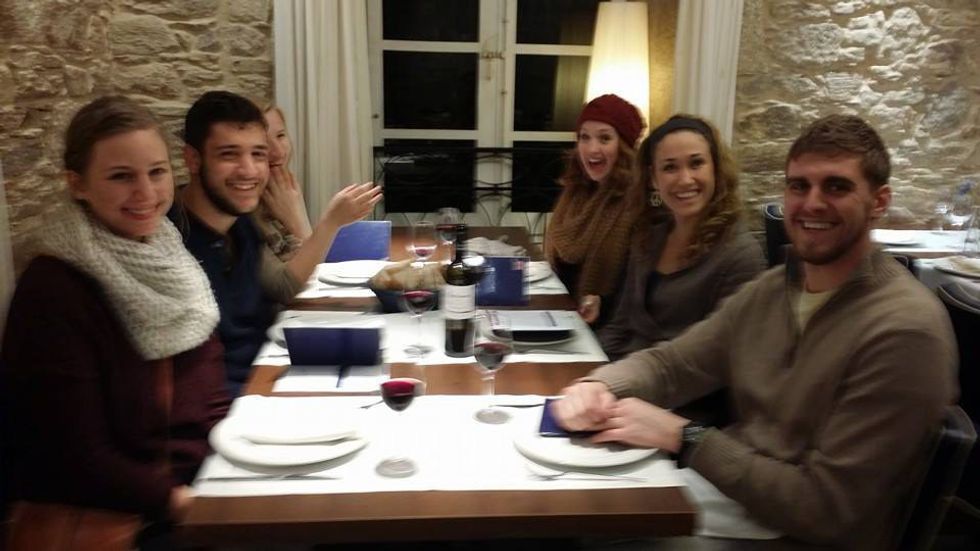
I would consider the happiest times of my life to be during this last year when I went to Spain with my choir in January and then Tennessee with my best friends over spring break. Instead of Netflix and pizza, my girls night in Spain consisted of trying the freshest seafood we have ever had and shooting Spanish cider poured fancily by the waitstaff in Oviedo, Spain.
Nights out consisted of dancing in literal underground dance bars and teaching Europeans how to do the electric slide. Shopping was collecting brightly colored sea glass on the beaches of Barcelona. New heights meant standing at the highest peak in western Europe and wondering where I have been my whole life until that moment.