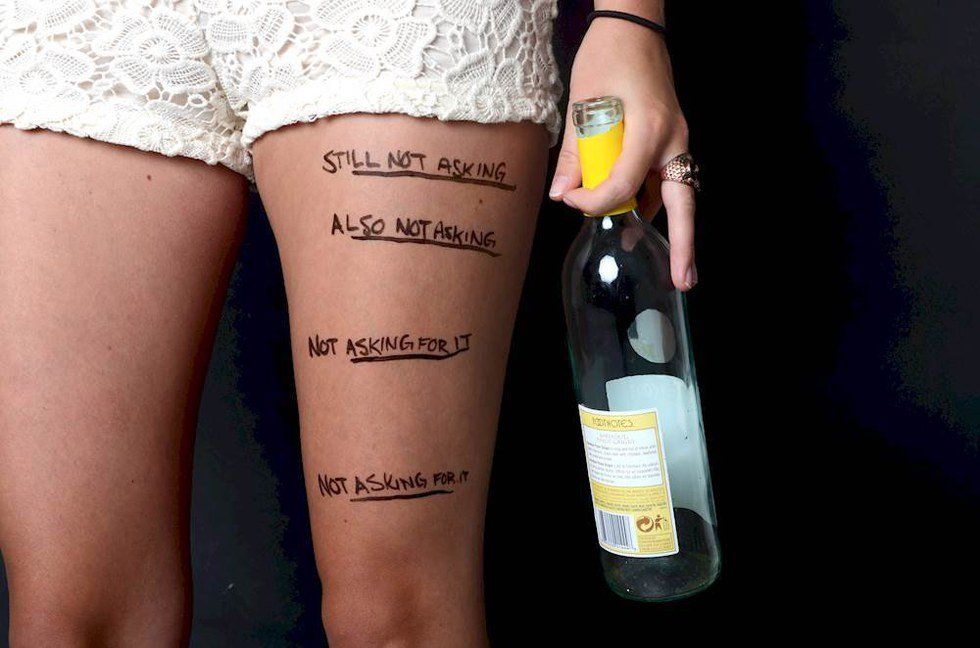
"She was asking for it, did you see how short her dress was?", "I mean, there were drugs and alcohol involved, so what can you do?". These are a couple of statements that we hear too often in media and in our everyday lives. It's all too common for people to shame victims in sexual assault cases. Why? It separates the victim from everyone else. It singles them out so you can point and say, "See? He/she is different; I'm not like that. That would never happen to me."
The Center For Relationship Abuse Awareness explains victim blaming as the following: "Victim-blaming attitudes marginalize the victim/survivor and make it harder to come forward and report the abuse. If the survivor knows that you or society blames the survivor for the abuse, s/he will not feel safe or comfortable coming forward and talking to you."
"Victim-blaming attitudes also reinforce what the abuser has been saying all along; that it is the victim’s fault this is happening. It is NOT the victim’s fault or responsibility to fix the situation; it is the abuser’s choice. By engaging in victim-blaming attitudes, society allows the abuser to perpetrate relationship abuse or sexual assault while avoiding accountability for those actions."
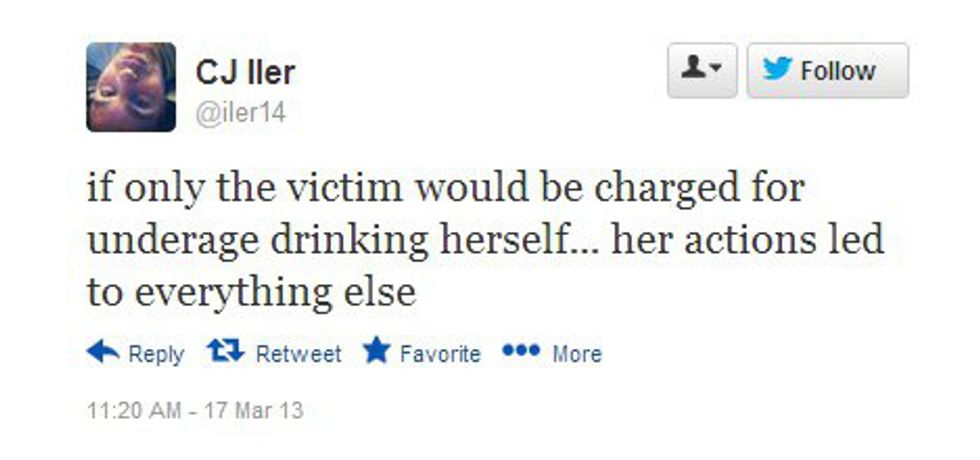
People are frightened and confused by cases of this nature and rightfully so--it's terrifying. But in shaming the victim, the blame is taken off of the assaulter. Meanwhile, sexual assault runs rampant in the US and all over the world, and many attackers never even see jail time.
Statistically, in the US, most rapes go unreported and of the 32% which are reported, only 2% are charged as a felony. Out of 1,000 rapes, 994 rapists will walk free. NINE HUNDRED AND NINETY-FOUR. Get that number through your head.
"How can this be possible?," you're probably thinking. Sadly, there isn't one simple answer. You could wrap the whole ordeal into a neat definition and call it "rape culture," but that seems too easy. Too simplified. It's an ideology built into our society with too many intersecting facets to count. Why can't women walk home alone safely, but men can? Why do women have to dress a certain way to "protect themselves"? Why are men told to be loud and dominant, while women are expected to be quiet and passive? Why are women taught time and time again how to lower their chances of getting raped rather than teaching men not to rape?
I wish I had the answers to these questions, but I don't. What's important is starting a conversation and starting to think about where these ideas come from. Ultimately, the goal is to think about how we can change them. Think things have gotten better recently? Just last week, a federal judge said to a rape victim, ""Why couldn't you just keep your knees together?" and followed that by, "...some sex and pain sometimes go together."
It's a daunting task to try to approach changing something that's already so ingrained into a system. But someone has to say something or nothing is going to change. Be the person who says something.