As a child, I used to never understand why my father couldn’t see food go to waste. Whether it was the remaining slice from a 4-day-old pizza box or the last few sips of milk in the bottom of my glass, my dad would simply sigh and chuck it down his throat, unbothered by taste. There were actually a lot of things about my father that I could never quite piece together, and since he rarely talked, I had to live the first ten years of my life silently questioning why he was the man he is today.
This all changed in the winter of 2010. My paternal grandmother was terminally ill, so my family and I went to visit my father’s hometown to see her one last time as her end was drawing near. Our destination, Xi’an, was the oldest of the Four Great Ancient Capitals of China. The 16-hour flight was strewn with conversation and hour-long breaks of silence in between them when my father didn’t feel like answering or when I attempted to get some sleep. Talking to my father was like trying to squeeze juice out of a dry lemon: very sour and only a few drops would sputter out at a time. Still I managed to wring out a couple anecdotes, and I noted that my father was most passionate when he talked about history and politics.
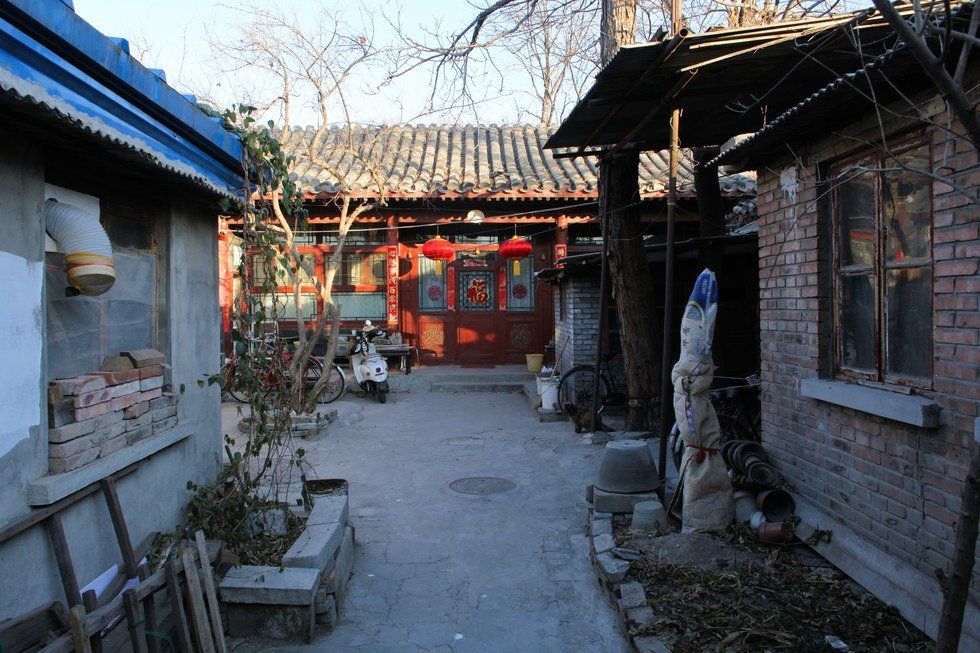
My uncle drove my family and me from the dusty, crowded airport to my father’s hometown in a rickety car with a single lightbulb dangling from the roof of it. The entrance to the village was marked by a bumpy, unpaved road and stacks of dry hay, broken bricks, and ice from the snowstorm the night before. A small pack of stray dogs dashed away as we pulled in. I held in a gasp as I gaped at the view from the car’s grimy window- it looked as if I had stepped into a 16th century rural China. Rows of old, traditional housing called Siheyuan stretched out into the distance for as far as my vision would allow. Beautiful Chinese characters were painted throughout the place: on trees, on the houses, on the sides of the road. And even though the colors of the paint were many shades past faded and almost always cracked and peeling, they remained a distinct reminder of China’s rich history and unique calligraphy rooted deep into its language. In the distance, I could see a couple of men returning from the village well, each with a bamboo stick lined across the back of his neck and rusty buckets of water hanging from each end.
As we pulled into the hutong (a narrow lane/alleyway) to my father’s house, I noticed the flashed bricks and warped eaves of colored metal lining the top of the house. Upon sheepishly walking inside, I heard my aunts before I saw them, as they were prattling indistinguishably fast in Chinese whilst setting up a fragile-looking table for dinner. When they saw my family and me, they immediately brightened up and rushed over. After the tight hugs and exclamations characterized by family reunions, we sat at the table to eat.
Each person was served a bowl of soup for dinner, which was the standard entrée for all the meals here. The “soup” was essentially rice drowned in boiled water. It had no flavor and was not a dish that I could imagine eating every day, for every meal, for the rest of my life. In the center of the small table, there were dishes of carrots and spinach. Meat was only served on special occasions when they could afford it. When my mother noticed my younger sister and me discontentedly picking at our food instead of eating it, she whispered in English that conditions were way worse when she first visited my father’s home just over a decade ago right after she married him. Back then, she recalled, there was no table to eat at, and they only served two meals a day: breakfast and dinner. I looked to the center of the table to load up on vegetables after my mother’s words, but by then the plates were empty. That explained why my dad had the bad habit of eating too fast- the early bird surely got the worm around here.
In listening to the dinner table stories told by my relatives and living alongside them in my father’s village for the next couple of weeks, I grew in many ways. The diva inside of me was silenced as there was no running water which meant the bathroom was a hole in the backyard and showering was near impossible. Wi-Fi was nothing but a mythical concept here, and so my sister and I made it our mission to find stray dogs and feed them. At the dinner table, my father and his siblings took turns telling stories about the “old days” in China around the time of my great-grandparents, when famine was severe among the peasant class. People would starve and die on the streets daily, and no one had the money or time to care. I now understood why my father was so bent on not wasting food, as well as why he cared about academics as much as he did. For him, graduating at the top of his class was his only hope of being able to move out of his hometown to the city, and from there onto the cherished America.
At the time, my grandmother was very sick, so she laid in bed all day. I regret not talking to her much during my time in China, but when I did she would always smile at me with a signature twinkle in her eye. She was bone-thin and frail, mostly because she used to give up almost all her food to her seven kids. But even then, she told me that she was happy, and indeed, very blessed, as there were many other elderly widows in the village at that very moment who were abandoned to slowly die on their own. When I frowned, she told me not to worry because those women were also happy since being alone meant that their sons and daughters were off being successful in the city.
On the plane ride home, I reflected on my experiences in Xi’an and allowed the stories I had been told to wash over me. They say that you can’t judge a man until you've walked a mile in his shoes—in my opinion, you should wait until you’ve lived in his hometown.