

There are a few things in life about which I'm absolutely certain. Tuesday is blue. The number five is red. E is yellow. If this sounds familiar, you might just be a synesthete. If you're starting to think I'm crazy, keep reading to find out what the heck I'm talking about.
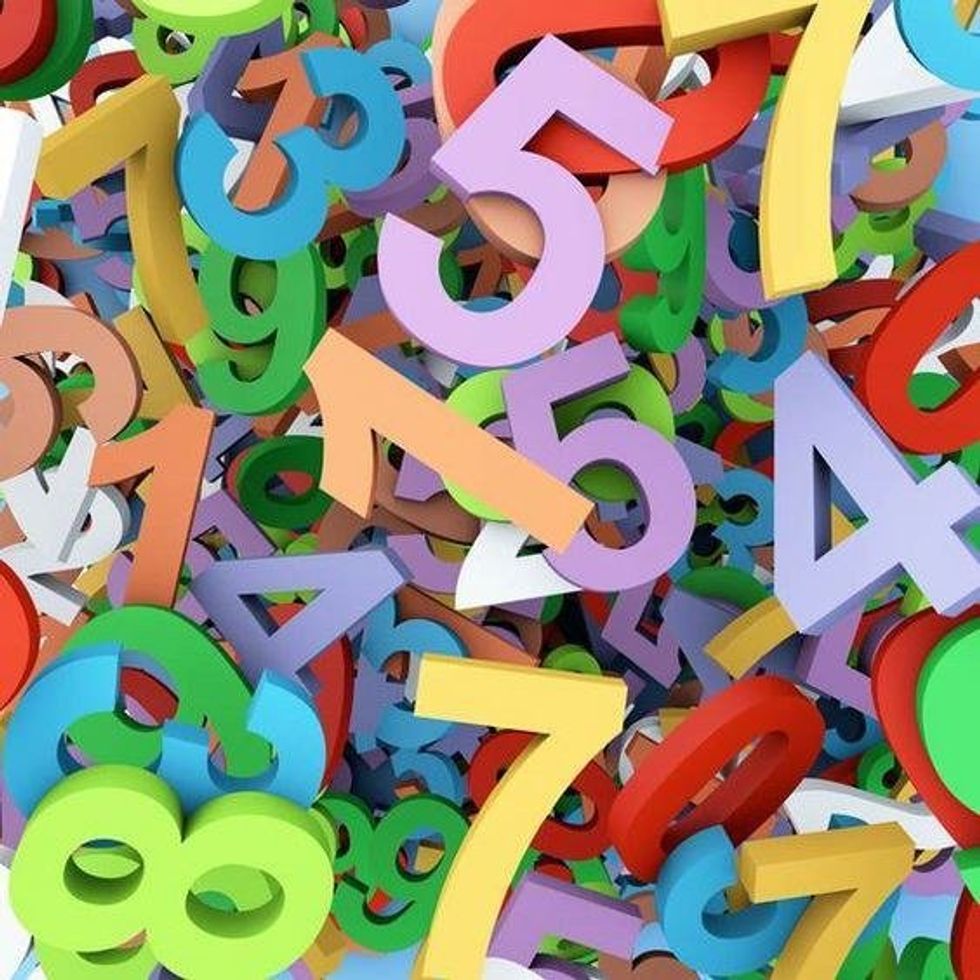
Synesthesia is defined by WebMD as "a blurring of the senses." It involves two unrelated senses being experienced at the same time. Some people can taste colors, see sounds, taste words, etc. I have one of the more boring but still cool types of synesthesia, called grapheme color synesthesia. This means that I associate certain letters, numbers, and words with specific colors. As mentioned above, Tuesday is blue. A dark, bright blue. The number five is firetruck red. E is spaghetti yellow. And the list goes on and on.
Synesthesia is caused by a difference in just one single gene in all of our DNA. Pretty cool, right? It's not a disorder or a disease because it isn't harmful and generally doesn't cause any problems in a synesthete's day-to-day life. In fact, it's a great memory tool. People with synesthesia get the benefit of mixing senses, which means there are more associations for the brain to make. The more associations, the better a person can remember things.
In Kaitlyn Hova's Ted Talk about synesthesia, she describes how she can see colors when she hears certain musical notes. She physically sees the colors moving outside of herself. This is called projecting synesthesia. I fall under the second category of synesthesia, known as associating synesthesia. If I'm looking at the word Tuesday written down on a page in black ink, the ink stays black to my physical eyes, but I know in my mind's eye the word is blue.
While doing research for this article, I discovered that I have another type of synesthesia besides grapheme-color synesthesia. It's called ticker tape synesthesia. I was shocked to find that this is a type of synesthesia at all. I knew about the colors and numbers type, and even about the music and color type, but I had no idea that all my life I had been thinking in a way no one else does.
I can see words when people talk. Not physically, but in my mind's eye every time someone speaks, I see words scrolling across a screen in my mind. The words change colors if I have a strong grapheme-color association with that word. For example, when "Tuesday" is said by someone else or me, I see the word Tuesday on a screen in my mind. Then it turns blue, because for me, Tuesday always has and always will be blue. I had no idea that this wasn't normal.
My whole life I've seen spoken words and even seen my thoughts written out as sentences inside my head. Complete, punctuated sentences. If a person is talking behind me, I'll imagine the words a distance behind me, scrolling in as the speaker says them and then disappearing to be replaced by the next words. I've never not seen words everywhere. This might be the reason I'm good at spelling. If I see a word once, I almost always know how to spell it for the rest of my life.
There is a downside to being a synesthete: Sensory overload. With my type of synesthesia, if a lot of people are talking at the same time, I become overwhelmed because I both hear and see words. I don't have time to process conversations in which people are talking over each other. I also have a difficult time understanding verbal communication sometimes. After a person says something to me, I have to go over the written words in my mind before I understand them. Again, I had no idea this wasn't normal. I thought everyone saw words in their heads, which also made me wonder how anyone could be bad at spelling. If you see words everywhere you look, wouldn't you know how to spell them? I guess most people don't see words everywhere they look. Who knew?
Think you might be a synesthete?
Synesthete.org is a great website to visit if you want to take a free, in-depth synesthesia battery. The test takes under an hour and is extremely thorough. You do have to register on the website to take the test, but the registration is quick and easy, and everything really is free. The website was created so that data could be collected from people with synesthesia. Understanding synesthesia may help researchers discover more about harmful types of brain abnormalities.
If you want to read an in-depth scientific explanation of the different types of synesthesia, check out this article.













