


Once, I asked my dad what made him want to become a meteorologist. He said that there were 2 reasons: (1) He loved getting caught in a thunderstorm while biking home from the baseball field. Plus, bad thunderstorms looked really cool. The clouds got all black and greenish… (2) He loved it when my grandpa would wake him up and say, “Hey, no school! It’s a snow day!”
You’ve got to admit that snow days are what schoolkids live for, and there is nothing quite like spending the whole day outside, then coming back indoors for hot chocolate and cookies. However, as an adult, winter in general becomes a chore rather than something to be enjoyed. We’ve got to dust off the car, shovel the driveway, drive on dangerous roads, and just deal with the cold and lack of sunlight. Definitely not as much fun as when we were 10. Winter can feel like a heavy burden to carry, especially for those of us who live northern parts of the U.S. However, I learned of an interesting concept that might help us to embrace the rest of the winter days ahead.
I recently discovered a book entitled, The Little Book of Hygge, by Meik Wiking. Hygge is a Danish word that can’t be directly translated into English. Pronounced “hoo-gah” or “hue-gah,” it means a sense of coziness, being together with people you care about, and enjoying the simple things in life. A Danish winter can stretch from November to March, and there is little to no daylight. They have to think of a way to last the winter in addition to enjoying it. There is a lot more that goes into describing hygge—that’s why there are multiple books on the subject! This multi-faceted concept has described ways in which I can create that safe, welcoming atmosphere, and it looks like I could potentially enjoy winter as a result.
The book mentioned above was a very insightful read into the concept of hygge and how it is incorporated into Danish culture. The book itself was very aesthetically pleasing, and it was a pleasure to read. I loved all the practical details that were included about how to create a hygge atmosphere. I believe that there was an important distinction made here. Hygge is not something that should require you to buy a lot. I’ve read a lot of complaints in articles and book reviews, and many seem to think that people are using hygge to try to sell something to the audience. However, that is not the point of this book, and I did not get that vibe. There are suggestions as to what you can do with your down time, and perhaps you can spend a little to treat yourself to something special without going overboard, but hygge is supposed to be about appreciating the simple things in life and being content with what you have. As it turns out, I’ve been practicing hygge for quite some time—I just didn’t know it!
However, the reason I would give this book 4 stars instead of 5 is because of a few concerns that came about. The Danes pride themselves on trying to be as egalitarian (equal) as possible, and this has overflowed into hygge. I can understand that bragging and one-upmanship has no place in an environment of comfort and safety, but to look down on exchanging gifts at Christmas just because there might be the potential of someone trying to show off their social status with an expensive present? That seems to be going too far. Yes, there are people who will be show-offs. But isn’t it more in the spirit of hygge to be kind and gracious in the moment? Mishaps and awkward situations can’t be prevented all the time, because it’s just a part of life. Also, placing too much pressure on equality can make the uniqueness of each individual suffer greatly. Differences are what make people special, and too much “egalitarianism” forces everyone to be cut from the same cookie cutter.
The Danes also place importance on indulging yourself, but they use that in a different context. For them, indulging means to treat yourself, but only in moderation, which is a good thing. That way it’s still a special moment, but it doesn’t become too selfish. Part of hygge is a focus on pleasure, but from what the book says, it sounds like that can be viewed as its’ only aim. Hygge is supposed to be a break from the stresses of everyday life, and seeing those opportunities as we go about our day. But making pleasure the only thing we look for in our lives creates a really unhealthy state of mind, i.e.: “What’s in it for me?” Appreciating the simple things in life should not be thought of as “sinful indulgences,” but rather as chances to savor the small things in life that we may miss, like a warm cup of coffee, a soft blanket, or a winter sunrise.
Lastly, and most importantly, I am not comfortable with the Danish dependence on the welfare state. The Danes claim that the welfare state removes a lot of worry about financial things and the like, and thus, that is part of why they’re rated as the happiest nation in the world. They’ve ranked in first place for 4 years in the UN’s World Happiness Report. How can a bunch of governments measure an abstract concept like happiness? Of course there are certain things in life that are just standard for true happiness (family, giving to others, etc.), but if you ask people on the street, the meaning of happiness becomes unique to each person. Happiness can’t come pre-packaged like a TV dinner. And isn’t it suspicious that the “Happiest Nation in the World” is one that is completely dependent on its own government? That seems really fishy and definitely has the potential to backfire one day. While the Danes certainly get some great perks in their daily lives, I think it is really dangerous to trust the government that much. I’m not saying that governments without a welfare state don’t need any improvement, but if a system like that of the Danish should be run by corrupt people at some point, then citizens might come to regret depending on their government for their average needs. Most people don’t relish the idea of having the government know all of their private information.
However, by itself, and without any ideas injected about the welfare state or some other strange Danish values, I think hygge is a wonderful concept. Our world is too fast-paced as it is, but this seems like a great antidote. I’ve always liked to take things a little slower, and this book certainly inspired me to see the moments and opportunities for hygge in my own life. Here are five pearls of wisdom that are important aspects of hygge and that help me look forward to the rest of winter.

Lighting: Hygge almost always involves candles of some kind. The Danes burn more candles in a year than any other nation, and with good reason. Candles add such a soft light to your surroundings, and the flicker of the flame is more relaxing than you might realize. It instantly creates a more comforting atmosphere. Lamps with low-wattage lightbulbs create a better mood than blinding LED lightbulbs. You want to be able to see, but you don’t want your eyes under an interrogation lamp. You don’t want to feel on edge, but relaxed.
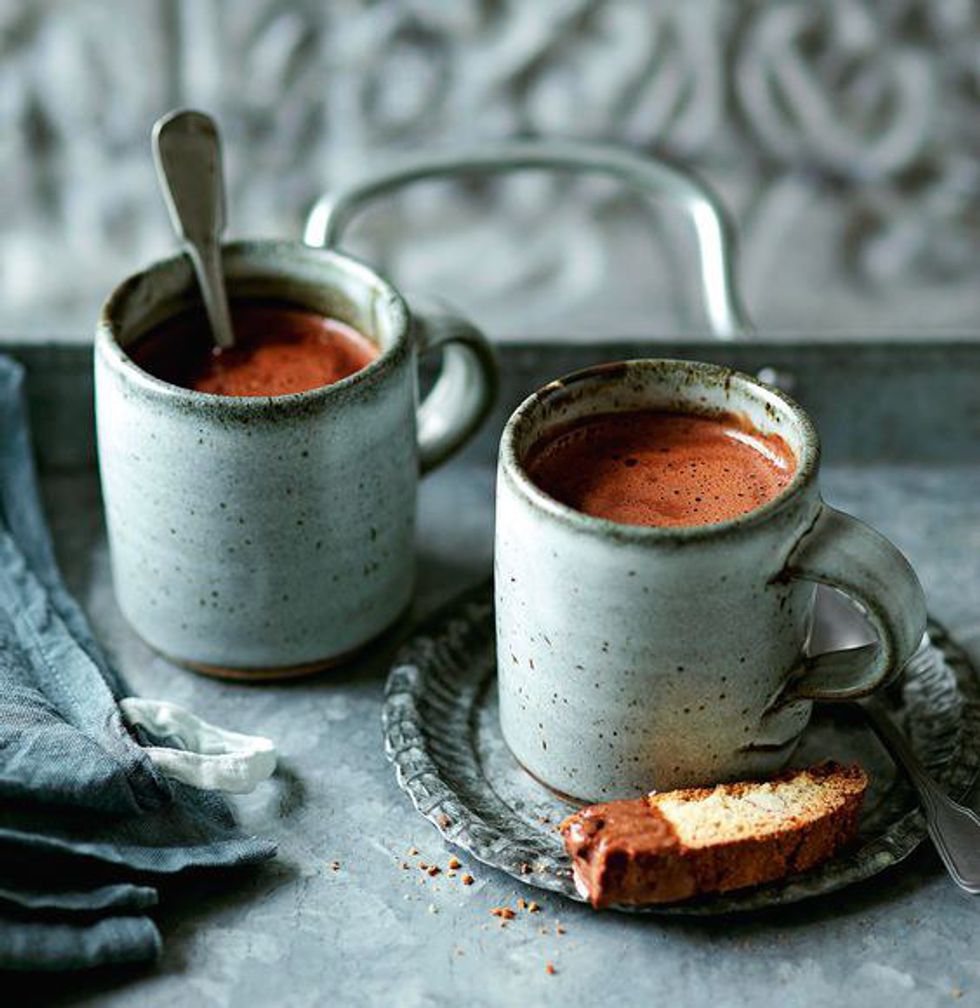
Hot drinks and good food: Things get even cozier when you have a hot cup of coffee, tea, cocoa, or mulled wine in your hand. Add a hot meal of simple comfort food, and that ties things together. The thing about hygge is that the simpler and more homemade the food and drink is, the better. I’m partial to Irish stew with a couple slices of rye bread, and a huge mug of tea.

Hyggekrog: Pronounced hoogacrow, this is the term for a nook or space in your house where you feel the most safe and comfortable. It’s your hygge spot. Curl up there with a good book or magazine, pour yourself a glass of wine, and lay your worries aside for a while. Sounds good to me!

It’s not just for winter: Hygge can be practiced all year, in every season. Although the “coziness” is at its zenith during cold weather, summer hygge can be achieved during a barbeque, a picnic in the park, hiking, or a day at the beach with family and friends. Once you learn what makes up hygge, you can start spotting and creating those moments on your own.

Perfect for introverts and extroverts: As an introvert, I can’t stand noisy crowds and rooms choking with people. I love a quiet night at home, or spending time with a small circle of people with whom I’m really close. Hygge helps introverts to socialize more comfortably, with just enough people to feel a sense of companionship, but not so much that they drain their energy reserves. Extroverts still get to mingle and talk without feeling bored, yet learn to tap into a quieter and less hectic mindset. Like Wiking says, hygge is “in between socializing and relaxing” (pg. 67).
Don’t let winter get you down just yet. Try practicing a little hygge and see where it takes you!