that.
Swedish philosophy is that happy, healthy employees are the most productive and efficient – the idea that you’ll do a better job and feel more motivated if you are valued as a person . This is evident in a multitude of ways, for example, in the workplace, there is ample time offfor vacations, flexible work times and working from home. As a Swedish resident you are given, by law, five weeks vacation per year. Vacation time can be accumulated up to one week per year for a five-year period. This means an employee could be entitled to a maximum of ten weeks’ vacation. There are 12 public holidays a year. This sound a lot better than the two weeks’ vacation and eight or so holidays (depends on job and state you live in) you might get in the US. Wow, that was a lot of information! Let’s recap just to make it easy. Swedes get a minimum of five weeks vacation a year and 12 public holidays. In the US, you are lucky to get two weeks vacation a year and around eight public holidays. In the States, you might have one-week sick time, whereas in Sweden, the first day you are sick you don’t get paid, but all the others you do, even if it is a long-term illness. If that wasn't enough time, if you get sick during the time that you have booked as vacation time, you will get that time back. I was told by a friend here “Being sick is not the time you get to relax and enjoy yourself so it doesn’t count as vacation”. In the same respect as being sick doesn’t equal a vacation, being at home doesn’t equal working. That’s right you won't get promoted for staying later - your colleagues will just think you're a bit strange or have no friends . That goes for answering emails, finishing a presentation, or organizing materials for the next day. Very different from how most of North America thinks!
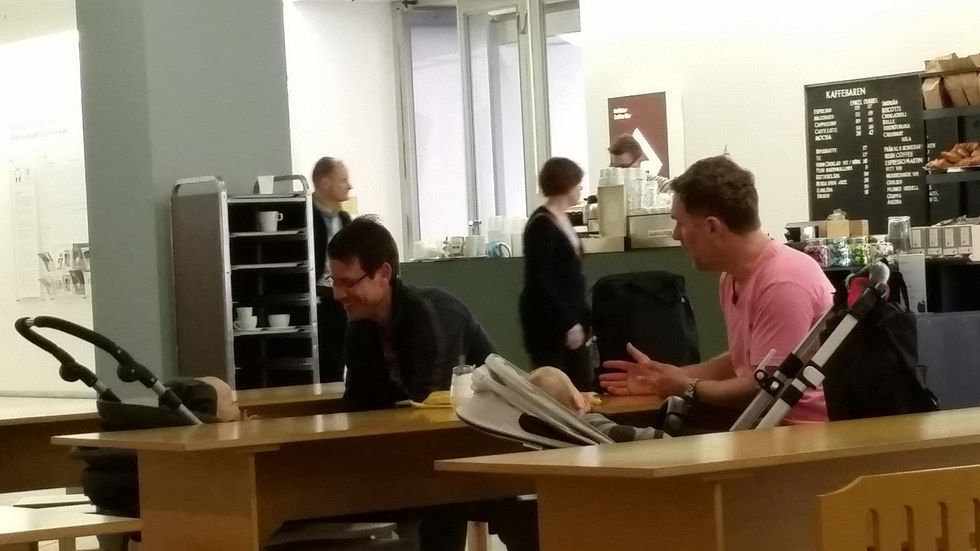

Let’s say you have kids. Kids get sick so you need to use your time off to stay at home and take care of them right?…...Wrong! Parents can also get state compensation when they need to take time off of work to look after a sick child. This is valid for parents of children up to 12, and sometimes for children up to 16, depending on the circumstances. That’s right parents, no stress over your kid being sick. You can stay home and take care of them without a worry. If your kid is in a sporting event that starts at 4 p.m. that you want to attend and you need to pick them up from school at 3:30 p.m., no problem! Swedish parents can quite happily walk out of the office mid-afternoon to pick up their children from daycare or schools without other colleagues raising an eyebrow. It is all part of the flex work that Sweden, like Denmark and the Netherlands, has adopted as a policy to improve work-life balance for its citizens. Sounds really nice, but there is more! If you are expecting a child through pregnancy or adoption, you automatically get 480 days off with your child. In line with the Swedish state’s strict policy of promoting sexual equality, mothers and fathers are expected to share the 480 days equally. It is possible for one parent to take up to 420 days of the total leave, but the remaining 60 days are then reserved for the other parent. When talking to most parents, they are normally off for the first year to two with their kids and then they start school, which is again covered, so you do need to stress over it. The US is one of only four countries worldwide (the others are Papua New Guinea, Swaziland, and Lesotho) that don't offer guaranteed paid leave to new mothers; women in 163 other countries, including Rwanda and Afghanistan, have the right to paid leave for the birth of a child. In 45 countries, fathers either receive paid parental leave from their employer or have a right to paid parental leave. Why is the US so far behind in making changes for the betterment of their citizens happiness?

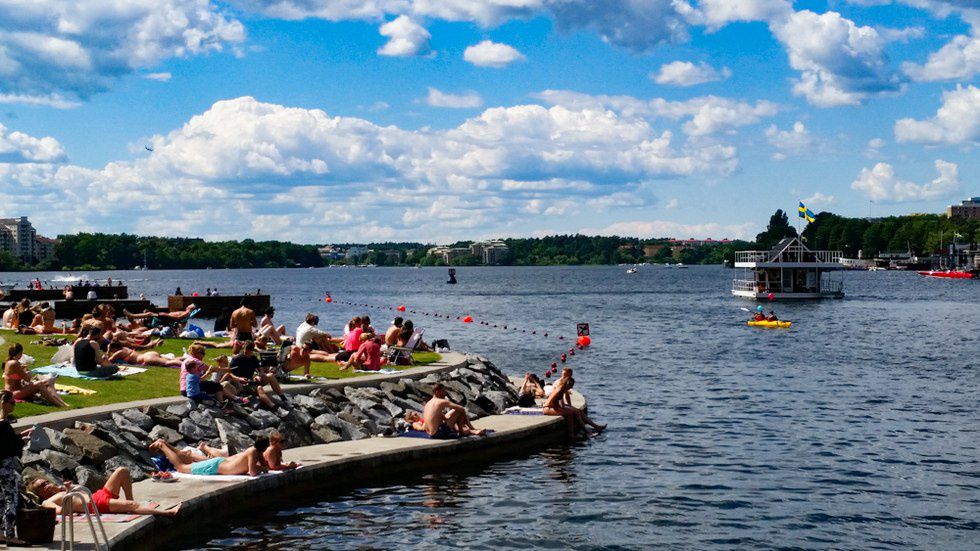
Now we get to the “Play” part of life. Swedes are very active. They work out more than the rest of Europe. Seven out of ten Swedes reported hitting the gym or engaging in a bit of sport weekly and they don’t let the weather stop them! Everyone walks a lot here and you will often find people riding their bikes in rain, sunshine or snow. You never need to go far to find a park to play in, the one by me is big and beautiful with a variety of recreational spaces, from hills that are great for sledding and ice skating in the winter, to green grass for football (soccer) or sunbathing in the summer. I don’t know well everyone knows geography, but most of Sweden is in the Arctic Circle, so the seasons are a little different here. Summer in the Northernmost of Sweden means 56 days of light around the clock. Winter, on the other hand, means 32 days of complete darkness. The longest day is Midsummer or the Summer Solstice, Midsummer Eve is always a Friday between June 19th and 25th. The longest night of the year Winter Solstice is December 21st or 22nd. And Swedes love the sun! You will find people just standing in a pool of light on the sidewalk and most of the benches are facing the sunlight!

From the time they are born, they are out and enjoying nature from family blueberry picking in the closest woods to climbing on ice covered rocks at a bus stop. Even in Sweden’s big cities; Stockholm, Gothenburg, and Malmö, Sweden’s nature is literally on your doorstep. Swedes would not have it any other way! Sweden’s constitutionally guaranteed right of public access (Allemansrätten) assures that the land is open to everyone. Which, again, makes life easier for everyone.
You could work 24 hours a day seven days a week and never feel like you have enough money, but putting the time into your life and your family will fill you in so many ways that money becomes less important. I think a life full of trying to obtain the unreachable goal of “enough” will leave you feeling empty. Swedes seem to feel the same. I wish that the US would take a look at what other countries are doing that make their citizens feel valued and happy. Then maybe they could use it to improve the happiness of its own citizens.
Putting people before money will increase people’s happiness and thereby increase productivity in the workplace. Some of the happiest people I know might not be the most well off, but they are very rich in the love they have for family and friends! “Being successful doesn’t automatically make you happier. But being happier, being more positive, makes you more successful."- Shawn Achor