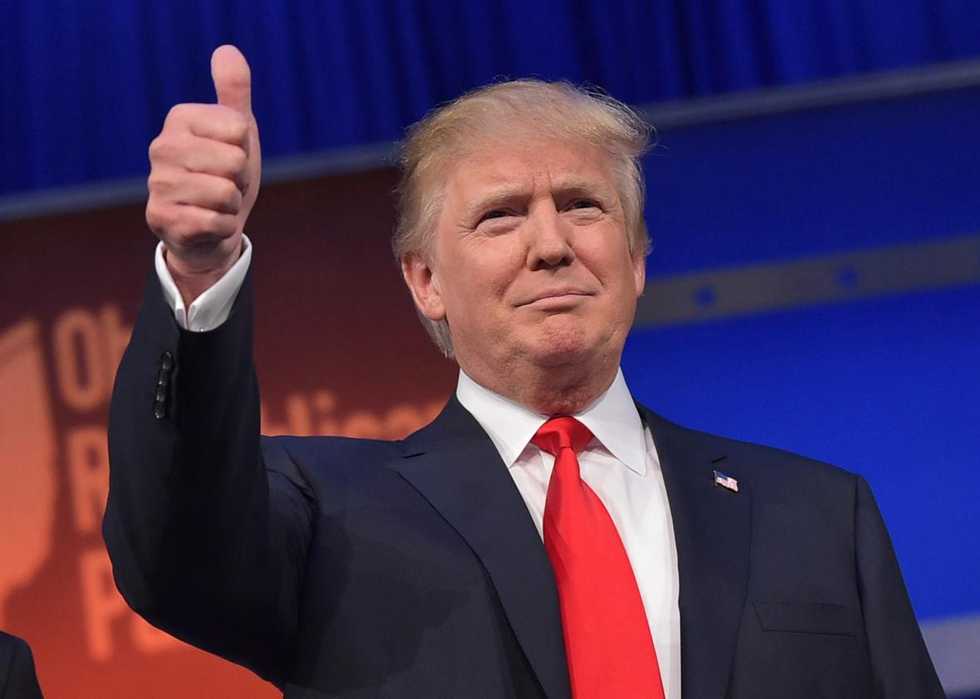
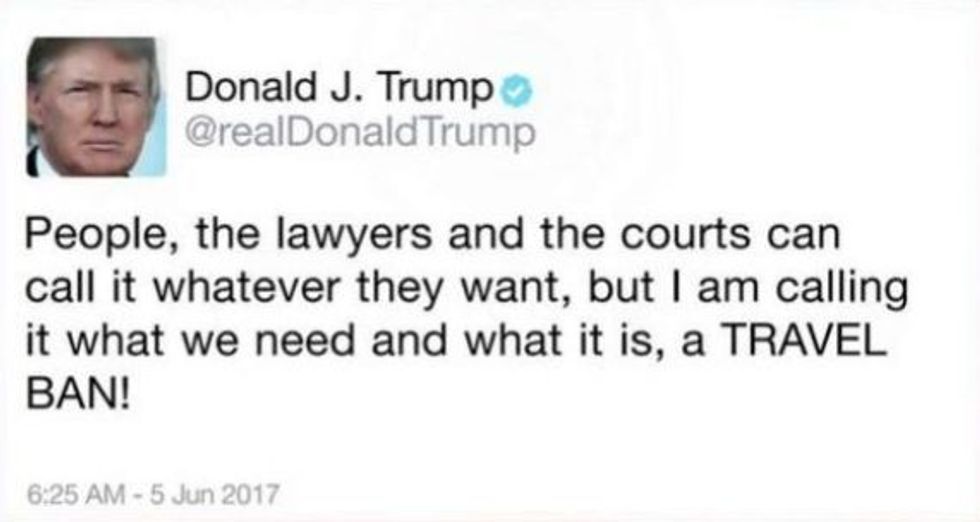
Throughout his campaign, the details of Trump's intensive travel ban policy made supporters rally and liberals rage. However, nearly everyone can agree that his plan leaves little room for ambivalence and has polarized the country with this issue at the center. While many presidents in the past have tackled this topic gently, referring to the issue with more 'politically correct' terminology, it's safe to say that President Trump wishes to get straight to the point, as he tweeted:
Despite his fervent efforts and profound agenda, the "travel ban" he sought has been scaled down since it took effect this week. While the plan doesn't live up to Trump's original hopes, it does carry a great deal of weight, particularly for Muslims and refugees. For simplicity's sake, below is a list of the implications taking effect today:
1. When Mr. Trump first took office, he issued a travel ban against seven countries-- Yemen, Iran, Iraq, Syria, Somalia, Sudan, and Libya. When this was subsequently blocked by courts, he tried again, removing Iraq from that list. Courts blocked this effort as well, proclaiming it a violation of the First Amendment in that it targets countries which are largely Muslim.
2. A modified version of this travel ban was then issued as an executive order by President Trump, allowing the plan to begin taking effect to some degree as the Supreme Court reviews its constitutionality. This is what is in effect as of this Thursday.
3. As of Thursday, people from Yemen, Somalia, Syria, Iran, Libya, and Sudan can no longer receive a visa to the United States for 90 days unless they have verifiable "bona fide" relationships with existing US residents. The USRAP program has been suspended for 120 days, leaving it up to the Secretary of State and the Secretary of Homeland Security to assess particular cases and grant case-by-case waivers.
4. "Bona fide" relationships extend from university acceptances and job offers to close family ties, but these close family relationships do not include grandparents, aunts, uncles, nieces, nephews, or cousins. Originally, fiancés were not to be included either, but this portion of the policy was changed within minutes of its taking effect.
5. Consular officers do have some authority when it comes to determining entry to the US. If it is evident that denying a visa will cause "undue hardship" for those applying, it is up to the discretion of the officers to grant them a visa.
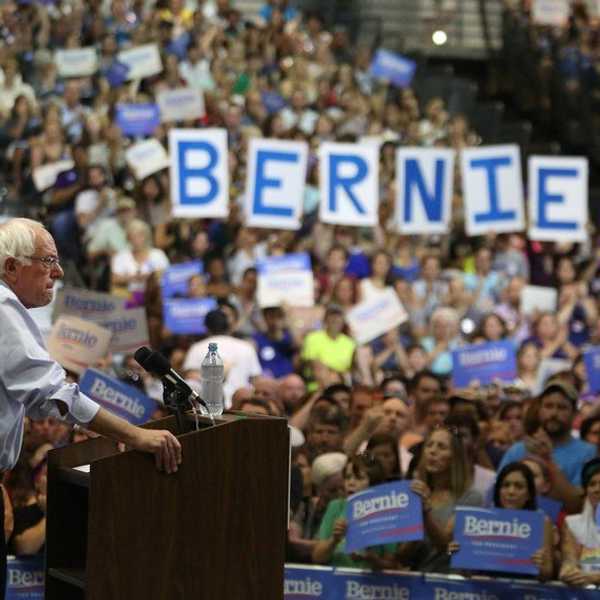
Reactions to this policy are all over the board, as usual, with Hawaii leading the pack in opposition. Hawaii has already filed an emergency motion, demanding clarification on the seemingly ill-defined "bona fide" relationships. A protest has ensued in Tampa, FL, where many have gathered with signs and chants outside of the Tampa International Airport. However, a recent poll indicates that half of "likely voters" do support the travel ban and according to Business Insider, it is one of his most popular executive orders so far.. Several Supreme Court justices have publicly professed their support of the policy, which is essential as it takes its next steps in October. Whatever your opinion, it is crucial to bear in mind the information we do have on the plan, which can be found in the executive order, detailed here.