


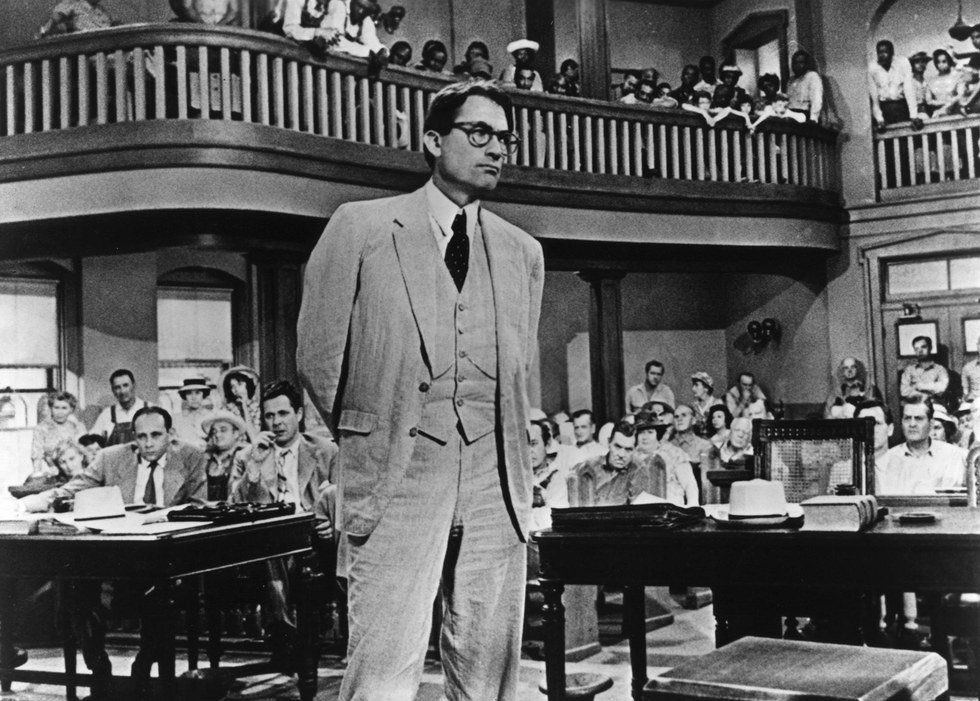
Fifty years ago, one of the most influential books ever written hit the book stands. It was largely successful from the get-go, earning its author a Pulitzer less than a year after it was published.There are phrases you hear so often that they begin to lose their meaning. The words become part of a series, like "bite the dust" or "have a blast." The title of Harper Lee's 1960 classic To Kill a Mockingbird is like that for me, despite its profound impact on the way I think about the world.
Why has it stood the test of time? Why the mockingbird?
The title, "To Kill a Mockingbird" takes on a very literal connection to the plot, but it carries a great deal of symbolic weight within the book. In this story of innocents destroyed by evil, the 'mockingbird' comes to represent the idea of innocence. Thus, to kill a mockingbird is to destroy innocence." Is it the symbolism of the mockingbird that makes us relate so much? So, who is the symbolic mockingbird? Later in the book, Scout explains to Atticus that hurting their reclusive neighbor Boo Radley would be "sort of like shootin' a mockingbird." Mockingbirds are not the only birds in the book. Finch, the last name of Scout, Jem, and Atticus, is a small bird. Like mockingbirds, they are also songbirds.
When I think of a mockingbird, think of a canary songbird, much the the bird in the coal mine. The treatment of Boo and Tom as they face the unspoken dictates or Maycomb, give life to the stock image of the canary. These two canaries expose the fragility of democracy when prejudice, myth, and misinformation go unchecked.
In the years since its publication, the title "To Kill a Mockingbird" has developed a meaning that goes beyond its internal logic. For many readers, the book and its characters live with them as intimates. The story offers a reflection point for the moral dilemmas we face in our own lives.
To Kill a Mockingbird represents the best and the worst parts of American society. Its themes may have been a little more sensitive in 1960, on the cusp of the civil rights movement, in which the American south became a major focus. Yet at the heart of the book -- what has really allowed it to survive for generations -- is basic human nature.
We live in particularly negative times right now, both socially and politically. News stories showcase people spewing invectives at each other. Bullying among school children has gotten out of control, basic consideration and decency seem out-dated and many people even fail to respect their president.
Perhaps it's time we look to To Kill a Mockingbird for guidance.

















