


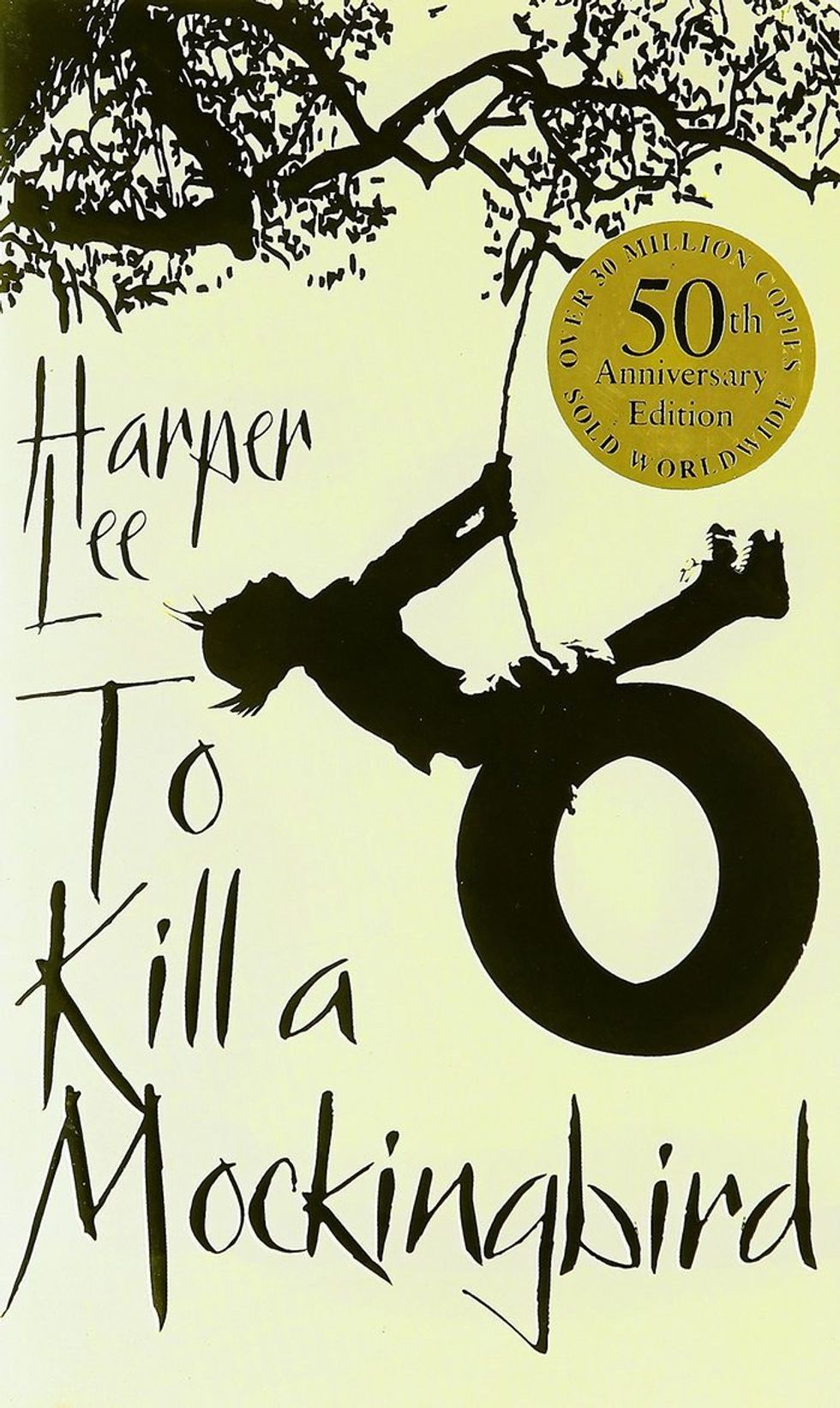
Most of us have read or at least heard of "To Kill a Mockingbird". In 2015, another book (which many believe is a sequel) was released entitled "Go Set a Watchman". It seems as though most of those who have read the book are extremely disappointed.
"To Kill a Mockingbird" follows the story of Jean Louise (aka, Scout) Finch as she grows up in Maycomb, Alabama. Although the main character, Scout’s father Atticus is the true hero of the novel. Living in 1930’s south, Scout witnesses constant racism. Her family seems to be immune to this as Atticus, her father, guides both his daughter and the town in a moral fight against human rights. He is hired to represent a black man, Tom Robinson, who is wrongly accused of raping a white woman. Despite hearing slurs aimed towards him and his family, Atticus defends the man. Although he destroys the evidence and all but proves Robinson innocent, the man is convicted. He later dies after being shot in an attempt to escape prison. Meanwhile, Scout sees how hard her father worked and how strong his beliefs are towards equality. During this entire trial, Scout and her brother Jem have a caretaker, a black woman named Calpurnia. Scout loves “Cal” and is ignorant to the issues the rest of society has with her and her family.
Warning: SPOILERS.
"Go Set a Watchman", released after over 50 years from Lee’s first novel, paints a very different story from "To Kill a Mockingbird". The novel begins with Scout, in her mid-twenties, advancing towards Maycomb for a visit to her father. Her brother, Jem, has passed away. Many of the other characters are present, however. When Scout arrives home, the readers are greeted with an image that we do not all like. Atticus is in his seventies. He is dealing with health issues that prevent him from even feeding himself right sometimes. Calpurnia, the beloved companion of the first book, is not around. Henry, a man taken under Atticus’s wing, is now Scout’s love interest. Instead of being affectionately referred to as Scout, Jean Louise has grown up and that is portrayed through the novel. She is the same tomboy we grew to love in "Mockingbird" but now an adult. She soon begins to notice tension in Maycomb that greatly disturbs her.
Jean Louise begins to notice undertones of racism in her hometown. People, both family and friends from the past, are rather distrusting of the black community. The young woman, who is now living in New York, is shocked to see the displays of racism in her little town. She was seemingly oblivious to these societal issues as a child, but cannot seem to escape them now. The novel has various occurrences, such as when Jean Louise is forced into a luncheon by her aunt and discovers how different she is from other girls her age. A few major events happen, like Jean Louise visiting Calpurnia. Instead of the warm welcome she was hoping for, she is met by an angry and defiant woman who refuses to allow a white woman (or her family) to help her. After being devastated by this, Jean Louise has more shock to come. She, always the rebel, sneaks into a citizen’s council meeting. Here, she encounters those she loves sitting by while men spout on about how harmful to society black people are and how they can rectify Maycomb. Jean Louise winds up finding out Atticus was a member of the Ku Klux Klan and has always felt racist towards black people. Her world is crushed.
Both the rage and disappointment felt by Jean Louise and the literary world’s anguish are understandable. The novel is focused on the relationship between Jean Louise and Atticus. He loves her, despite the fact they disagree and cannot find mediation on the topic of race. She may yell and provide evidence for him being wrong in a variety of ways, but ultimately he does not revoke his opinion. The reader, then, is also assigned the task of incorporating this version of Atticus into the old version. This is not a simple task. In fact, I hated the book from the moment I began to sense that racism was involved with the most beloved characters. I kept reading, however, and I came to a conclusion: Atticus Finch, hero, is just a plain man living in 1930’s-1950’s Alabama. This by no means excuses the behavior he displays. He, as well as most of the other characters, believe in the discrimination of back people and have extremely backwards views on society. But, I came to realize (as I believe Jean Louise would have) that Atticus is not the hero of "To Kill a Mockingbird".
That novel was written from the perspective of a six-year-old girl. When we are little kids, most of us look up to our parents in many ways. I thought, when I was that age, that no matter what, my parents were amazing. I was blind to how they actually viewed the world and the beliefs they had. If I was writing from that perspective, I would also idolize my father. Atticus is a good dad, there is no denying that fact. But, in order to be a dad, you have to be human. You make mistakes and cause heartache as well as bring love and joy to your child’s life. In a way, the reader has to rectify the earlier picture of Atticus with this one. It is no easy task. Just like all of us realizing things about our childhoods, Jean Louise is no different. Atticus, in "To Kill a Mockingbird", was a hero to all of us. He was the ultimate protagonist. He committed no wrongdoings.
In "Go Set a Watchman", both the reader and Scout have to come to terms with the fact that her parent is not perfect. Our parents have different values, morals, beliefs, and religions that paints them differently as we age than the idols we thought they were as children. In a way, these novels are both coming-of-age novels that we must respect and admire. The first is a child’s perspective. The second is more of reality. We see the racism, gender roles, and general atmosphere of the town as she must see it: as an adult instead of a child. Our job, and her job, is to understand and respect who Atticus is in both novels for what he is.
















