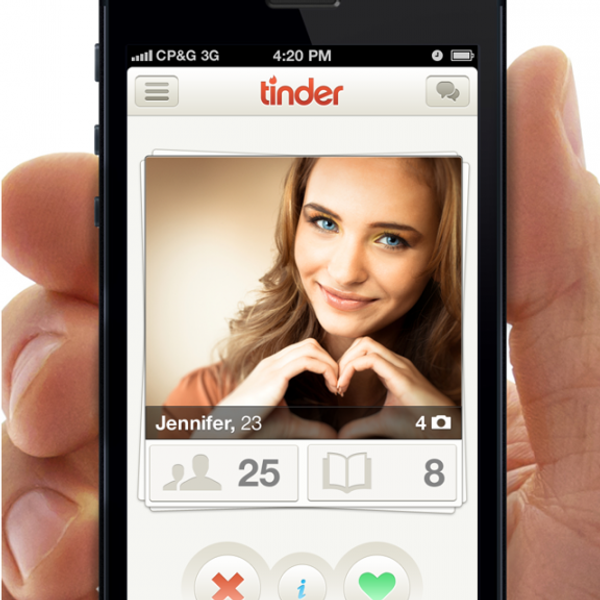


Okay, okay, I'll admit it. Yes, I've used Tinder. Am I ashamed of myself? Maybe. Embarrassed to admit it? A little. Fascinated with why it's so popular? Definitely.
If you've used it, maybe you'll see truth in what I've learned about the psychology behind Tinder. If you haven't, well, remember what your mama always said: "You can't say you don't like brussel sprouts if you've never tried them."
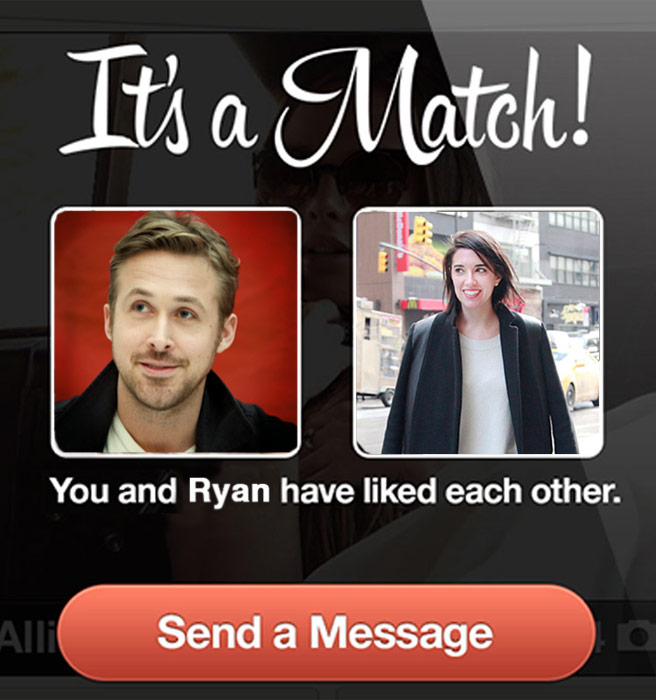
Tinder is the smartphone dating app where you judge potential romantic partners on their photos, bios, and similar likes. Swipe right if you like the person, left if you don't. And, if you both swipe right, voilà! A match! Now you can message each other, get to know each other, and potentially meet up to see what else there is between the two of you.
But Tinder is often referred to as the superficial way to date. Basing potential matches off of looks, come on! There is so much more to a person that their "hotness" or the short bio they write. Yet, it is still very popular. In his article "Tinder and Human Nature," Ross A Rosenberg points out, "According to Tinder founder and CEO Sean Rad, as of February 2014, Tinder is responsible for 750 million swipes and 10 million matches per day. It also boasts that 450 million profiles are rated every day and membership is growing by 15 percent each week". So if it is criticized constantly and ridiculed continually, why do more and more people keep using it? There is more going on in the brain than we think.
Instant Gratification
When you taught your dog how to obey, you rewarded him with a treat. When you received an A on your report card, you were treated with donuts from Krispy Kreme. And when you swipe right on Tinder and the same person swipes right on you too, you keep playing becuase something must be working. It's kind of satisfying when Tinder freezes and tells you you have a new match. This feeling is chemical. In fact, the whole process is. Rosenberg explains:
"Gazing upon a photo of someone with whom you are smitten, e.g. a Tinder photo, activates the brain's pleasure center (tagmental ventral area), where copious amounts of dopamine, the brain's 'pleasure chemical,' is released to travel down the brain's neural 'love circuit.' Once it reaches the pleasure centers in the brain, primarily in the nucleus accumben, we feel a rush of desire, which then travels at lightning speed to the thinking and action parts of our brain: the prefrontal cortex. This is where we decide to swipe right or left. The little dopamine hit is the swipe, the bigger and more intoxicating one is with a match! And with a match, one experiences the full breadth of the dopamine-induced fireworks show!"
Didn't think your brain was that involved in a mindless app, did you? It makes sense though. Hannah Schacter in her article "Love Me Tinder" on Psychology in Action explained this instant gratification that keeps us swiping is because of "the anticipation of an eventual match combined with the unpredictability of reinforcement . . .To maintain its success, Tinder wants to encourage users to swipe, and this behavior is maintained by periodic rewards in the form of matches."
The more you swipe, the higher chance for matches, and the more dopamine you have filling your mind. As cheesy as it sounds, it is a rush.
Ease and Convenience
We are always looking for the fastest, quickest way to do something. Well, thanks to Tinder, we have the fastest, easiest way to meet potential romantic partners. But more than that, there is almost no risk involved. In their study on the dating app quoted on Boston.com, SoulPancake explained, “It’s the game of love with the pressure taken out. It increases your odds of meeting someone, while lowering the stakes if you fail.” In a sense, you are putting yourself out there when you use Tinder. Sure you're still using your best Facebook photos, and you are editing your bio to perfection, but you are still receiving matches only if someone finds you attractive or sees something in your bio worth learning more about. Plus in swiping, "users make decisions based on first impressions of physical appearance and [thus] carry relatively low expectations regarding romantic outcomes," said Schacter.
But we do the same thing on Tinder to other people. Therefore, we can feel a little better about ourselves if someone doesn't swipe right because we don't swipe right for everyone. We avoid "disappointment by strategically lowering one’s expectations about a desired outcome," explained Schacter. During a conversation a friend and I had about Tinder, she asked if it was wrong she didn't feel bad for swiping left so many times. "Does that make me a superficial person?" she asked.
I thought about her question for a second, then realized, no it doesn't. "If you don't find him attractive, there's nothing wrong with that. And if he doesn't find you attractive back, again. Nothing wrong with that." With Tinder, there are no strings attached.
Mimics Reality
We've heard of the algorithms of Match.com or eHarmony, but what research has discovered is that these algorithms aren't as accurate as we think. In fact, according to Eli J Finkel in his New York Time's article "In Defense of Tinder," "predicting whether two people are romantically compatible requires the sort of information that comes to light only after they have actually met." He goes on to give some more surprising claims in defense of the infamous dating app:
"More important, superficiality is actually Tinder’s greatest asset. Singles typically don’t adopt an either/or approach to dating — either casual sex or a serious relationship. Most of them want to have fun, meet interesting people, feel sexual attraction and, at some point, settle into a serious relationship. And all of that begins with a quick and dirty assessment of rapport and chemistry that occurs when people first meet face to face."
Regardless if you're on Tinder or not, we all do this. I do this. How many times have I been somewhere in public and commented on another's appearance before even thinking about who they are as a person? I'll give you a hint: A lot more than a couple times. It's human nature and Tinder simply enhanced this and turned it into a dating app. It's more accurate than signing up for a site online and crafting long responses. Swipe right, get their number, and maybe it turns into something more. That happens on Tinder and in the real world.
Entertainment
But, most of all, Tinder is just plain ole fun. It may not be your grandmother's idea of how to spend an afternoon, but it is enjoyable for many singles today. I had some good laughs on Tinder, and I'm sure some of you would agree with me.
Schacter does: "it’s important to note that Tinder’s popularity may also boil down to something much more simple—it’s entertaining."

I found myself chuckling multiple times at some of the ridiculous things on Tinder. And, let's not forget to mention how easy it is to mindlessly swipe through the app when I was sitting in a car or a waiting room. But what I've found is that it isn't as pointless as I thought. Not saying it is the ideal way to meet people, but is there really an ideal way? I know some people have found soulmates on Tinder and others use it for fun. Either way, Tinder may surprise you and there is certainly more to it than superficiality.