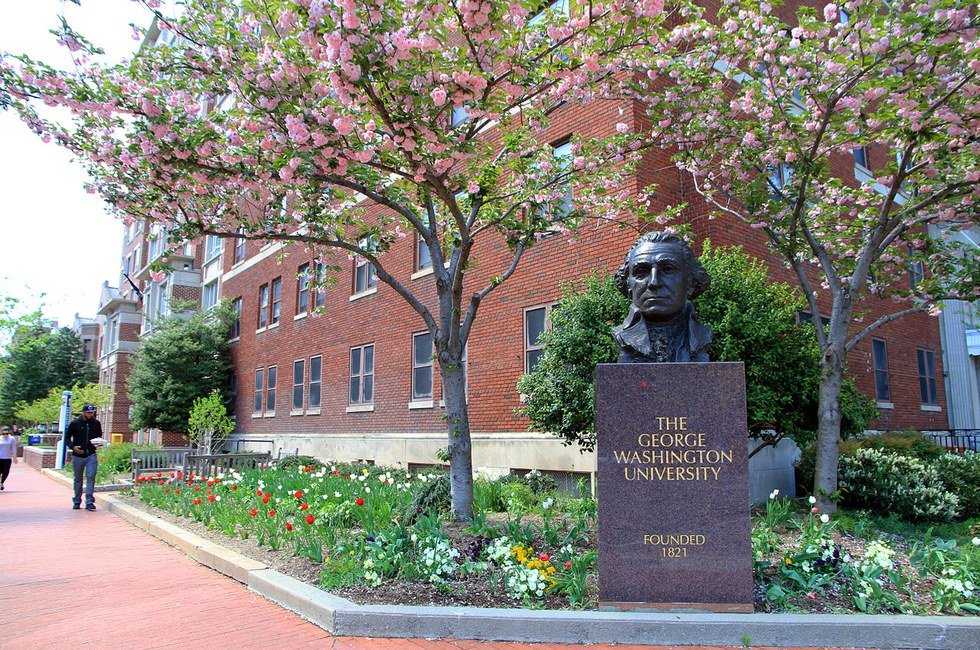
Just last month, George Washington University in Washington, D.C., joined more than 800 Universities and colleges in making the SATs and ACTs optional for high schoolers to submit during college application, making GW one of the largest and most notable colleges to do so. This began after backlash for years over the legitimacy and effectiveness of what the SATs and ACTs mean to colleges and universities, as well as what they say about prospective students.
According to Yahoo News, this new option will allow lower-income and minority students better access to higher education. "It was really about making sure that the right students, students for whom GW would be a great place, were not discouraged from applying," said Karen Stroud Felton, George Washington's Dean of Admissions. In 2014, only a couple dozen schools eliminated this practice, including Temple University. According to The Washington Post, George Washington University has always tried to looked beyond test scores when admitting students, however fears that the anxiety of the test itself hinders optimal results and leads wanted students away from applying. “We want outstanding students from all over the world and from all different backgrounds – regardless of their standardized scores – to recognize GW as a place where they can thrive," said Felton.
Due to this option on applications, colleges will be more willing to accept students based off of their work throughout high school rather than a specific test that is claimed to assess their knowledge as a whole. In fact, many people involved in admissions have claimed that GPA is a great indicator of success in college, not standardized tests scores. Yahoo News interviewed William Hiss, the study's main investigator and a former head of admissions at Bates College in Maine, and he has also found this to be true. "The fact that they are not a great test taker is maybe the only thing that's out of whack" for high schoolers applying to college. Hiss also noted that about 30 percent of students he examined did not submit test scores, and tended to come from minorities, women, low-income families, or were the first in their family to receive higher education.
The Washington Post reports interviewing a young woman named Natalie Casimir, an 18 year-old perspective student from Mooresville, North Carolina, who had a 4.0 in high school, but only received a 1580 on her SATs. “I felt like my work in the classroom wasn’t adequately depicted in the test scores. I kind of panicked. I had only really known of schools that took SAT or ACT scores."
This elimination also serves as a money-saving tool for those who have a difficult time affording the SATs. SATs usually cost about $60 per test, and most of the time, students end up retaking or wanting to retake the SATs two or more times to receive the best scores. For others, these tests are students' ways to get into the best college for them, and usually end up seeking out tutors or prep-books, which have costed in the hundreds before tests became optional.
Though seen to improve diversity, there have been nay-sayers to how effective this really is. Cyndie Schmeiser, Chief of Assessment at the College Board, the non-profit that administers the SAT, said research had repeatedly shown it was a strong predictor of academic success. According to the American Educational Research Association and Sage Publications, after implementing test-optional policies, last year showed that colleges made little to no progress in improving diversity.
However on my personal agenda, I do not believe that one large and vague test really tests much. I'm a rising junior, so I just missed the implementation of this by one year. Yes, realistically, they want to know you can do simple math, but I get frustrated that an individual's knowledge is based off if you can tell the weather by looking at sticks and circles and asking me college-level calculus.
In high school, I was involved in sports, both soccer and basketball, and I was involved in after school clubs and my church's youth group. My grades were always A's and B's, but I did enjoy my social life and personal time. My SATs were a 1300.
Eek.
After taking the ACTs to help me relinquish anything, I received a 21, a very average score compared to national scores. When applying to Temple, I didn't think I was going to get in. The pressure standardized tests puts on student's is scary. Do I think admission should be competitive? Well, yeah. You have to do some work to earn a spot into college. However, do I think admission should include the application, transcript, personal statement, essays, standardized test scores, and interviews? No, I don't. To some, standardized tests mean everything to them and is their only measurement for success in high school. But that's not real life. Though it is absolutely important to know math and be able to write essays, real life includes so much more than that. I really suck at math, but I'm really good at communication and public speaking. I can communicate something with total ease and have (usually) have no issues. I can write a professional email in my sleep and I'm able to present anything with little practice. Those are my strengths; two huge aspects that are used in college and real life all of the time. And here I was, stressing over questions about geology when taking the SATs.
Though I don't think SAT scores measure much, I do believe there are exceptions. If you are able to earn high scores, I think that should be able to add a new aspect to your application, but it shouldn't hurt your chances if you can't afford the exam or can't replicate higher scores.
Those who disagree with this implementation probably committed years towards this one test. But personally, I don't want other boys and girls in high school putting this huge pressure on themselves, like I did, all for a test that measures how "smart" someone is. I think this implementation is really going to give disadvantaged students the opportunity to a better education, a right that we all have, that no standardized test should be taking from anyone.
If you're curious about these schools that are now test-optional, or are a prospective college student yourself, you may wanna check this out.