
As I'm sure many of you are aware, October has been nationally, and rightfully, recognized as Breast Cancer Awareness Month. What you may not know is that National Breast Cancer Awareness Month, or NBCAM, was founded in 1985 by a groups of medical associations and national service organizations. The month was put into place primarily for three reasons: 1. To promote awareness, 2. Raise funds for research, and 3. Provide greater access to services in order to better utilize "early detection."
Unfortunately, breast cancer is still the most common cancer among women globally. One in eight women will be diagnosed in their lifetime resulting in it being the second leading cause of death among women. This inevitably means you will come into contact with breast cancer someday, whether it's through the lens of a family member, a friend, or maybe even yourself personally. Although there is no permanent cure for breast cancer right now, what's important to understand is that there are treatments and sometimes even more importantly, there is hope.
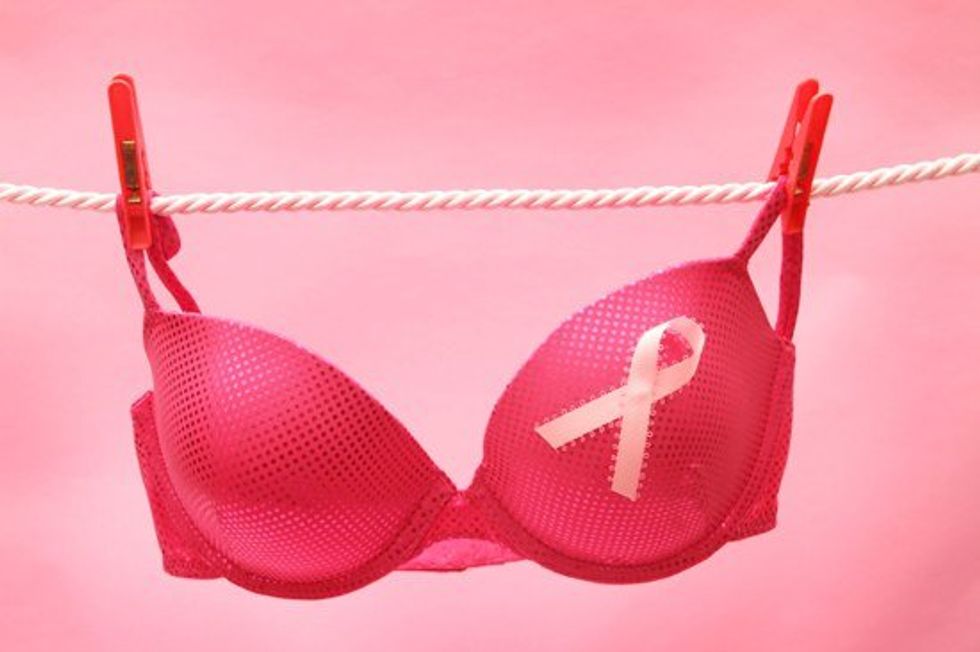
When researching Breast Cancer Awareness Month, I was astonished by how much information I didn't know about the cancer. For starters, the story behind the pink ribbon. At a Susan G. Komen Foundation Walk in New York City in 1991, volunteers first passed out pink ribbons to participants and survivors. The foundation piggybacked the idea off of the red ribbon which represents AIDS awareness. From then on, the pink ribbon idea stuck and was seen in conjunction with breast cancer. Two years later in 1993, the editor-in-chief of Self Magazine, Alexandra Penney along with Evelyn Lauder, the Senior Corporate Vice President of Estee Lauder and breast cancer survivor, founded the Breast Cancer Research Foundation and officially took in the pink ribbon as their symbol. With two highly successful women, both working for respected companies, leading this organization Breast Cancer Awareness took off and so did that little pink ribbon.
Another piece of information I didn't previously know about breast cancer and a more startling one, was that 85% of women who are diagnosed have no family history of breast cancer. I think often times we see cancer, breast cancer and others as purely genetic. Where this can sometimes be the case, it only holds true in 15% of women diagnosed with breast cancer. This is why it is so, so, so important to realize this is something that can happen to anyone, whether breast cancer has impacted your family before or not. It is recommended that women start getting a clinical breast exam three years after their 20th birthday and every year after their 40th. I know some of you might see this as excessive or even unnecessary, but early detection is one of the most prominent methods of survival among breast cancer patients. There is currently a 95% success rate for treatment when the cancer is found in Stage 1, so why not get that pesky breast exam and beat cancer before it has the ability to beat you?
So you went to the doctor and thankfully your breast exam came back clean, now what? Get involved by raising money and awareness in any other way you can. The American Cancer Society, as well as hundreds of smaller organizations, put together different events including walks and runs locally throughout the month of October. If you look up the ACS' website, it is easy to access events taking place in your area. Too late to participate? Go support those who are walking on the sidelines! All the ACS walks in your area have already happened? Give a dollar to the little girls at the lemonade stand collecting money for breast cancer research, wear a pink shirt to class instead of a black one, take a pink straw from the local coffee store. Know that no act of kindness is ever too small and everything you do in honor of breast cancer awareness will be appreciated. For those of us lucky enough to not be directly affected by it, Breast Cancer Awareness is primarily the month of October because this is when we are reminded of it most heavily. However to every patient and survivor of breast cancer or any other type of cancer, awareness takes place every single day.
With this in mind, let's not limit our response of any type of cancer awareness to just one month. Realize each day when you wake up that there are millions of people in the world, ranging from infants to elderly that are being treated for all different types of cancer. Did any of these people deserve cancer? Of course not, but it is their awful and unkind reality. Live your life for those people who cancer may not have allowed to live their own, by being kind and loving. I encourage you to support Breast Cancer Awareness in the month of October, but I also challenge you to continue raising awareness every month until a cure is finally found to eradicate this awful disease.