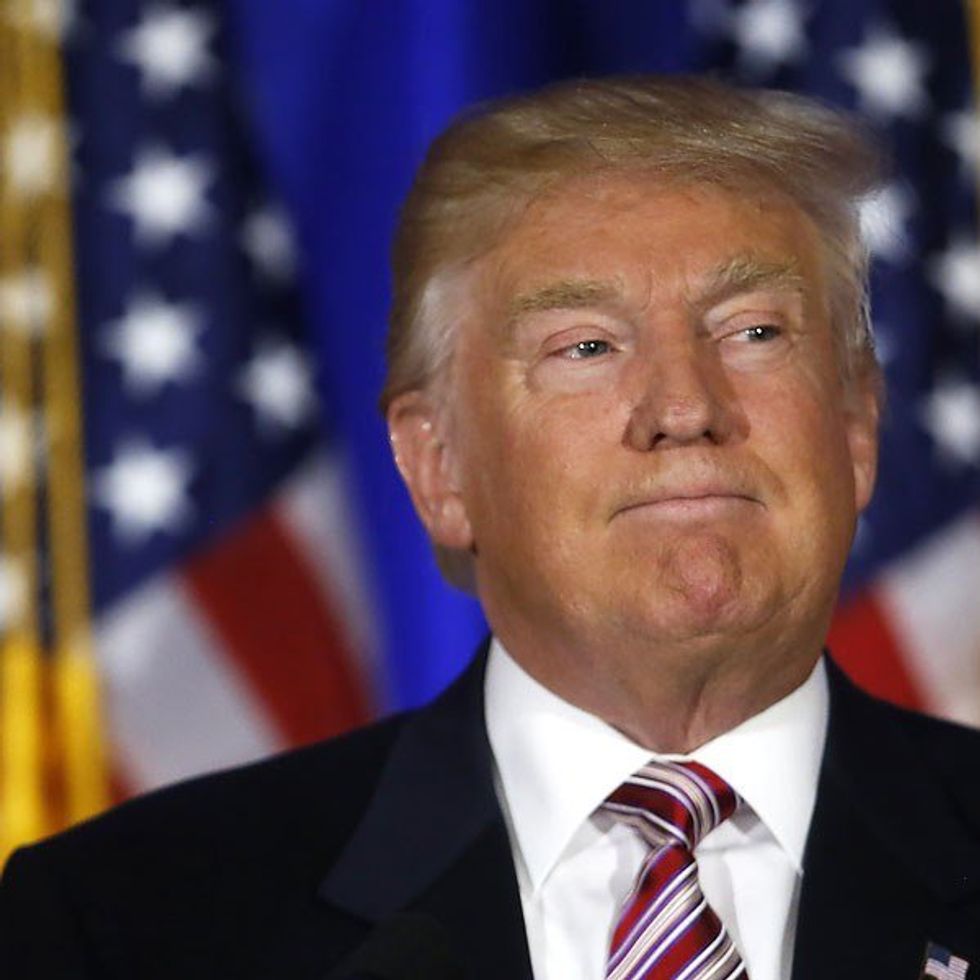
The weeks before the presidential election saw final, desperate outcries from Americans hopeful of their presidential nominee securing one of the world’s most honorable offices. There was intense polarization and political tension between and within parties. But post-election, things aren’t looking any better. Can a President Donald Trump unite the Republican Party, or is he recreating it? Can a President Donald Trump cater to healing Hillary supporters, or is it a lost cause? Amidst all of the craziness, where is the positivity? Is there any?
When asked this question, some will clamor, “Yes!” Some will cry, “No!” Both have legitimate opinions that do not boil down to innate stupidity or a secret, villainous scheme. The danger of such a polarized campaign was the extension of time to create such profound party allegiance, and now that it’s all over, we have to retrace our steps to meet the other side half-way.
“Hope” has a different meaning for every American; one person’s hope is another person’s nightmare. But like dreams, hopes are diverse and unique, and they are not easily explained. Because hopes and dreams are seen through only the eyes of the beholder, no one is willing to ditch their own version of idealism for the intangibility and questionable intentions of another's. But we can’t cater only to hopes, and we can’t cater only to nightmares. We have to be willing and selfless enough to find common ground.
But it isn’t so easy. Clinton’s loss is stinging for many people, and Trump’s victory is a monumental success for many others. If everyone decides to stand firm—to not budge—then we are acting only in self-interest. If we start to act uncivil, our opinions will incite more opposition on an already bloody battleground of polarization, and what happens in four years upon Trump’s possible exit? Will that be a victory for half of the nation as the bitter rage and animosity fires on from the other side?
Hate is the best avenue to both friendship-building and enemy-making. Hate is passionate, alive, and evil. Its strength garners more and more disciples. It tricks its followers into believing that hate is the best means of promoting what is good and right. Hate can consume us, steal our ability to compromise, make us feel like the only opinion that matters is our own.
We all need to swallow our pride.
Just because the Americans who voted for Trump got it their way does not mean that this is their game or their country. They are not superior, and Trump supporters can no longer accept his flaws for the purpose of maintaining Republican competition. He isn’t an impeccable character whose every action deserves justification. He is a human being who commits both right AND wrong, and rallying behind a candidate to the point of not only accepting his or her flaws but also justifying them is the effect of brainwashing.
Hillary supporters, angry about the popular and electoral vote discrepancy, struggle to swallow the large pill that is the Trump victory. A loss is painful, especially when the battle was long and grueling. But labeling all who voted for Trump “sexist,” “racist,” “misogynistic,” etc. are hefty accusations that are arguments propelled by emotion rather than fact. It creates the false narrative that every Republican is prejudice and generates a Republican-defensiveness that ultimately converts to reciprocated hostility.
BOTH sides of the spectrum harbor hateful, narcissistic, and uninformed people. But BOTH sides of the spectrum also harbor moral, intelligent, and equally valuable people.
Republican and Democrat division on such a mass scale post-election reveals a lot about the American individual. We claim to value freedom, but then we use it to tear others down who disagree with our own set of beliefs. We want more jobs and a stronger economy, for everyone to live happily, for educational resources to be distributed evenly, for opportunities to abound, but we continue to spew hate and write off the other side as ignorant. Hate may be strong, but it isn’t strong enough of a platform to complete such a magnificent agenda.
Is a Trump victory truly a tragedy? This is a personal decision that should be both respected and presented respectfully. What occurs on TV and in the nation’s capital is a distant, fairly inaccessible institution to the common American. But nothing permeates society more than a local social attitude. Let it be liberal, let it be conservative, but don’t let it be a sense of angry superiority.
"It is no secret that the President-elect and I have some pretty significant differences," claimed President Barack Obama, “We are now all rooting for his success in uniting and leading the country."
Just like “hope,” “unity” means something different to every American. One group’s unity may propel division between itself and its opposition, but where hope and unity converge is their absence of hate. Let’s all hope for unity.