
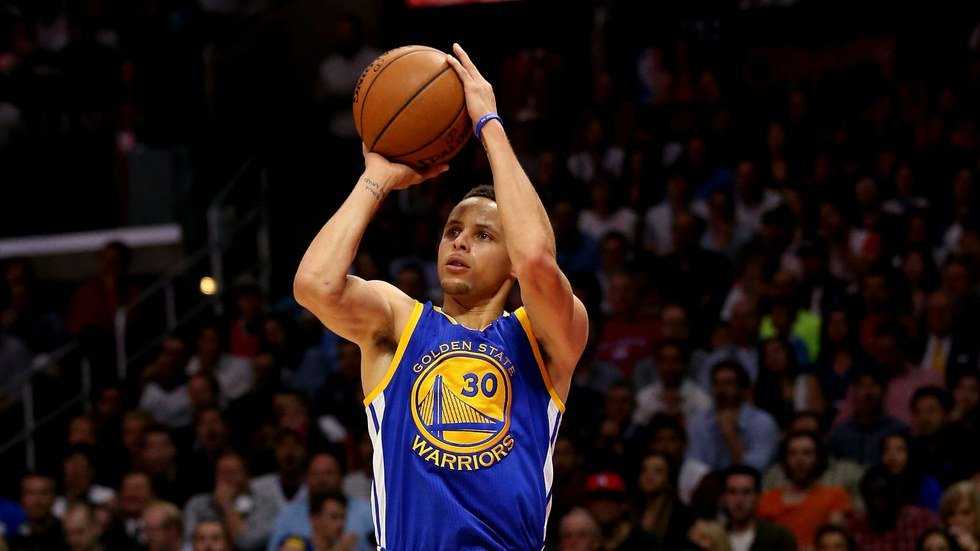
They call him the Human Torch. The Baby-Faced Assassin. Chef Curry. If you live in America and own a smartphone, you’ve probably heard of him. His name is Steph Curry, the best shooter basketball has ever seen.
Now before I continue, even if you don’t like basketball, you still may enjoy this article, because Steph Curry is not the typical NBA superstar. He’s no Michael Jordan or LeBron James, perhaps two of the most athletic people the world has ever seen. He is not six-foot-eight-inches tall and able to jump almost four feet vertically. He was not born a basketball prodigy. Before Steph Curry became Chef Curry, no one gave him a chance. Every analyst on the air wrote him off. After all, who could blame them? On paper, Steph Curry wasn’t much to look at it.
Case in point: Steph Curry does not like to dunk. He struggles with it because he can’t jump high enough. And sometimes I think to myself, how is this person so good at basketball? In some ways, it defies reason. It doesn’t make sense for someone like him — scrawny and lanky, puny compared to his opponents — to be this good. And yet here he is, the reigning MVP.
Turn back the clock. It was June 2015. Steph Curry and his Warriors were playing the Houston Rockets in the Western Conference Finals. This was the prime of Curry’s career, and I was in Cuba on a volunteer trip — the first of its kind since the US began lifting the embargo. The hotel room had mosquitoes and I couldn’t drink the tap water, but a beat up TV bolted to the corner of the room had ESPN Deportes. I sipped on a mojito as Steph Curry scored 40 points, and the Warriors eventually moved on to the Finals.
The next day, I had the opportunity to play basketball with some friends I’d made. One of them spoke decent English; the rest didn’t know much. The court was pitiful. It was built under a bridge to offer some shade, but the sun still found its way in. The paint on the court was chipping, and the paint on the basket was gone. There was no net. The only ball they had was overinflated and children’s sized, and resembled something you’d win at a carnival.
I played, and I was better than most of them. That’s not to say I’m good — the opposite, in fact. I’m an American who drinks too much soda, and I could probably stand to go to the gym more, yet here I was scoring on these players who were far more athletic than me. The difference was I had a coach back home.
There was one guy who was pretty good—the only one who could give me a run for my money. He didn’t have any shoes, but he was about six foot three inches and he could dunk; I wonder what he could’ve done with a pair of Kobes and a hardwood court. After it became clear we were the two best players on the court, everyone wanted us to play one-on-one. He beat me once, but in the last game, I hit a tough jump shot to win it. After the ball sailed through the naked hoop and bounced against the wall, I threw up my hands and yelled “Chef!”
Everyone there started laughing. My opponent embraced me; I think he was a Curry fan too. I collapsed against the wall and downed a bottle of water, sunburned and panting in the brutal heat. I thought on that moment, when Steph Curry brought us together. Just by seeing him play, they, too, understand what Curry goes through. They understand he does not have the body of a typical MVP. They understand the adversity, the doubt, and the determination. These are things all of us understand. These are things that are deeper than words.