I don't quite remember when I gained a comprehensive understanding of the concept of sex. I was confused, ashamed and quite awkward about approaching this topic at school or at home. For the longest time, any mention of the word "sex" would be followed by endless giggles amongst my friend circle who were as clueless as I was as we felt ashamed to inquire about this "forbidden" subject with elders.
Growing up in the Indian educational system, the first time I was introduced to the phenomenon of reproduction was as a part of my Biology lesson in grade 7. I remember shyly learning to label male and female reproductive organs. I have a hazy memory about studying female menstruation. Having studied in an all girls school with a female Biology teacher, I remember how I actually learned greater detail about this subject in comparison to my other friends who went to co-ed schools or who had a male teacher teaching the course. Such was a taboo regarding this subject where it was forbidden as much as possible even if it was at an educational arena.I remember being taught how a zygote was formed by a fusion of male sperm with a female egg cell. But these words like sperm," "egg cell or how they fuse were merely mentioned in the passing rather than actually discussed.

The complete lack of awareness or misinformation regarding sex is not uncommon among adolescents in India. I remember the first time I kissed a guy, I came home and googled if I would get pregnant. However, while their sentiments were previously disregarded by elders as sex being an adult topic, many adolescents do not simply turn a blind eye anymore. Instead, they resort to the internet, and in some cases, porn sites which only further confuses and distorts their ideas regarding sex.

Lack of sex-education and knowledge and understanding of the development of their body amongst adolescents come with their own set of problems. Adolescent pregnancies do not occur in a vacuum but most often occur due to a series of interlocking factors like poverty and lack of education. In India, 22% girls reported having given a birth before the age of 18. Furthermore, adolescents are highly vulnerable to poor sexual health outcomes including developing sexually transmitted infections (STIs) and the lack of access to comprehensive sex-education is one of the key contributors to this issue. Even today, the main source of information available to many adolescents in India about safe sex, HIV/AIDS etc are either friends (who are just as confused as they are) or media, internet and magazines (which in many cases further distorts their ideas).

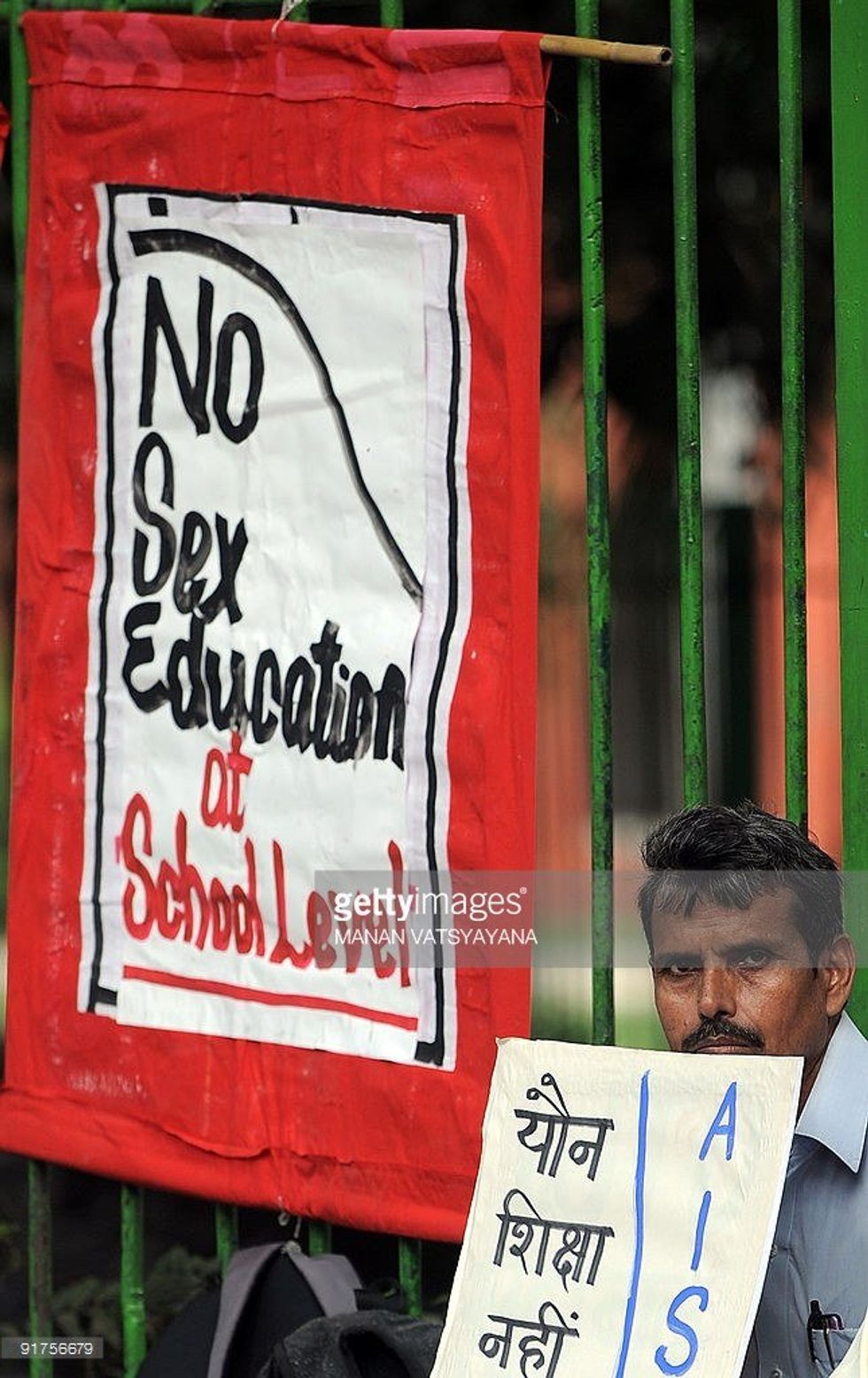
In 2014, Union health minister Hash Vardhan stated that " sex education should be banned in India" and advocated for value education and yoga instead. He had earlier raised controversy when he said that fidelity in marriage is a better prevention for AIDS than the use of condoms. Sadly, sex is a sensitive subject of taboo and considered a shameful act in most of India and there is a greater emphasis on value education and abstinence instead. In a country where people don't hesitate to have sex; conversations about it are considered abominable and against Indian values.There are numerous misconceptions about sex-education in India where regard it simply as a course on intercourse and thus unnecessary for the children to learn about until marriage. Thus, many parents and educators are uncomfortable to talk about it with children.

No, Sex is not about just about adults. Teenage pregnancies, child abuses, sexually transmitted infections are sad truths of our society. No, It is against Indian values and cultures as it has nothing to do with culture but is rather a part of human nature. If anything, sex-education will prevent the high rates of sexually-transmitted diseases and teenage pregnancy. No, sex-education is not just a lesson on intercourse. It also entails other aspects like physiological changes that comes with growing up. Adolescents is an age of transition from childhood to adulthood. And institutionalizing sex-education is a step forward in forming right attitudes about sex, sexuality, relationships and intimacy amongst adolescents so that they make safe and informed choices in life.