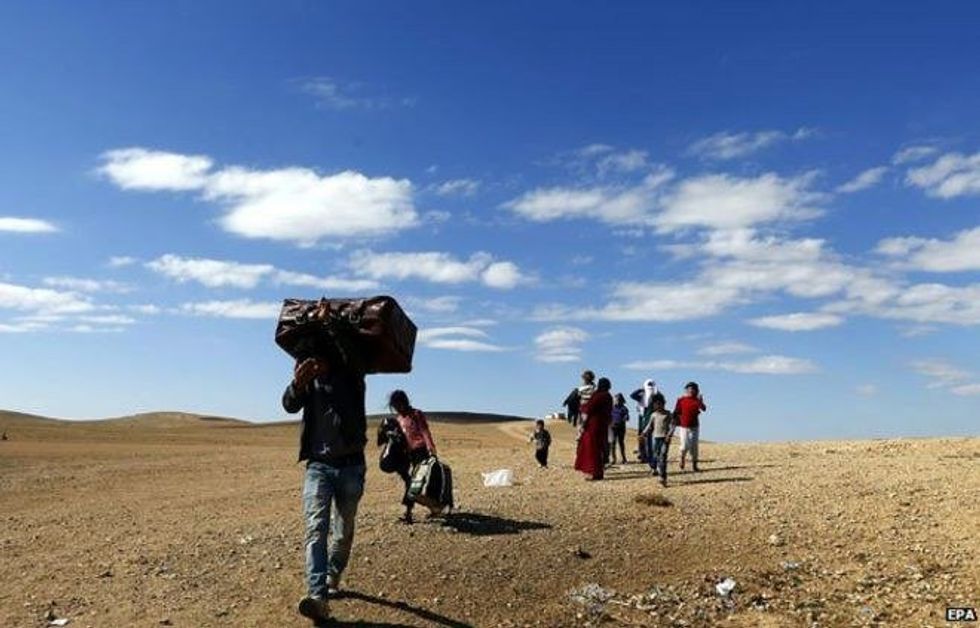
Since 2011, more than 10.5 million Syrians have been displaced from their homes due to civil war. Seventy-percent of citizens have no water, 67-percent have no food and 80-percent of them live in poverty. In a country that was young, well educated and decently wealthy, it is a shock to see the damage that has been done due to the fighting. However, it is hard to picture six million children who have been displaced, it is hard to comprehend the four and a half million people who have fled their home country and it is hard to imagine the 400,000 people who are unable to receive life-saving aid because they are in unreachable places.
Behind all of the political rhetoric and debate that has taken over the Western world, there are millions of people with their own story that are living in overcrowded, underfunded refugee camps around the world. Almost every day you hear and read stories about boats full of refugees on their way to Europe capsizing because they are overfilled. Every week you hear about a country that has decided not to accept refugees out of fear and ignorance. Every month you hear about the many charities trying to help out but lacking the funding. Yet every time, you turn off the news and scroll past the articles that mention the war because you are tired of hearing about it.
But let me put it in perspective.
Imagine a small town of around 10,000 citizens. This is a thriving town with a small college (much like Waverly, Iowa). A generation ago, a mayor came to power in the form of a military coup. We'll call them Mayor Adams. He was not Christian, unlike the majority of the population, and the Christians were angry about this. During his reign, there was much fighting. This fighting was mostly over territory but also suppressing those against him.
In 2011, many of the surrounding small towns started getting mad at their governments and the young people started protesting, pleading for democracy. The protests eventually turned into full out revolts in some towns.
In this small town, the young people also starting protesting, pleading for democracy. The local law enforcement started attacking, imprisoning and killing these protestors which brought more of them out. Eventually, the protesters started fighting back against law enforcement, turning the protests into a war.
Now the war in the small town started as the rebels started claiming area and the government fighting back. Many war crimes were committed on both sides of the war including torture, murder and the use of chemical weapons.
To make matters worse, a local gang has decided that this war is a perfect time for them to come in and claim land. So they join as a third party in the fight and start taking over many of the northern suburbs while the main war is happening in the south. In the summer of 2014, they have enough land to set up shop. They have killed and ruined the lives of many people who were caught in their way.
Cities around the state were distraught to see the fighting that was happening and often tried to send aid. One big city, the United States, sent military aid to the rebels. Another major city, Russia, promised to "fight the terrorists". However, Russia is friends with the Mayor and often fought against the rebels, claiming they were terrorists.
During the fighting, 20-percent of the population, around 2000 people, fled to the surrounding towns to seek refuge and asylum. About 200 of those sought out bigger, wealthier cities in hopes that they would take them in. Yet these bigger and wealthier cities were scared that the refugees would take their jobs, ruin their culture and commit crime.
As the smaller towns are filling up with refugees, they become unable to support all of them. State and federal help is trying their best, but they are running out of money and resources to be able to help these people. Children are receiving minimal education, if any at all, and families are not able to get jobs. They are earning $3 or less a day.
Twenty-eight-percent of the townspeople, around 2800 people, were displaced from their homes but are stuck inside the town. Nineteen percent, or around 1900 people are stuck in hard to reach areas with 173 people in areas that are inaccessible to those trying to help.
So just under 5000 of the 10,000 original citizens have been forced to leave their homes. Many of those left behind are in left in the war zone. Over 1,150 people have been killed.
Now this is much more comprehend-able. But scaling it back up, more than 4.5 million people have fled Syria, more than 6.5 million people have lost their homes and are displaced. Four hundred seventy thousand people have been killed, as far as we know.
United Nations is trying their best to help out but they are lacking resources. The UN estimates that they will need $3.2 billion to help. And even as the war seems to be ending, those 6.5 million people will not have homes to go back to.
There are many charities and organizations that are doing their best to help out. Larger charities like Save the Children, UNHCR and UNICEF are working as best they can to help out. There are also many smaller charities helping out as well.
However, if you are like me and many others and have no money to give, I suggest downloading the free Chrome extension Tab for a Cause. Essentially, every time you open a tab you gain a heart and you donate those hearts to the charity of your choosing. The money comes from ads that run on the newly opened tab and you customize this page with bookmarks, calendars, sticky notes and many other widgets. I highly suggest you check it out.
I have also put together a playlist of videos that help put in perspective the refugee crisis. If you'd like to learn more about the background of Syria, The BBC have a great timeline of events. They also have a list of the big ideas around the war.