
“You’re probably going to hate me for saying this, but I can’t stand hearing women talk about football.” This quote was retrieved from a 2013 Sarah Spain article, about a blind date she went on with a smart, ambitious college graduate. She had just told him she was an associate producer for a sports nightly highlight show. Spain went on to elaborate that his opinions are not unpopular. This take is one people feel comfortable expressing in person about women in sports, but what happens when people sit behind a computer screen? What Spain received from her dud of a blind date turns out to be incredibly mild. Take a look at analysis given via social media, more specifically Twitter, by prominent women sports journalists. It is disturbingly easy to find comments aimed at female journalists that are vulgar, sexually explicit, or even threatening.
If you do not think harassment is an issue or have not been exposed to it on the Internet, take a moment to watch John Oliver’s episode on Online Harassment from his HBO show, “Last Week Tonight.” In it, John Oliver congratulates the people who have never been harassed online for their “white penis” (Oliver is brilliant at bringing comedy to these subjects). For those of you who believe this affects men too, I don’t disagree. But look at the statistics.
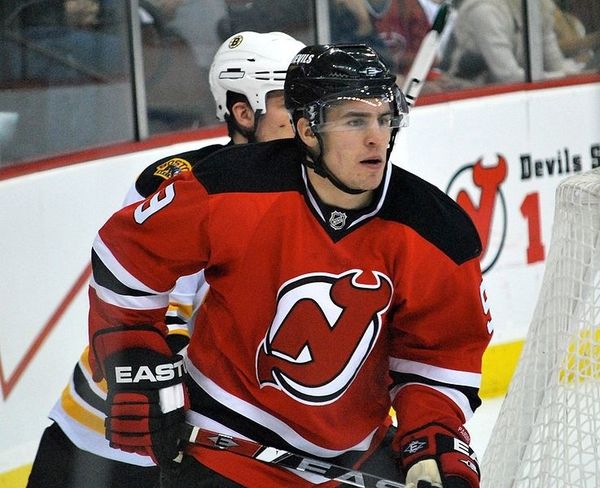
In the organization Working to Halt Online Abuse’s 2000-2012 study, of the 3,787 people who reported harassing incidents online, 72.5 percent of them were female. Chicago sports radio station, 670 The Score, anchor Julie Dicaro recently published a must-read piece for SI, shining a light on her experiences with Twitter threats and assault. The results are unnerving. Dicaro understands her job subjects her to more scrutiny, but some things get too personal. Dicaro’s station was in the midst of covering the investigation of an alleged rape by Chicago Black Hawk’s hockey player, Patrick Kane. As a rape survivor, the responses to her Patrick Kane related tweets rightfully made her feel unsafe -- “@pcdene: Hopefully this skank @JulieDiCaro is Bill Cosby’s next victim. That would be classic.” “@udpaule: @JulieDiCaro One of the Blackhawks player should beat you to death with their hockey stick like the W**** you are. C***.” One comment made her feel so unsafe she stayed home from work. Said comment was deleted and could not be included in her article.
These findings are clearly alarming. As John Oliver says, these types of threats online are often pointed at any woman who “makes the mistake of having a thought in her mind and then vocalizes it online.” There are laws against online harassment, but many police departments do not have enough knowledge, or resources, to appropriately act upon the allegations. Isn’t it time to let women into the “men’s club” that is sports? I’m not talking about just “letting” them be the sideline reporter every dad gushes about, or “allowing” them to moderate Skip Bayless and Stephen A. Smith's arguments. I mean real opinions, coming from actual knowledge that a lot of them can and do possess. Women are not inherently unable to understand sports. For every mom out there who doesn’t understand the difference between a point guard and a left guard, there is a group of intoxicated men sitting behind me at a Packers game starting a chant to get Coach McCarthy to put Matt Flynn in (a quarter and a half after Flynn had already replaced Scott Tolzien against Minnesota).
It is time people understand their gender identification doesn’t give them inherent abilities to understand sports. It is also time to talk about how women with views on sports are subjected to harassment online. The Internet is not going away, and we need to strengthen laws against online harassment. Just this past week I came across a tweet from someone on my timeline aimed at Hillary Clinton telling her to “Shut your w**** mouth” and calling her “a f****** c***.” This is happening all around us. And although Clinton is no sports figure, it is clear some people have no idea how wrong this is. Before you send these tweets, take a moment to think about the consequences. If for some reason you can’t resist, at the very least, think about it selfishly and understand how future and current employers would think about it, and don’t send it. Hopefully Dicaro’s story and the women on Oliver’s show help exhibit that these are people, not just accounts.