


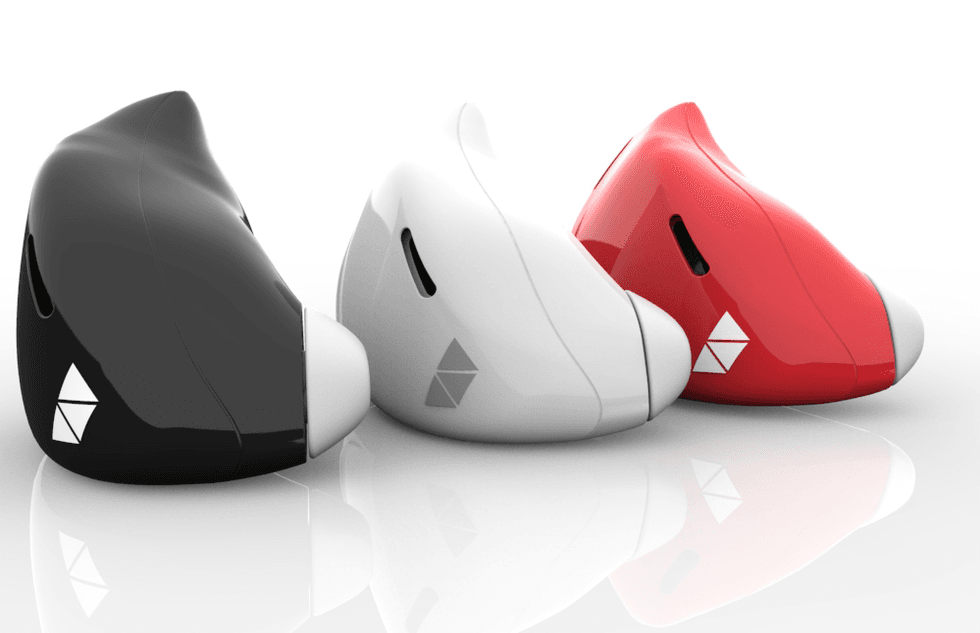
Word is spreading about a new piece of technology on the horizon: an in-ear Bluetooth device that translates foreign languages in real time. According to Discovery News, the Waverly Labs of New York City hopes to get this device, The Pilot, out into the market by spring of next year. While most reactions are intrigue and excitement, some reactions are not so enthusiastic. Some claim it is an easy way out of learning a language and a lazy form of communication. Is it really a lazy form of communication? Or is it an opportunity to communicate with people you couldn’t talk to without the device?
All throughout high school, I have been taking Spanish class in a slow, but steady attempt to read and speak the language. Despite the fact that Spanish is a much easier language to learn than say, Arabic, because of its similarities to English, it is still extremely frustrating at times.
Trying to figure out the difference between using the subjunctive tense and the conditional, present, past, future, and indicative tenses induces headaches. Also, the fact that there are grammar“rules in place, but for every rule, there are double the amount of exceptions.
When reading about this new invention, my reaction was mixed. Instinctively, I was impressed with the technology. It also initially struck me as a fantastic way to integrate cultures and breakdown language barriers which can segregate people from one another. Culturally, it seemed like a breakthrough and potentially life-changing tool for so many people.
After considering it and thinking further about it, I also questioned its usage. Did this mean people would put less emphasis on learning other languages? Would it mean people in the future would be communicating not with each other’s voices, but through a piece of technology in their ear? Why am I spending so much time and effort trying to learn a new language if this could be the future of communication between cultures?
Like most concepts, I believe The Pilot has its benefits, but only to a certain extent. I believe that to say it is completely destroying culture and making people lazy is an ignorant statement.
Some people don’t have the time or money to learn a new language. For some people, they may have already invested the time and money to learn a language, but may want to use this device to translate other languages. Some people may be learning the language, but just aren’t ready or comfortable enough yet to use their skills and want to start by using this translator.
Either way, these circumstances cannot be overlooked.
However, the priority should be learning the foreign language before choosing this option. Before considering buying this technology (which could retail for $200-300), that money and time should be considered to be invested in education in the language. It should be the last resort.
This is because technology is not an equivalent or replacement of real, human communication. It will never be equivalent. Sure, it may come close, but it will never be the same as hearing your family, friend, or coworker’s real voice and words.
My hope is that this technology will not reach extreme popularity and learning a language, firsthand, will always be the prioritized and encouraged rather than the simulation of communication through technology.

















