

It’s present in many vocabularies, starting as early as elementary school. People—even full-grown adults—use it all the time to describe the stupidity of others. It can even be used to explain the uselessness of an object. Although much effort has gone into destigmatizing this word, it has been to no avail. It’s used in conversation and is commonplace on the internet, too.
I’m talking about “Retarded.”
An intellectual disability, or what was once known as mental retardation, is defined by the DSM-V as “a disorder with onset during the developmental period that includes both intellectual and adaptive functioning deficits in conceptual, social, and practical domains.” Individuals who were once diagnosed as having mental retardation are now classified as individuals with an intellectual disability. Some people have qualms about this name change, not quite understanding why the change occurred.
It’s simple: stigmatization.
Here’s an example. The word retarded ran rampant throughout my middle school. Someone would make a mistake, and that was “so retarded.” Someone acted a little more silly than usual, and they were automatically branded as “a retard.” I have an extremely vivid memory of a particular group of boys who would openly mock “the retards,” (as they referred to them,) flapping their arms, speaking with a lisp, and saying inappropriate, sometimes suggestive comments.
Even at the age of ten or eleven, my peers were already capable of stigmatizing individuals with an intellectual disability. A preconceived definition of intellectual disability had already been formed; of course, this included the use of the word retarded.
Luckily, as I entered high school the explicit mockery ceased. On the downside, however, inanimate objects were now classified as retarded. “This homework’s retarded,” chimed the boy next to me in my US History class. A girl in my chemistry class once exclaimed: “that retarded quiz brought my grade down!” The bell system was retarded. The attendance policy was retarded. The lunch lines were retarded. As if overnight, every single rule or assignment that was deemed worthless or stupid was now called retarded.
In the context that apathetic teenagers or uninformed individuals are familiar with, the word “retarded” holds weight with its various meanings. It covers a wide range of characteristics. Something is retarded if it is useless, it’s unintelligent, or if it’s bothersome. A “retard” is someone who doesn’t act normal or does something erroneous and embarrassing. After all, these are the true characteristics of those with intellectual disabilities, right?
That’s absolutely and positively wrong.
It pains me that I’d ever even have to explain this.
Those living with disabilities (any disability) are perhaps the most inspiring, important, and compassionate people I have ever had the pleasure of knowing. Knowing that people use the word retarded in reference with these people is absolutely heart-wrenching.
What’s even more disparaging is that the word is being used by students with disabilities as well. While working in one of the special education classrooms during my senior year of high school, students would use this word freely to describe people, actions, and things. Even the individuals who are ridiculed (intentionally or unintentionally) with the use of the word “retarded” used it in everyday conversation. The pejoration with the word has stemmed so far from its original denotation that it has become a mere synonym for a plethora of negative characteristics.
Some might attempt to argue and say, “well, if the word retarded doesn’t represent what it used to, what’s the problem with using it to—”
Stop. The problem with using the word retarded is that it undermines both the struggles and successes that individuals with intellectual disabilities have had to overcome. Institutionalization, for example, was once the protocol for eliminating these individuals from society in parts of the 20th century. Eugenics and sterilization in Europe during World War II exterminated hundreds of thousands of individuals who had disabilities.
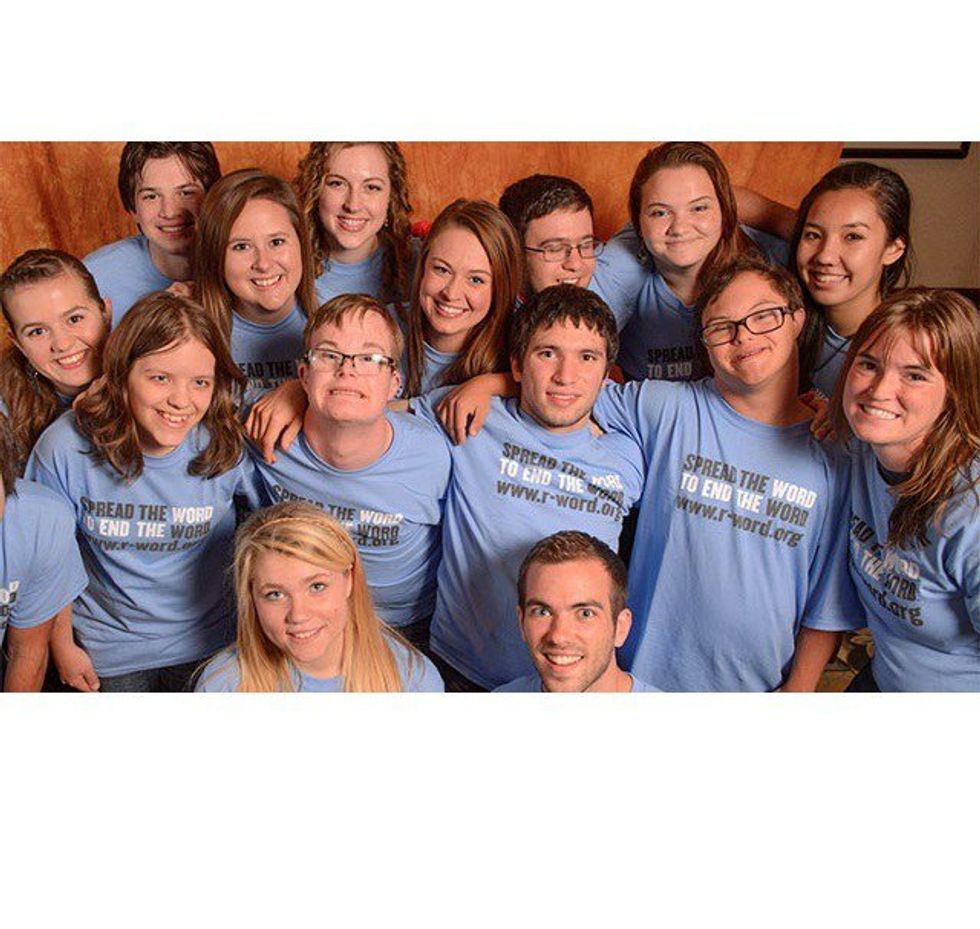
As the stigmatization of the r-word grows, our society further erases the history of millions of individuals. In support of putting this word to rest, the campaign Spread the Word to End the Word (r-word.org) advocates for the elimination of this derogatory word. Because that's what the word retarded is: derogatory.
It isn’t cute when you call your buddy this. It isn’t amusing to witness you freely using it to describe idiocy. It most certainly isn’t okay to demoralize the achievements of millions of individuals who have progressed so far within the past fifty years.
Stop saying the word "retarded."