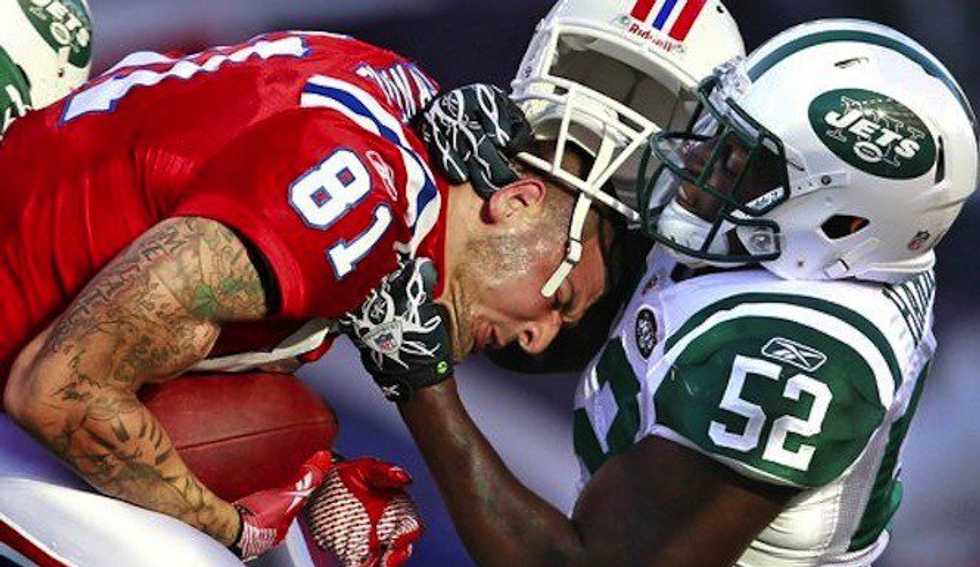
If you love the game of football (like millions of other Americans) it's probably for one of two reasons. First, you grew up watching “your” team and you can’t get enough of the hard-hitting, hard-nosed action. Or, you have become consumed by the highly addicting, heart pounding weekly cash cow that is fantasy football (that’s a topic for another time). Regardless of your reasoning for tuning in, if the NFL continues down its path the future forecast of the game of football is cloudy with a good chance of pain.
Recently, medical research and evidence have debunked the old myth that playing competitive tackle football does not increase one’s risk for head injury. In the past, the NFL has vehemently denied that the hard-hitting nature of football causes serious health issues especially to the brain. Specifically, the appearance of CTE (chronic traumatic encephalopathy) in hundreds of cat scans of players post mortem is evidence of the contrary. If you are not familiar with CTE consider yourself lucky you never want to be. CTE is a destructive degenerative disease that results in brain trauma because of continuous hits to the head. Symptoms of the disease have been shown in hundreds of athletes and can range from impaired judgment all the way to depression and dementia. Although CTE can only be diagnosed post mortem (after death) its likelihood of affecting football players during their lives is extremely high. In fact, a recent study at the Boston University School of medicine demonstrated just how common CTE is in NFL veterans. Out of 34 players examined, 33 showed traces of CTE. This is bone-chilling evidence. The disease is so common among players that it would be less likely for a NFL veteran to walk away CTE free.
Due to the increased amounts of evidence on the detrimental impact of playing football on one’s body many players have decided playing is just too risky. In fact, some players have decided to give up the game entirely. A recent example of this is the untimely departure of former 49er’s linebacker Chris Borland. Borland, a young educated middle linebacker out of the University of Wisconsin at Madison, shocked many when he decided to put the pads up for good after just a single season. Although Borland was a very skilled linebacker and a passionate competitor he could no longer ignore the medical facts that now are as clear as day. Borland was not willing to put his life on the line for sport and felt that his health was far more valuable than his rookie contract.
Hundreds of kids are following Chris Borland’s lead. The amount of young people choosing to play football is dropping each year. Pop warner (the nations largest youth football program), for example, reported almost a 10% drop in participation from 2010 to 2012. Parents are no longer allowing their kids to play football. Although I grew up playing football and truly love the game, how can I blame them?
Truthfully, the NFL and the nature of the game will need to change if it is to become safer. Concussion preventing helmets, renovated padding and new tackling rules may be part of the solution but the issue is far more complex than that. The sport, by it’s very nature, is violent and not for the faint of heart. For many, football’s nature is what makes it so appealing. However, when we realize that the physical damage that’s being done to players is irreversible and the emotional damage that friends and families have to endure is crippling we may choose to reconsider our why we love the game. In reality, a true solution will require cooperation and compromise by all (the NFL, NFLPA and fans) to accept change.