
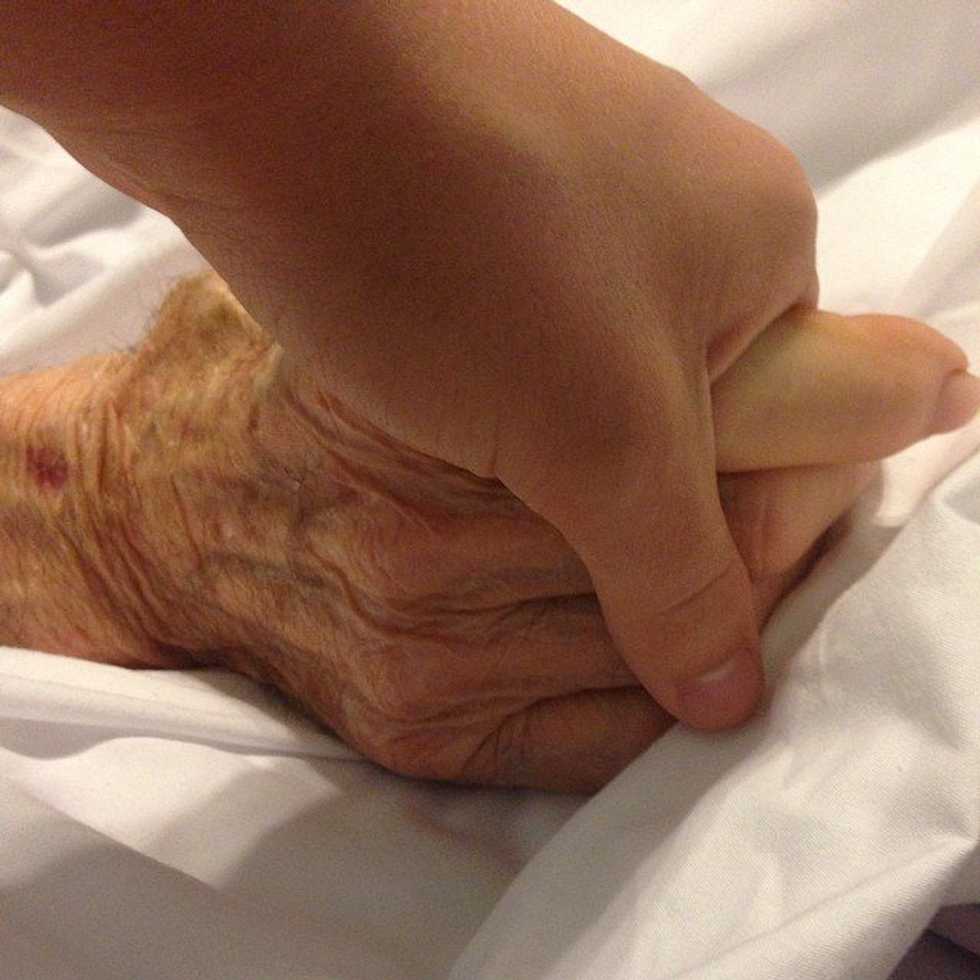
There is something sick and twisted about a mentally degenerative disease that slowly eats away at a person and taking away their memories, their motor functions and ultimately the person themselves. It is the most heartbreaking form of torture to see someone you love with your entire being flinch away from your embrace and ask who you are.
Two years ago this past April, my grandfather passed away from highly advanced Alzheimer’s and metastasized liver cancer. He was our everything. He taught us to fish, put up fences, shell peas, catch worms, you name it. My grandfather was the epitome of a southern gentleman, always working hard for his family and laughing his way through the good and bad days. Towards the end of his life, my grandfather was diagnosed with Alzheimer’s and the research will tell you that it goes downhill pretty rapidly from there.
I am here to tell you that is a bold-faced lie. Alzheimer’s thought it won. It thought it had taken our larger-than-life idol and brought him to his knees. It didn’t. You can look at life in two ways; half full or half empty. My family chose half full. I’m not telling you there weren’t enough tears to fill an ocean or days where his unprompted bouts of anger didn’t shatter our hearts. But oh, how we loved the days where he laughed and retold his stories. How he would sit on the porch and tell recollections of memories that would just pop into his head out of nowhere as he rocked in the swing with the sun setting. The jokes that would break the silence at the dinner table and had everyone bent over their meals in laughter. Alzheimer’s didn’t stop his joy.
My grandmother told me once that, while they were watching TV, he looked over at her and asked if he could marry her. After 53 years, four kids, and a hoard of grandchildren, this man who had lost his memory of their years together still chose her. She told me they spent the entire rest of the evening holding hands as she told him story after story of their beautiful life together.
My family developed special skills that can only come from loving someone with Alzheimer’s. We knew when he needed help, we knew when he needed to still feel like an independent man, we knew when to be tough and we knew when to hug each other and let the tears fall.
One day a man came into my job and I realized right away he had Alzheimer’s, if not something drastically similar to it. He became angry that our business' time was not in military format. My co-workers couldn’t understand why he was so upset and called me over. After my grandfather passed away I packed those skills away in my heart. It was time to bring them out again. I told the man I agreed with him and gave him plenty of reasons as to why he was correct and we were wrong. I’ve never seen a wife look so grateful. She and I shared a secret smile that day. One that said I have your back and I have those special skills of calming a potential storm as well.
After they left I quietly excused myself to the restroom and cried my eyes out. The memories that had been stored so far in my heart to avoid the pain came flooding back in full force. But then something amazing happened. My mom and I went to my grandmother’s house that weekend and I told the story of the man at work. And then my grandmother told a story, and then my mom too. The next thing I knew my family and I were sitting around a table just like we had with my grandfather remembering the good times and the precious moments we had with my grandfather.
That’s when I knew that Alzheimer’s had lost. This disease that thought it had destroyed our loved one couldn’t stop our memories of him. It couldn’t erase the love in our hearts or the feelings of joy as we brought to life his memory. And just like that, he was back at that kitchen table drinking coffee and eating a jelly biscuit. He was fishing with worms we caught in the back yard. He was yelling for the Braves to run faster on TV. He was playing Scrabble and chicken scratch. He was laughing at my cheesy jokes.
So, if your loved one is experiencing Alzheimer’s or something to the same effect, I encourage you to find this mindset: “They may not remember, but I can remember for the both of us.”
I can tell them that story of us over and over and watch them smile again and again as if it was the first time they are experiencing the moment. And when it’s all said and done I hope that you find peace in those memories. Don’t store them away deep in your heart, let them shine on the very first page of your life story.
You won’t win Alzheimer’s; I will always remember for the both of us.