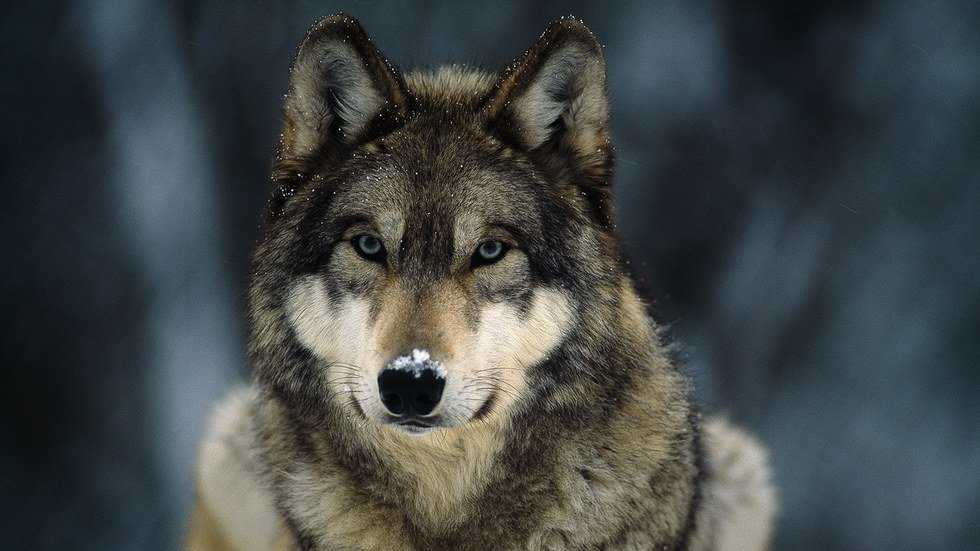
Two weeks ago, on Sept. 15, an Eastern Washington man chased down a protected gray wolf with his car, then proceeded to shoot and kill the animal. In Washington State, wolves are classified as an endangered species and this type of illegal action entails at least a year of jail time and a $5,000 fine. Rather, this certain man has been released with a mere $100 fine and a promise to keep from violating any other fish and game regulations throughout the next year in order to get this misdemeanor taken off of his record.
The point we are at with this species goes beyond the tale old declining species of elk due to rising wolf populations within our Northern Region. It goes beyond the thousands of cattle and sheep killed, not only by wolves but other predators as well. It goes beyond the endless number of studies done by hundreds of researchers to prove that a wild animal, a native creature, has the right to share with us the similar land to that of what it previously roamed. It goes beyond the man who told his son to shoot the wolf they saw in the distance, when it ended up being someone’s pet husky.
It goes beyond the thousands of wild game each year illegally poached within the state of Idaho, numbers we do not take into consideration while we point fingers at anything else but us. It goes beyond wildlife management. It goes beyond our attempt to “manage” the natural world. It goes beyond the lives that have been altered due to their presence.
This is perhaps the most controversial topic that is native to our state of Idaho: the reintroduction of the Gray Wolf. 20 years ago this past June, four wolves were released into The Frank Church Wilderness range in central Idaho, back into their ecologically speaking, native territory. Since this reintroduction their population has grown, and the amount of turmoil between our species and theirs has grown alongside it.
Tales dating back to ancient times have consistently taught us to fear wolves, Little Red Riding Hood being a prime example; the tale of the innocent and helpless human vs. the big bad wolf.
Though this is a fictional story, the theme still holds true to many in this day and age.
Humans are predators; we depend on other sources and organisms to obtain energy and to keep us alive. For centuries we have relied on our surrounding environment for these sources, and for centuries we have competed for those same resources with fellow predators. It is a natural balance; it is what Darwin referred to as natural selection and survival of the fittest, and it is how nature manages us.
However, humans advanced past this point. We have “out-smarted” the power of nature, we no longer rely on primitive techniques to keep our population stable, we have created our own techniques. We have temporarily found a loophole through the world’s carrying capacity regarding the human population.
At this point; there are far more predators on this planet than there are “prey,” and we are competing for the same resources.
With the growth of our population, we have encroached upon the habitats of wild animals. We have placed ourselves directly within the hunting grounds of large predatory species. And we have cried out when they have taken from us what we dangled in front of their faces. We have forgotten about the method of co-existing. We have forgotten that nature’s methods of balance have never changed; that it is still survival of the fittest. We have forgotten that naturally speaking, any living organism is going to do what it needs in order to stay alive.
Idahoans have grown up amongst the North American Cougar and three of our primary bear species, grizzlies presenting the highest amount of terror among humans. However, wolves have just now recently been implemented into our society, so it came as somewhat of a culture shock which we are still getting used to and having to adapt to, when overall, grizzlies and cougars are the most aggressive when threatened and pose the most threat to our human safety, by far, as compared to the wolves.
It is in our biology to feel the pressure of change, to feel threatened when our routine gets thrown off of its track. Therefore, it is natural that many people have been taken aback by this and have felt effects that the growing wolf population has had on their daily lives.
Idaho is a producing state; we rely on our land to sustain our local economy, and it has remained this way for hundreds of years. However, only 20 of those years have included the presence of the Grey Wolf Species. Ranchers, farmers, hunters, and biologists are still struggling to adapt to this shift in the ecosystem.
For many, adapting is not an option, so they are deciding to take the situation into their own hands. For many, co-existence is not an option.
And for many, the big bad wolf is just what they will always be.