
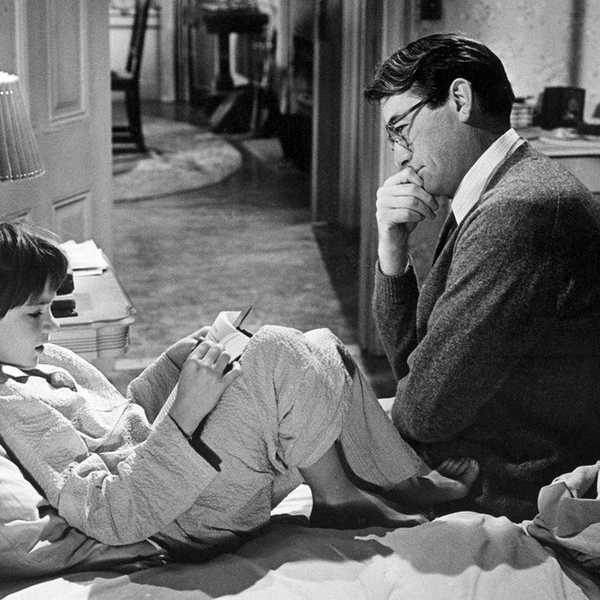
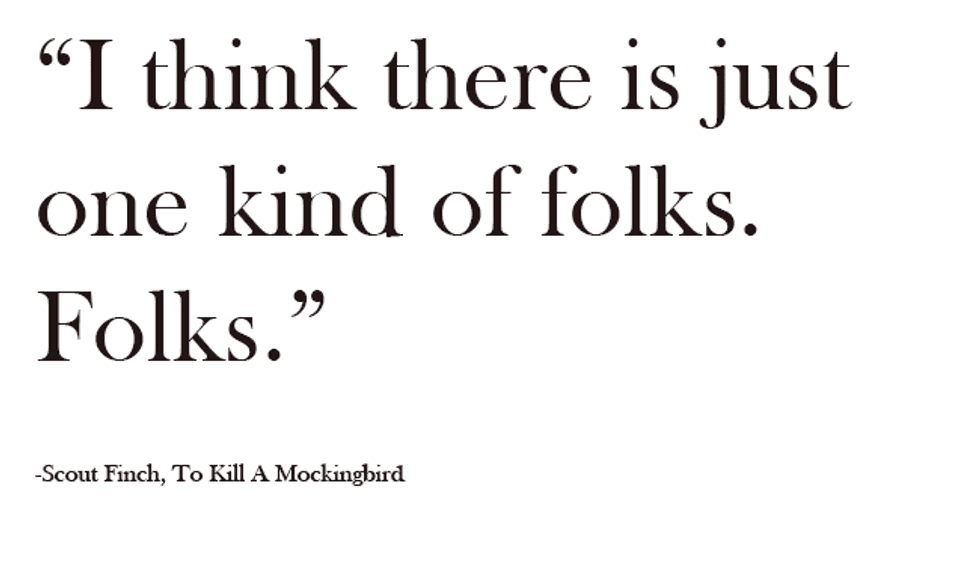
I feel as though I have lost a very old, very good friend. When I received the news of Harper Lee’s death, I was hit with an overwhelming sadness, usually reserved for people known personally. But I think, sometimes, being so closely acquainted with someone’s words can feel similar to knowing them. Holding a book can feel like holding a piece of someone’s heart. Harper Lee’s "To Kill a Mockingbird" has, undoubtedly, had a hugely significant impact on our world today. It’s a title recognized by all, a beautifully crafted story that rings true with most all who read it. And most all do read it.
It’s been quite a few years now since I first opened the story narrated by Scout Finch, was transported to Maycomb, Ala., and taught lessons I didn’t know I needed to learn. I think that’s one of the many beauties of Harper Lee’s story: it teaches without ever preaching and makes you open your eyes in subtle but certain ways. I also think it’s easy to forget some of these lessons as we grow up. To honor Harper Lee, and all she taught me, I think it’s time to remember what she gave me when I first read her book as a child.
Perhaps no character has resonated so strongly with readers as Atticus Finch, so full of warmth, kindness, and some of the best advice ever delivered. It’s impossible to consider what Ms. Lee taught me without taking Atticus’s incredibly well-spoken pieces into account. A personal favorite:
“Shoot all the bluejays you want, if you can hit 'em, but remember it's a sin to kill a mockingbird.”
A call to protect the innocence alive put so exquisitely that it rings true several decades later. Or perhaps another one,
“You never really understand a person until you consider things from his point of view... Until you climb inside of his skin and walk around in it.”
These are words I think we have all needed to hear at some point or another, a gentle reminder to never judge a person without trying to see where they’re coming from, without trying to understand them truly. I often wish I were as wise as Atticus Finch. While I doubt I will be there anytime soon, I will try to remember to think of his words, to consider the goodness he represents and helps us find within ourselves.
And perhaps we should look at what Lee’s story teaches us about growing up. I think most of us read this book at a time of transition, I know I certainly did. Many aspects of the story have to do with coming of age. Our young narrator, Scout is only nine years old at the events of the story, and she is seeing some of the scarier parts of the world for the first time. Scout has to make difficult choices for the first time,
And let us not forget the way Harper Lee made us see the racial issues of the nation in a frank and honest manner. I truly understood the nature of inequality, I think, for the first time reading this novel, and it scares me how much this rings true today.We must remember to stay on the right side of the fight, and to recognize and face injustice head on, much in the way Atticus Finch did.
I am deeply saddened by the loss of Harper Lee, and the more I write about her, the stranger it is to think of existing in a world where she does not. But we are very lucky to have the words she left behind, her words so full of power and of love. We will all remember the woman who gave us the book that helped us to grow up, to see things in new ways, to be good. Thank you, Harper Lee, for the story you shared and all the greatness that came along with it.