
I had a friend in high school who cut. Don't let that define her, though. There's much more to her. She loved literature, garage sales, Lewis Carroll and her black converse. She was restless, full of daydreams, begging to run off and see the world. And she was terrified of rain. Because rain is dark, wet and unavoidable. The horizon seems to bend beneath the weight of a thunderstorm, and that kind of thing always reminded her of her own weakness. And then that weakness would become anxiety. And even though people thought it was because of her pretty face--"she's just insecure," they'd say--that was never true. What, after all, drives a person to cut themselves? Nothing that simple. Not the rain or the weakness or anything like that. Those were just reminders. "Triggers."
Anyway, she was so thoughtful, so compassionate and kind. What else could I do when I found out about her wrists, her thighs, her sides... when I woke up to texts that said, "are you awake? I'm scared...I screwed up"? What are you supposed to do then? I was smart enough to know I couldn't save her; I was dumb enough to maybe try...maybe? All I could do in the moment was weep.
This article is about that, about sadness, empathy and weeping, and about whether or not tears are a kind of hope, or a kind of hopelessness. Let me begin just a year after I graduated high school.
So I'm beginning to subscribe to newspapers and magazines: The Wall Street Journal, the New York Times, the Economist, the New Yorker, and a few other, less newsy types. It's early summer, and I promise myself I'm going to catch up with the world. Like it's an old friend I've been neglecting or something, I'm going to find out what's up. How are you? What's new? A few weeks into this routine, I recognize a strangely familiar feeling swelling in my lungs and up into my throat. It's not just empathy, but sadness.
Surely anyone can relate to this. Sometimes I think news headlines seem like humanity's scars, you know? Thousands of refugees rejected and abandoned. Relics of the ancient world destroyed by fanatics. Journalist murdered. Young recruits witness beheadings. Sex trafficking is a multibillion dollar industry. Excessive consumption damaging environment. Suicide rates climbing. Pharmaceutical companies defrauding mentally ill for profit. Young minorities killed by cops. New drug causes deaths.
It's all a razor to the wrist of the world. And even though so many of us want to help, we're paralyzed by our own understanding. We know that we alone aren't enough, that no one person or one group has all the answers, that it's going to take a lot of time and a lot of effort and a lot of courage. But where do tears factor in? More often than not, when I ask my friends about this kind of sadness, they take on a somber tone and confess that crying, to them, feels like so much wasted energy, so much wasted time.
There's actually an old story told about Solon, the great Athenian, who was found weeping in the street because his son had died. And the pedant who found him asked, "Why do you weep if weeping avails nothing?" Pause. What a shitty thing to ask someone right then, honestly. But anyway, Solon's enduring reply came, "precisely for that reason--because it avails nothing."
Notice, however, that Solon cries because he can't do anything else, because his son is already lost and there's nothing left to do but cry. I think this is what we call "grief." It's a powerful emotion, as some of you readers surely know. But what is this despair that colors my friends? Surely it isn't grief? Is the world already lost? No. And yet they are profoundly skeptical of its importance, weeping. Just think, the symbol so many ancient myths chose to represent regeneration, resurrection, new life, and hope... tears, and they are profoundly skeptical of their importance. What's more, I think this position is not only odd, but widespread.
Media theorists have spoken of a certain "apocalypse fatigue" that supposedly wears young people out these days. The fact it took a group of people with $200,000 PhDs to figure out that a constant stream of bad news can be tiring is beyond me. So I won't even spend time proving its existence. Instead, I want to make a simple, almost commonsensical point: Although it's hard to stay afloat when the headlines stream through news media like the world's tears themselves, burying the sadness, dousing the sadness, giving up on the sadness--these are the only surefire ways to make yourself feel worse.
Back to those ancient myths. In the earliest written description of crying, Anat, a goddess, weeps over the death of her brother, Ba'al. The text says that she wept continuously, "to drink tears like wine." Pain or sadness may be the cause of much crying, but the crying itself is cathartic, healthy. It releases in a way that can even seem intoxicating or transcendent. Some neuroscientists today believe that this is because, when the mind is thrown into emotional turmoil too great for the powers of thought and reflection, the body overwhelms it with tears in order to remove it from the disturbing stimulus. The body, in effect, frees the mind of its crippling emotions. And whereas some consider this a primarily self-centered technique (I'm thinking of Jean-Paul Sartre in his "Sketch for a Theory of Emotions"), I don't think it is.
Because it seems like there's another way to look at this.
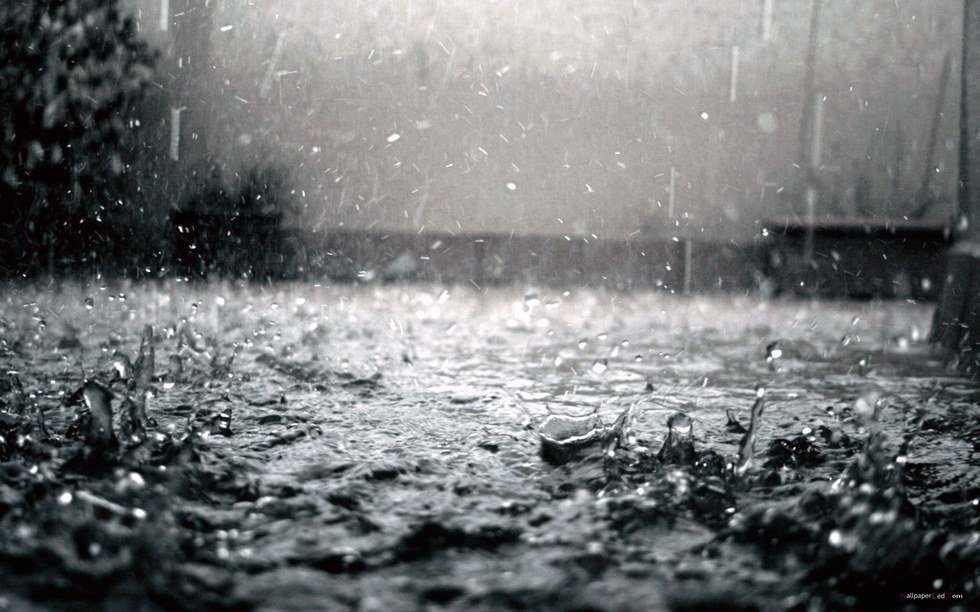
So it's raining cats and dogs outside as I look out the window from my room. And I think of my friend, who must be curled up in her bed listening to The XX or Flatsound or maybe something loud. And I think of her sides, striped like she just fell off a cliff and rolled down a rocky mountainside. And I think of her past, equally as traumatic as falling off a cliff might be--maybe more. And I think about how so few people even know, and about how much shit she gets for being shy and "fragile," and about how strong she is even though no one sees it... and I begin to worry that she might crack. I begin to worry that I can't save her. I begin to feel the weight of the rain on my thoughts. And before long, I'm being washed away, like Alice in Wonderland, on a river my eyes are the source of.
But the river releases me. I let go of the crippling fears--it is, more often than not, fear that cripples us in the end--and I remind myself that she's OK. And I'm OK. And I can keep going. And she can keep going.
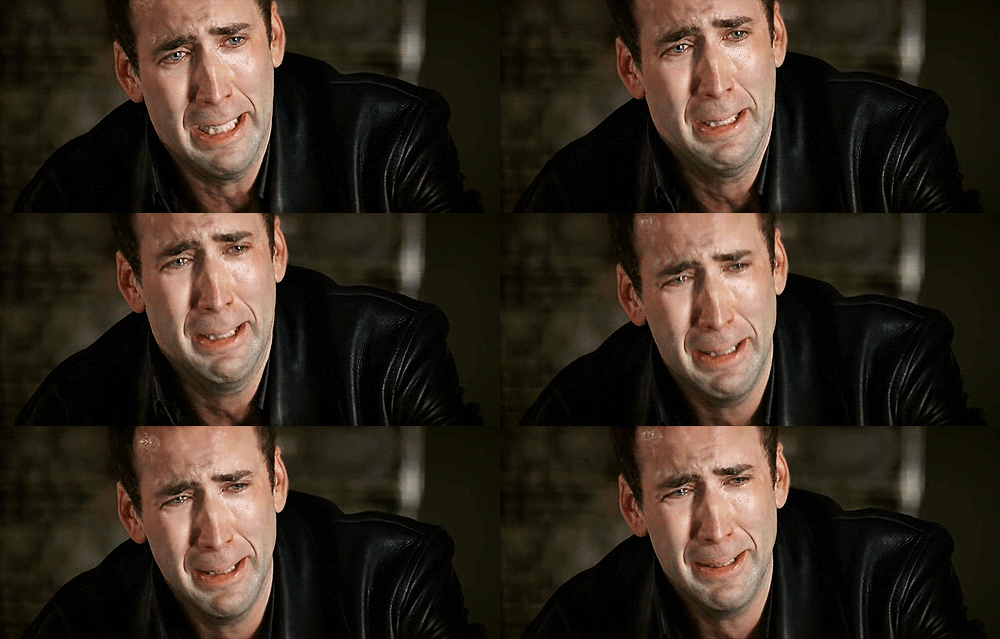
I just needed to be honest for a moment and cry. I needed to let the world know that sometimes I genuinely think that it's all going to hell in a handbasket and there's nothing we can do about it. And my body took over helped me get it all out. Afterwards, I can move again...toward a not impossible future where my friend overcomes and recovers. And I can move toward that future precisely because I didn't give up on her, because I faced my sadness and let it wash over me, like Anat's tears bringing me new life.
The world is in pain and we don't always know what to do. But we can't give up. And the best way to do that is to face our sadness honestly, not burying it or ignoring it, but letting it out, and moving again. Movement, after all, is the opposite of hopelessness.
And one day last year, I woke up to a text again. But it was different this time.
"I was sitting on my bed watching the rain outside...and I'm scared of thunderstorms even though they're so peaceful. Anyway, I decided to do something about my fear and ran outside and played in the rain. I can't even begin to explain how great it was. I felt...innocent and sort of childish...free."
(The information in this essay comes from twobooks, mainly. Tragic Sense of Life by Miguel de Unamuno and Crying: A Natural and Cultural History of Tears by Tom Lutz.)