
Tattoos have changed demographically since they were first in demand during the mid 1800s. The rapid increase in popularity became apparent when, at the turn of the century, tattoos covered 21 percent of Americans. In 2014, that number nearly doubled to 40 percent of Americans. The rich tradition of tattooing, which stems back to Neolithic times, gives the practice strong overall intrigue. Tattoos used to sheet mummies back during Ancient Egyptian times, as well as have prominence in other rich cultures such as in India, the Philippines, China, and Japan. Despite that, however, there seems to be a tension between tattoo-getters and high-paying jobs nowadays.
In our generation, there is a line dividing which occupations accept tattoos and which occupations reject them. For example, tattoos are quite popular within law enforcement, firefighting, and most other areas of manual labor. They are also extremely popular in professional athletics and entertainment. But where does that leave the rest of us? In association with income, tattoos poll at 24 percent for those who make between $45 and 75,000 a year. Once you hit that $75,000 mark, the percentage drops to 15 percent of people making that much money and having some ink. Can you guess what happens at the $100,000 salary mark? Only 6 percent of Americans who have tattoos make this kind of money, pending the question as to why smart, educated adults don’t make the big bills when having ink.
It is with my experience that I find there is an “old-fashioned” view on tattoos in the corporate world. I refer to the corporate world as a generalization of six-figure incomes unassociated with sports or entertainment. These institutions that end up being the goal of young students’ career paths are governed mostly by socially conservative heads. These employers see tattoos as a “threat” to the status quo. In fact, almost 74 percent of polled employers say that seeable tattoos make a difference in whether or not a person can get hired. That may have been more relevant 20 to 30 years ago when the tattooed populous wasn't generally as ambitious, but in 2015, amidst a surge of social movement, it’s unfair that young businessmen, attorneys, doctors and financial advisers are being discriminated by the employers they seek. Let’s take a moment to think about this topic from the other perspective. As we all know, tradition in the American business industry is very important, especially for those making the top percentage. For that reason, tattoos are seen as simply “untraditional” and threaten partnerships and agreements between companies. They could also be seen as offensive or just immature. The latter seems to be more relevant now as older employers see someone with a tattoo and assume that they don’t have what it takes to work in the corporate world. But like I mentioned before, tradition and immaturity can not be scapegoats for that argument. If you want to think traditionally then think about Julius Caesar having multiple tattoos; think about Thomas Edison, Teddy Roosevelt, and George Orwell, all with ink. Think about how, in the Samoan Islands, it is tradition to pass on the skill of tattooing from father to son. Think about how in Great Britain, arguably the most traditionalist state in the world, they praised prominent men with tattoos such as multiple aristocrats and even a handful of kings including King George V.
If the “tattoos can be offensive” argument wants to be upheld, then it can be, but believe it or not, not all tattoos are offensive, especially those on the people who want high-paying careers and have worked towards them. Most of the tattoos on these job seekers are simply just an expression of something meaningful or something that happened to them in the past. But if an employer sees these marks, the first thing he or she thinks is the level of maturity, which if you ask me, is absolutely crazy.
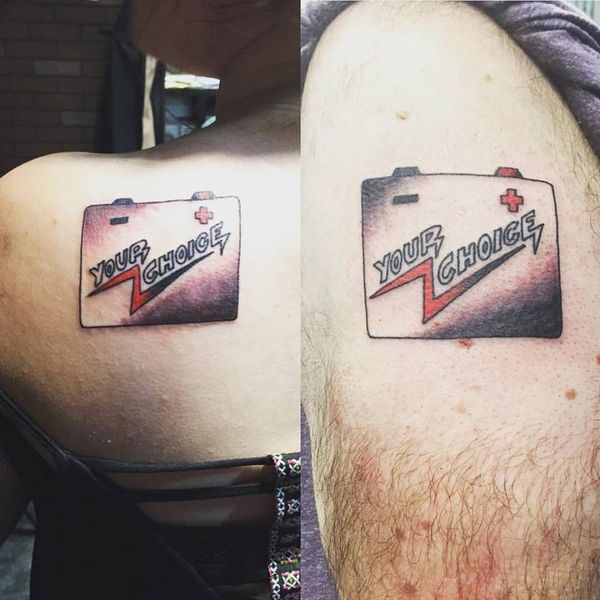
The stereotype of tattoos is overall ridiculous. I sit here and write this article as a proud member of an elite university pursuing law school and beyond. I have two tattoos. The Editor-in-Chief of The Odyssey at Brandeis has over nine tattoos. I dream of a world in which someone can roll up the sleeves of an expensive dress shirt and have tattoos on his/her arms without being judged. I dream of a world in which women don’t have to wear dresses or outfits that cover their backs so that their bosses don’t see the ink. How can we grow up in a country where social justice is the norm, and yet even the simplest of things like tattoo discrimination, is still a prominent ideology that flies under the radar?
Regardless of whether or not you have a tattoo, I plead with you to understand what it is like to constantly feel like you need hide what you have on your body, simply because you want to climb the corporate ladder. No more, I say. Our generation has the most people tatted in the history of this country, and sooner or later someone is going to realize that it is heinous to think of a tattoo as the reason to hire or decline a job seeker, despite qualification. I’m not promoting getting a tattoo, nor am I recommending it to everyone. All I want is to show that this is an actual controversy that needs to be addressed.
So take this as my warning to you, CEOs and Senior Partners…the tattooed era is upon us. Educated people who deserve to lead businesses and work for the country might just have a little ink on them, BUT DO NOT deserve to be belittled or looked at differently because of it. It’s time to rally, you young ambitious adults with tattoos; let’s see if the conservative corporate heads can handle us. My guess is they have another thing comin’.