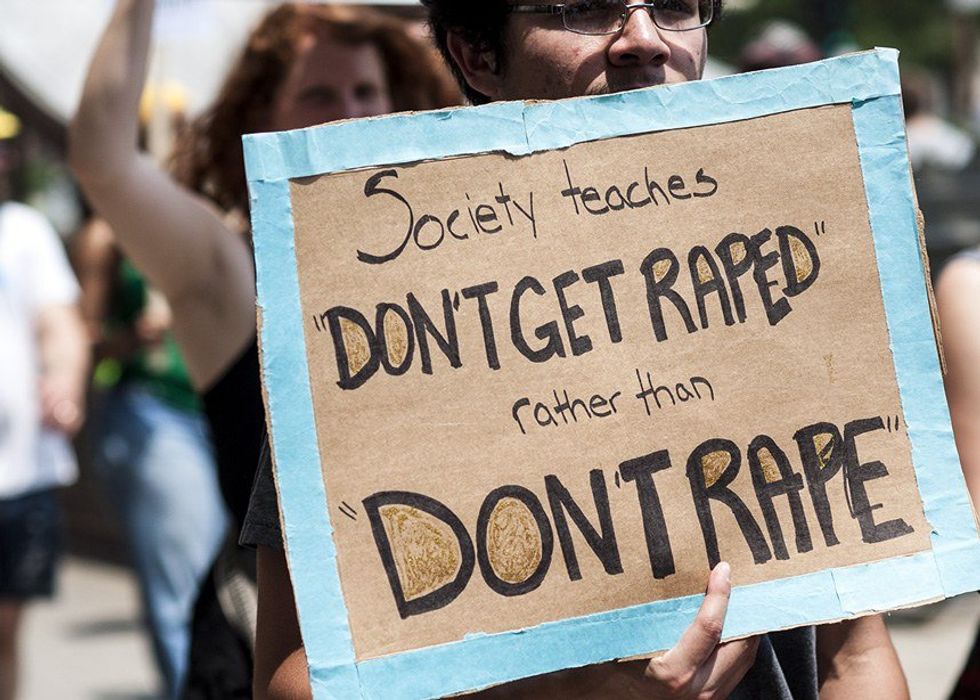
In our society, we have a funny way of wording things and viewing situations. Many of times, it’s easier to put blame on the innocent or to find an excuse or reasoning for an uncomfortable topic.
Maybe that’s why our society chooses to blame women when they are raped or sexually harassed. Because how on EARTH could it be anyone else’s fault but their own? They’re the ones who chose to dress the way they did. They’re the ones who put themselves in that situation at the time or chose that location. Maybe it was bad timing and they shouldn’t have walked alone. Maybe they shouldn't have been drinking or they had wanted it at one point. Maybe they should have worn looser clothing and more material. Because if they had done something different or made "better" choices, there’s no possible way that they would have been raped.
Some of you have never witnessed this or been affected by it. I used to be like you. I used to pretend that it wasn’t a big deal, that it wasn’t my business. I used to be OK with pretending that there wasn’t a bigger issue here.
According to TIME, “It’s no surprise that we would refuse to acknowledge that rape and sexual violence is the norm, not the exception”.
Did you know that one in six women have experienced an attempted rape?
WE can’t pretend anymore. It’s up to our society to stand up for our friends, colleagues, peers, classmates, and the people we see walk by us every day. This is happening to people we know — from not only people they don’t know, but people they DO know.
Approximately 4/5 of rapes were committed by someone known to the victim.
Eighty-two percent of sexual assaults were perpetrated by a non-stranger.
Forty-seven percent of rapists are friends or acquaintances, 25 percent are intimate partners, and five percent are relatives.
Do you still think that this is okay?
This is Rape Culture
The rape culture in our society is seriously disturbed. If you don’t know what rape culture is, it’s a setting in which rape is prevalent and normalized due to societal attitudes about gender and sexuality. We’ve chosen, as a society, to create this idea that women are raped because of their appearance and actions, as well as that men are uncontrollable due to their sexual thoughts and desires.
This concept is wrong for multiple reasons. First, who is society to frame that women are the only ones who suffer from being raped? Men are as well. Second, when is normalizing an invasive and demeaning action seen as okay in our society? According to Julia T. Wood in "Gendered Lives," this is known as blaming the victim or “holding a person responsible for the harm that another person has inflicted” (2015, p. 257). Wouldn’t it make much more sense to hold the person who has inflicted the harm, responsible? Or would that put ourselves at risk?
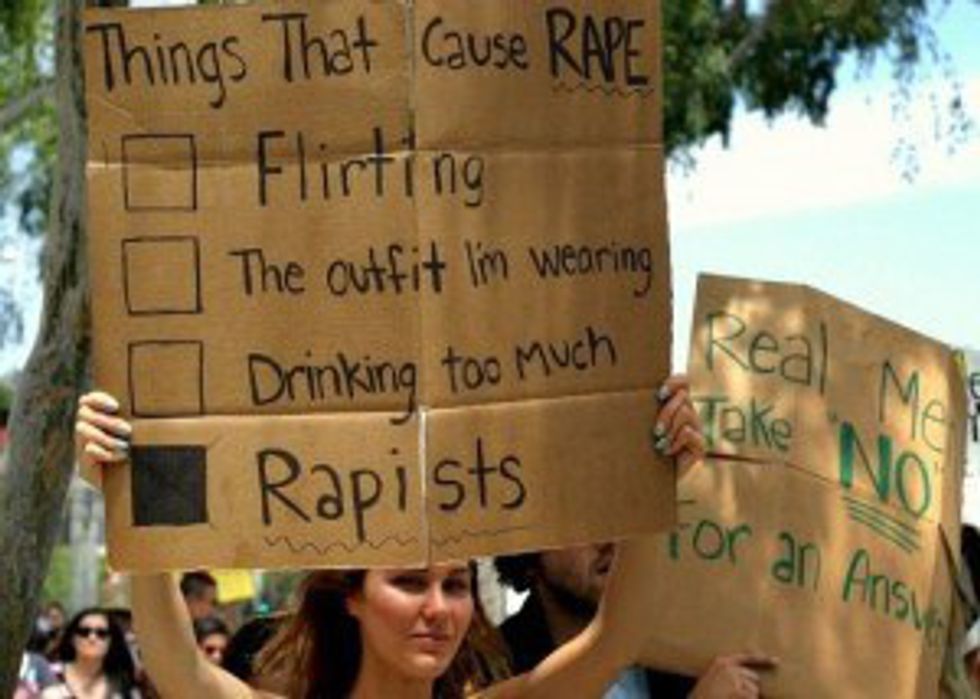 For instance, should it be okay for members of our society to say phrases like, “Well, she was asking for it with what she was wearing,” “She looks like a slut, so why should we care,” “She shouldn’t have had that much to drink," "Maybe if she were more responsible, she wouldn't have been in that situation in the first place,” or even, “She shouldn’t have been so friendly or flirty with that guy or he wouldn’t have thought she wanted it." According to Wood, “one reason that rapes are common at colleges and universities is the existence of what researchers call a campus “rape culture” (2015, p. 256). You see, unfortunately, phrases like the ones above are said all too often, not only on campuses but elsewhere as well. Victims are blamed every day.
But I'm sure you're wondering if fingers shouldn't be pointed at the victim for their actions, who should they be pointed at?
The way I see it, maybe our society should start pointing fingers at themselves. Letting a rapist get away with their actions might as well be the same as assisting in the act itself.
Now I'm guessing it doesn't feel good when you are being blamed for a harm that you didn’t actually inflict.
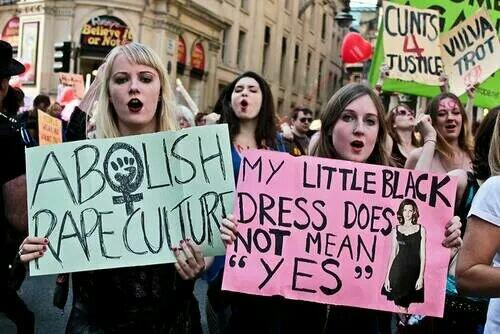 But think about how a victim feels when the same is done to them. We need to STOP victim blaming. According to Psychology Today, “Victims threaten our sense that the world is a safe and moral place, where good things happen to good people and bad things happen to bad people”. It’s so much easier to be in denial than it's possible to have something bad happen to you, especially when you haven’t done a single thing wrong. But that doesn’t make it's OK either. We need to start taking responsibility for our own actions. What could we have done to help? What was wrong with the person who raped the victim? What were they taught? It should never matter what a woman is wearing — “Her little black dress does NOT mean yes.”
What Is Our Role in This?
I think when we begin to realize that rape culture is about OUR attitudes as members of society that normalize rape, we will begin to think twice when we blame a victim. The truth is, rape sucks. It’s unfortunate, but it doesn’t have to be that way. Rape victims suffer from depression and other mental disorders because of what happened to them. They are already blaming themselves enough, so why should we add to that?

This “Rape Culture protester” states: “My rapist doesn’t know he’s a rapist. You taught him it wasn’t his fault. I drank too much, flirted, and my shorts too short. I was asking for it. He left me in a parking garage staircase. My (ex)boyfriend spit in my face. He called me a SLUT, he called me a whore. I deserved it. My friends gave me dirty looks, they called me trash, not realizing, it could have been them. This culture, your culture, my culture, told them, told me, this was my fault. And I suffered. But, my rapist doesn’t know he’s a rapist. I am not ashamed. I will take a stand. SlutWalk DC 2011.” (To learn more about the DC SlutWalk, click here.)
How Do We Take a Stand?
It’s time for us to reach out. Let’s make ourselves aware of the issue at hand. Let’s help prevent rape from being a normal occurrence. Let’s teach children to have self-control and that they are responsible for their own actions. Let’s stop punishing teenaged girls for wearing clothing that seem “too distracting” at school, and teaching boys that they don’t have to restrain themselves. Let’s help women, especially, feel comforted and loved instead of alone. Let's teach our children that it's OK to be rejected, and that it's OK to say NO (view this simple video on understanding consent here). If we don’t change our attitudes, current rape culture won’t either.
**DISCLOSURE: I recognize that rape culture is an issue with men too, but chose to focus on the gender issue of women being blamed for “getting raped” due to personal experience.
Reference:
Wood, J. T. (2015). Gendered lives: Communication, gender, and culture(11th ed.). Stamford, CT: Cengage Learning.