As Syria's civil war rages on, more and more people grow desensitized to the country's tragedy. The sight of a young boy stretched across a Turkish beach has slipped from the minds of so many along with the outrage people used to express. This increased apathy is partially due to people's lack of knowledge on how and why the Syrian civil war started.
After the mid-1940s, France's occupation in Syria ended which led to a period of increased turmoil as the government struggled to stabilize itself. This chaos slowed and relief was brought to Syrian citizens when Hafez Al-Assad came into power in 1970. Assad was initially seen as a figure of hope in Syria since he brought stability to the country. He appealed to the average citizen by building more universities, hospitals and factories that were more affordable for people.
However, as Assad's presidency continued, he allowed corruption to seep into the government, schools and workplaces by allowing the wealthy and elite to have more control. Naturally, Syrian citizens were upset and angry, which led to more hostility toward the government. New hope was found after the death of Hafez Al-Assad in 2000 when his son, Bashar Al-Assad, stepped into the presidency. Like his father, Bashar Al-Assad set up hopes for a fair democracy by continuing the creation of hospitals, schools and factories. Most importantly, Assad allowed citizens to have access to the internet which let them view what life was like in other countries. Just like his father, Assad reestablished corruption within the government, but this time, Syrian citizens were able to access Western media and see what a democracy really looked like. Many citizens began to protest the injustice of the government and, within a few years, protests turned violent and blossomed into today's civil war.
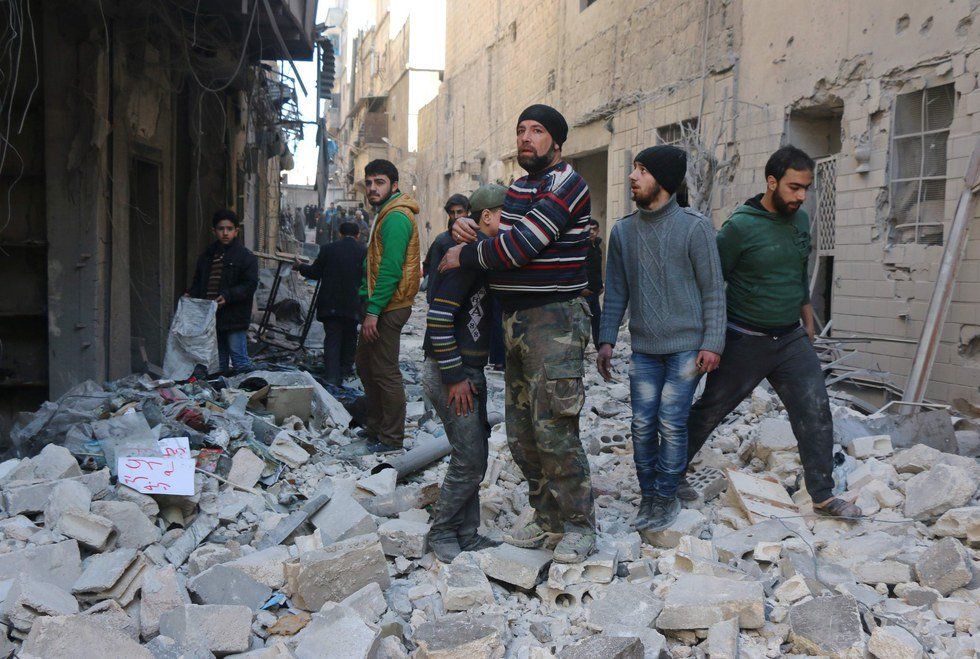
The citizens' fight for a just system and the government's stubborn corruption has resulted in an estimated 470,000 deaths. Unfortunately, the majority of those are civilian deaths either occurring from crossfire among protesters, government airstrikes and attacks or from starvation and overexposure (since many often find themselves homeless). Thousands of Syrians have found that their homes are unsafe, their children unable to seek an education, and food and utilities nearly impossible to find. This has forced millions of citizens to seek refuge in other countries where they often face financial hardship and hostility. With time, people can only hope to see an end to the destruction of their country as they try to restart their lives in a foreign place.