
This past Monday, the Missoula Valley in Montana experienced a rather sudden and fierce thunderstorm. The wind came not with a howl, but a roar – reaching speeds up to 70mph.
Just yards from my own home, a weathered 100 ft. cottonwood met the ground with a thunderous crash and in every direction one could witness all manner of large branches and debris strewn across streets, yards, and homes. Around 60 power lines were downed and thousands were left without electricity for nearly 24 hours.
The hour just before the storm arrived painted a very different scene. The August sky kept its fire-season haze, and summer’s lease remained hot and arid as one would expect. This, however, is the Northern Rockies, where neither land nor weather make any guarantees.
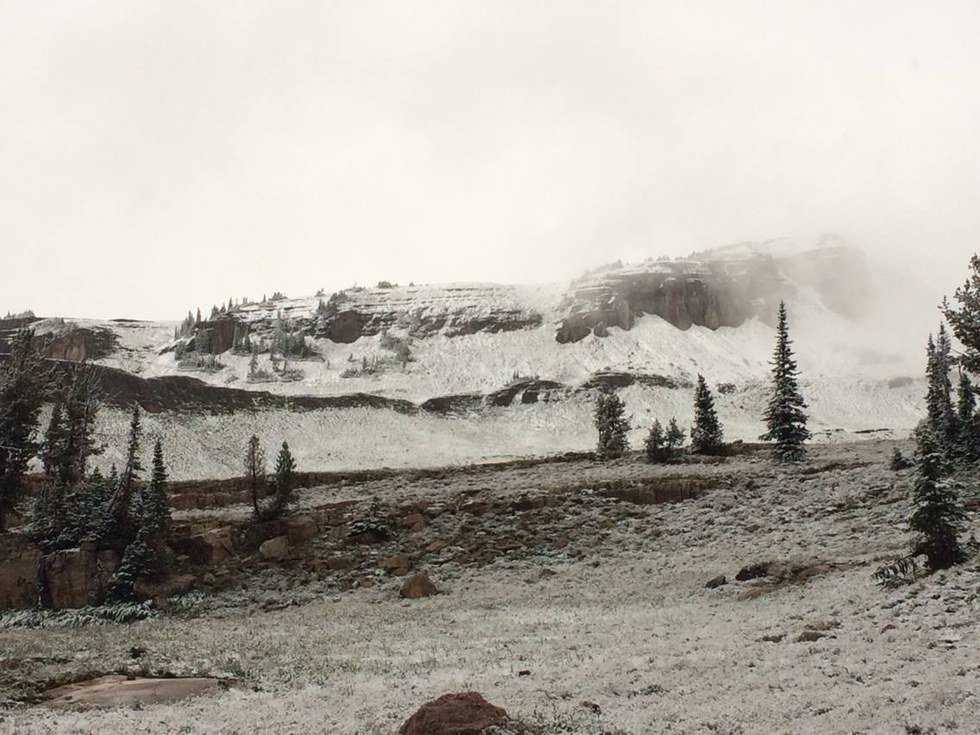
Just a few weeks prior to the storm I found myself in the Tetons, where similar events unfolded. My party and I had just begun our approach to a place known as Hurricane Pass, which lead up to the Grand Teton. The name itself reflected what I have no doubt the early travelers who named it learned the hard way, which is that this place, these great mountains, though beautiful, are first and foremost treacherous. There, too, we found ourselves in a sudden storm – this one a blizzard – in late July with the confidence that the weather service’s prediction of mild rain was accurate. The day’s adventure resulted in success, thankfully, though with multiple close calls (they don’t call it Hurricane Pass for nothing), and a case of mild hypothermia, we remained weary yet undefeated.
I could not help but notice something particular that each of these instances shared, something universal. It was in the sudden onset of the storms, unexpected but not unfamiliar, something wild beyond human containment. There is an unmistakable electricity in the air, one that is both invigorating and sublime. This moment does not or cannot occur without what follows, the storm itself, which solicits quite a different sensation – one of fear and uncertainty. I recall sitting under a stand of trees below the pass in the Tetons, watching sleet become snow and finally the landscape become an impenetrable white. The first winds that called the blizzard forward were exciting and in some strange way liberating. As the air grew colder, I sat there, huddled, at the mercy of the skies, and it was now the faint onset of uncertainty and fear that overcame the youthful enthusiasm of the previous hour.
The storm in Missoula followed the same process. The sky grew gray as the fell winds shook our unfettered storm windows. My roommate and myself ran outside in a state of unwitting curiosity. The wind became violent, but I could not help but feel alive. In the next moment, I witnessed neighbors sprinting for shelter, as massive, old trees fell around them. Then the crash of the cottonwood. It became clear that I was no longer in a safe environment, and helplessly I retreated to the shelter of my home.
The common expression, the proverbial “calm before the storm,” does not capture what I mean to suggest here. Rather, I mean to say that storms -- like reality -- not only challenge our desire for constancy, but are what invigorate us to take on such a hefty task. They are perhaps the problem and the solution within a vast unity, a unity that can only be described as “nature.”