
It is long overdue that humanity becomes more mindful of their relationship with the natural world.
Since colonial times, the main perception of the environment has been through a conquering lens. The land was once viewed as something to dominate and possess. Wars were fought, forests destroyed, fashioning a binary view of man and nature deeply rooted in history. This vantage point has been withstanding and persists today.
As “nature” poet and essayist W.S. Merwin has put, to use the words “nature” and “environment” is to put man and environment as opposing forces, suggesting our exemption from nature’s covenant: “Anything we do to the rest of the world we’re doing to ourselves.”
This post aims for you, the reader, to revaluate your position in Earth’s abode because as long as this duality has existed, so too have those arguing against it.
Famous writers such as Ralph Waldo Emerson, Henry David Thoreau and John Muir (all present in this list), have worked with the written word in order to reestablish a community mindset in regards to our habitat.
To help, I’ve provided a list of quotes that elicit emotionally-charged thoughts in regards to this topic, writers across time periods, in order to establish Gary Snyder’s realization: “Nature is not a place to visit. It is home.”
Here are quotes from 15 different nature writers you should know and will make you think:
1. John Muir
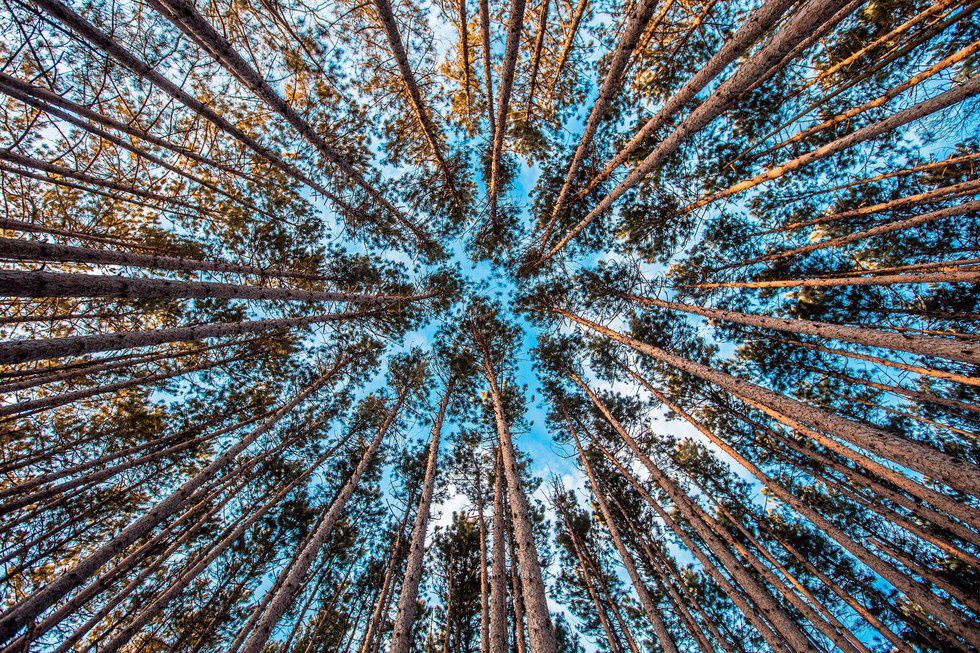
“Between every two pine trees, there is a door leading to a new way of life.”
“Any fool can destroy trees. They cannot run away; and if they could, they would still be destroyed -- chased and hunted down as long as fun or a dollar could be got out of their bark hides, branching horns, or magnificent bole backbones. Few that fell trees plant them; nor would planting avail much towards getting back anything like the noble primeval forests ... It took more than three thousand years to make some of the trees in these Western woods -- trees that are still standing in perfect strength and beauty, waving and singing ...”
2. Rachel Carson
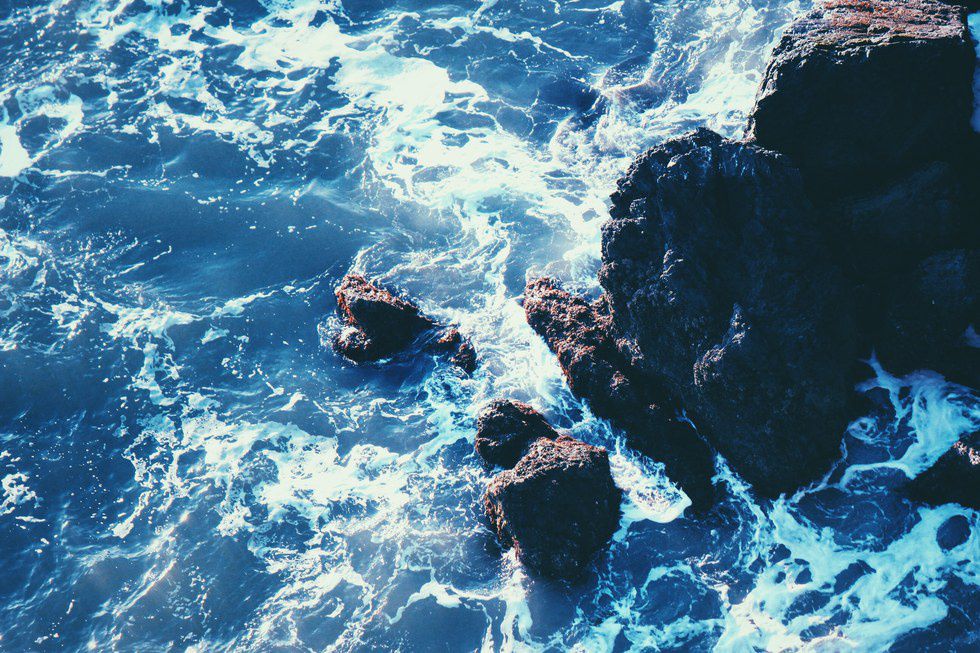
“It is a curious situation that the sea, from which life first arose should now be threatened by the activities of one form of that life. But the sea, though changed in a sinister way, will continue to exist; the threat is rather to life itself.”
“Those who contemplate the beauty of the earth find reserves of strength that will endure as long as life lasts. … There is something infinitely healing in the repeated refrains of nature — the assurance that dawn comes after night, and spring after winter.”
3. Barry Lopez
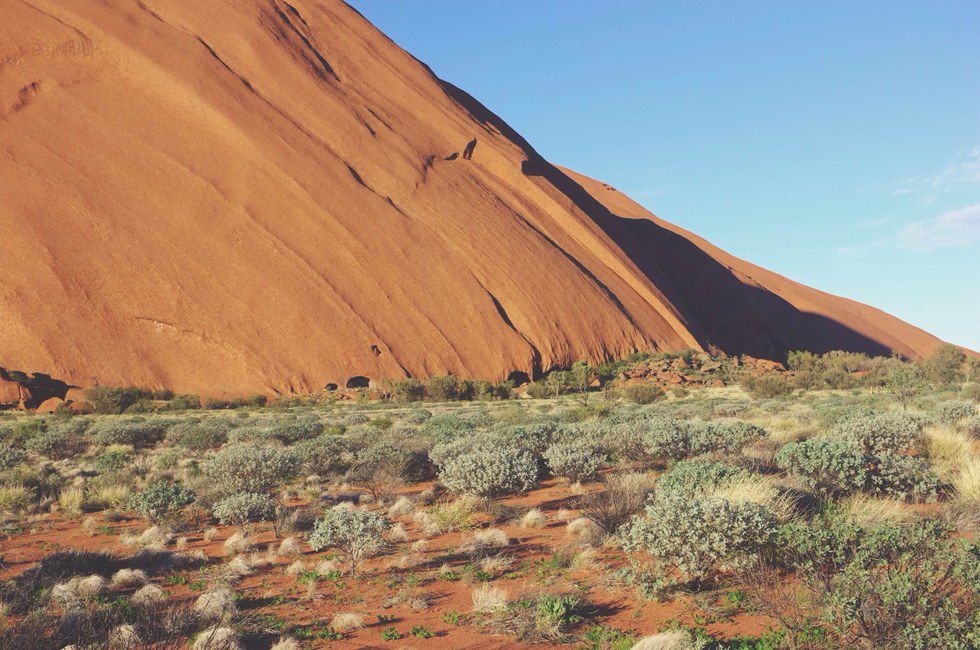
“I do not know, really, how we will survive without places like the Inner Gorge of the Grand Canyon to visit. Once in a lifetime, even, is enough. To feel the stripping down, an ebb of the press of conventional time, a radical change of proportion, an unspoken respect for others that elicits keen emotional pleasure, a quick intimate pounding of the heart.
The living of life, any life, involves great and private pain, much of which we share with no one. In such places as the Inner Gorge the pain trails away from us. It is not so quiet there or so removed that you can hear yourself think, that you would even wish to; that comes later. You can hear your heart beat. That comes first.”
4. W. B. Yeats
"I went out to the hazel wood,
Because a fire was in my head,
And cut and peeled a hazel wand,
And hooked a berry to a thread;
And when white moths were on the wing,
And moth-like stars were flickering out,
I dropped the berry in a stream
And caught a little silver trout."
“But I, being poor, have only my dreams;
I have spread my dreams beneath your feet;
Tread softly because you tread on my dreams.”
5. Ralph Waldo Emerson
“Live in the sunshine, swim the sea, drink the wild air.”
“The earth laughs in flowers.”
“When it is dark enough, you can see the stars.”
6. Gary Snyder
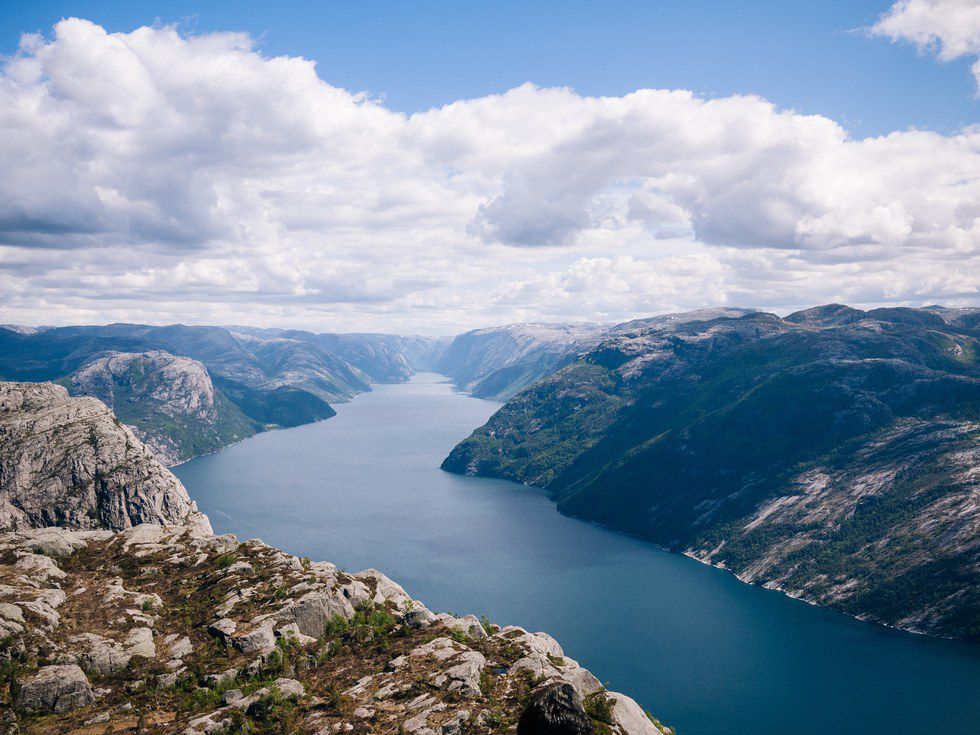
“Clambering up the Cold Mountain path,
The Cold Mountain trail goes on and on:
The long gorge choked with scree and boulders,
The wide creek, the mist-blurred grass.
The moss is slippery though there's been no rain
The pine sings, but there's no wind.
Who can leap the world's ties
And sit with me among the white clouds?”
“But if you do know what is taught by plants and weather, you are in on the gossip and can feel truly at home. The sum of a field's forces [become] what we call very loosely the 'spirit of the place.' To know the spirit of a place is to realize that you are a part of a part and that the whole is made or parts, each of which in a whole. You start with the part you are whole in.”
7. Garett Hardin
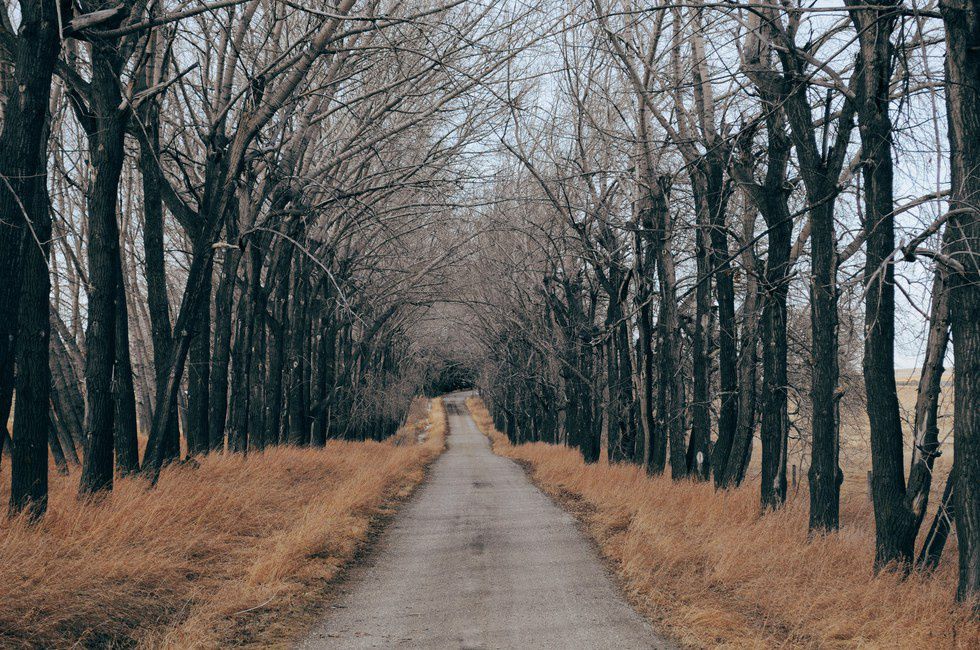
"One world cannot endure - not in a universe programmed by natural selection."
"The financial world habitually speaks of yearly 'production' of oil. But the unvarnished truth is this: we human beings have never produced so much as a single barrel of petroleum. Only nature produces oil - and at a very slow rate."
8. Aldo Leopold
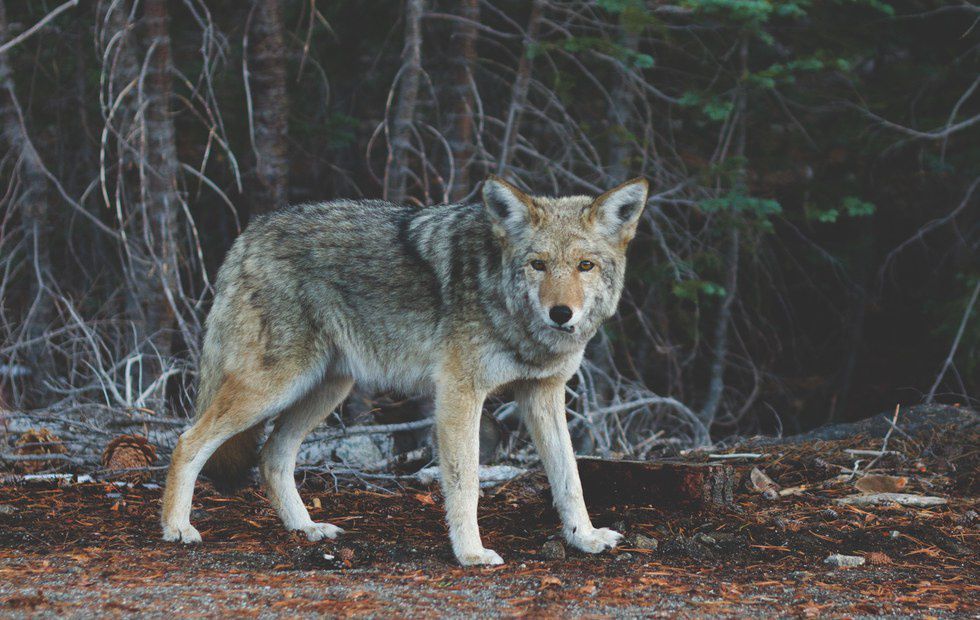
“When we see land as a community to which we belong, we may begin to use it with love and respect.”
“We reached the old wolf in time to watch a fierce green fire dying in her eyes. I realized then and have known ever since, that there was something new to me in those eyes – something known only to her and to the mountain. I was young then, and full of trigger-itch; I thought that because fewer wolves meant more deer, that no wolves would mean hunters’ paradise. But after seeing the green fire die, I sensed that neither the wolf nor the mountain agreed with such a view.”
“The last word in ignorance is the man who says of an animal or plant, "What good is it?" If the land mechanism as a whole is good, then every part is good, whether we understand it or not. If the biota, in the course of eons, has built something we like but do not understand, then who but a fool would discard seemingly useless parts? To keep every cog and wheel is the first precaution of intelligent tinkering.”
9. Henry David Thoreau
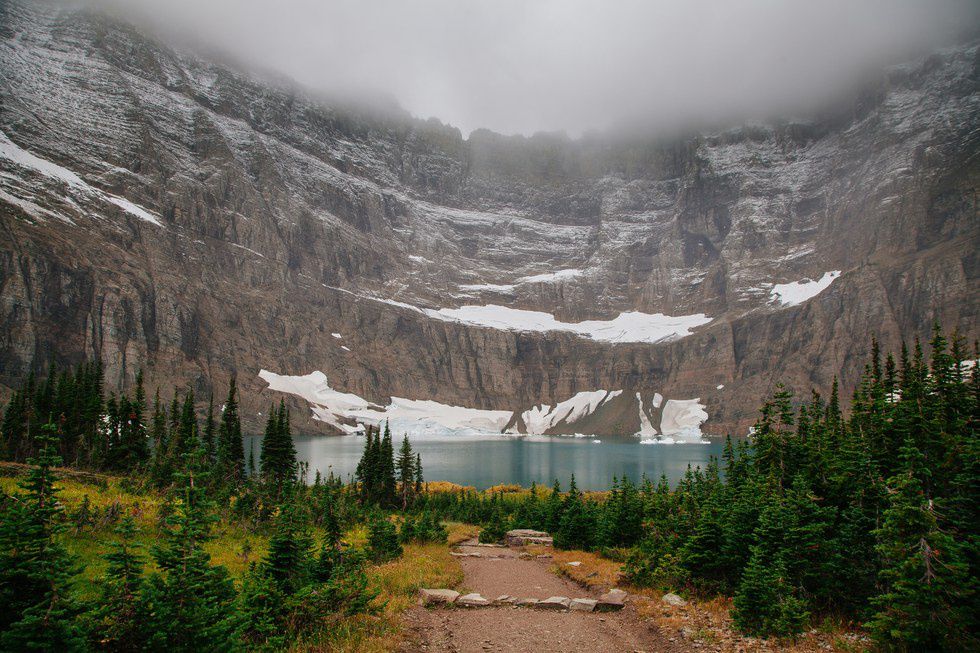
“The animal merely makes a bed, which he warms with his body in a sheltered place; but man, having discovered fire, boxes up some air in a spacious apartment, and warms that, instead of robbing himself, makes that his bed, in which he can move about divested of more cumbrous clothing, maintain a kind of summer in the midst of winter, and by means of windows even admit the light and with a lamp lengthen out the day.”
“We need the tonic of wildness... At the same time that we are earnest to explore and learn all things, we require that all things be mysterious and unexplorable, that land and sea be indefinitely wild, unsurveyed and unfathomed by us because unfathomable. We can never have enough of nature.”
10. W. S. Merwin
“The wind lifts the whole branch of the poplar
carries it up and out and holds it there
while each leaf is the whole tree reaching
from its roots in the dark earth out through all
its rings of memory to where it has never been."
“After an age of leaves and feathers someone dead thought of the mountain as money and cut the trees that were here and the wind and the rain at night. It is hard to say it.”
“In my youth, I believed in somewhere else
I put my faith in travel
now I am becoming my own tree...”
11. John Burroughs
“I go to nature to be soothed and healed, and to have my senses put in order.”
“To find the universal elements enough; to find the air and the water exhilarating; to be refreshed by a morning walk or an evening saunter... to be thrilled by the stars at night; to be elated over a bird's nest or a wildflower in spring — these are some of the rewards of the simple life.”
“The universe is so unhuman, that is, it goes its way with so little thought of man. He is but an incident, not an end. We must adjust our notions to the discovery that things are not shaped to him, but that he is shaped by them. The air was not made for his lungs, but he has lungs because there is air; the light was not created for his eye, but he has eyes because there is light. All the forces of nature are going their own way; man avails himself of them, or catches a ride as best he can. If he keeps his seat, he prospers; if he misses his hold and falls, he is crushed.”
12. Edward Abbey
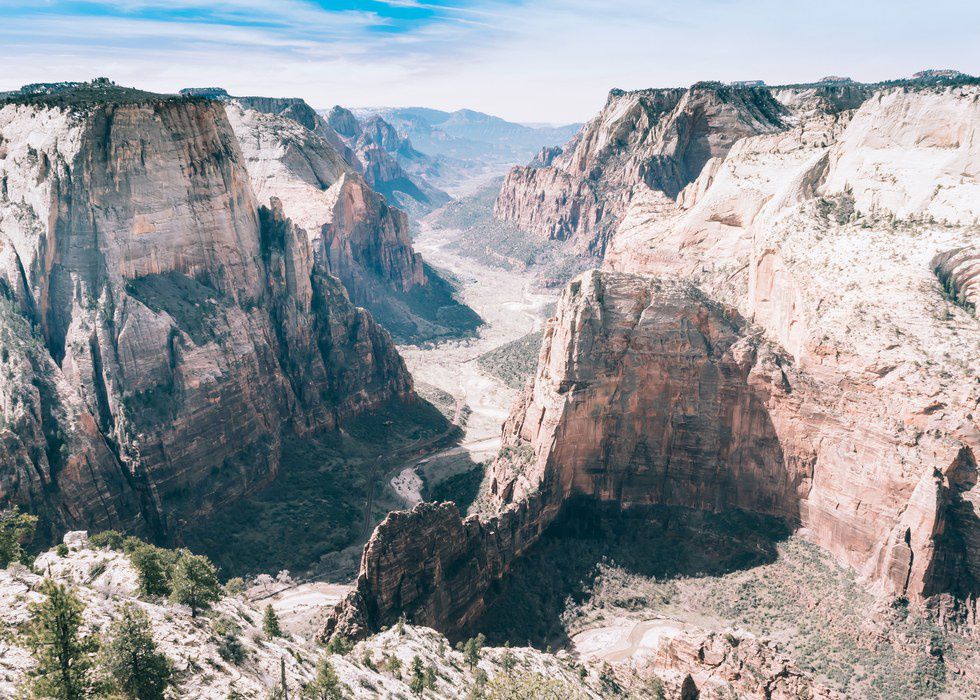
“Wilderness is not a luxury but a necessity of the human spirit, and as vital to our lives as water and good bread. A civilization which destroys what little remains of the wild, the spare, the original, is cutting itself off from its origins and betraying the principle of civilization itself.”
“A man could be a lover and defender of the wilderness without ever in his lifetime leaving the boundaries of asphalt, powerlines, and right-angled surfaces. We need wilderness whether or not we ever set foot in it. We need a refuge even though we may never need to set foot in it. We need the possibility of escape as surely as we need hope..."
“In clear-cutting, he said, you clear away the natural forest, or what the industrial forester calls "weed trees," and plant all one species of tree in neat straight functional rows like corn, sorghum, sugar beets or any other practical farm crop. You then dump on chemical fertilizers to replace the washed-away humus, inject the seedlings with growth-forcing hormones, surround your plot with deer repellants and raise a uniform crop of trees, all identical. When the trees reach a certain prespecified height (not maturity; that takes too long) you send in a fleet of tree-harvesting machines and cut the fuckers down. All of them. Then burn the slash, and harrow, seed, fertilize all over again, round and round and round again, faster and faster, tighter and tighter until, like the fabled Malaysian Concentric Bird which flies in ever-smaller circles, you disappear up your own asshole.”
13. Annie Dillard
“The mockingbird took a single step into the air and dropped. His wings were still folded against his sides as though he were singing from a limb and not falling, accelerating thirty-two feet per second per second, through empty air. Just a breath before he would have been dashed to the ground, he unfurled his wings with exact, deliberate care, revealing the broad bars of white, spread his elegant, white-banded tail, and so floated onto the grass. I had just rounded a corner when his insouciant step caught my eye; there was no one else in sight. The fact of his free fall was like the old philosophical conundrum about the tree that falls in the forest. The answer must be, I think, that beauty and grace are performed whether or not we will or sense them. The least we can do is try to be there.”
14. Wendell Berry
“We have lived our lives by the assumption that what was good for us would be good for the world. We have been wrong. We must change our lives so that it will be possible to live by the contrary assumption, that what is good for the world will be good for us. And that requires that we make the effort to know the world and learn what is good for it.”
“The care of the Earth is our most ancient and most worthy, and, after all, our most pleasing responsibility. To cherish what remains of it and to foster its renewal is our only hope.”
15. Helen MacDonald
“I think of what wild animals are in our imaginations. And how they are disappearing — not just from the wild, but from people’s everyday lives, replaced by images of themselves in print and on screen. The rarer they get, the fewer meanings animals can have. Eventually, rarity is all they are made of. The condor is an icon of extinction. There’s little else to it now but being the last of its kind. And in this lies the diminution of the world. How can you love something, how can you fight to protect it, if all it means is loss?”
“Nature in her green, tranquil woods heals and soothes all affliction,’ wrote John Muir. ‘Earth hath no sorrows that earth cannot heal.’ Now I knew this for what it was: a beguiling but dangerous lie. I was furious with myself and my own conscious certainty that this was the cure I needed. Hands are for other humans to hold. They should not be reserved exclusively as perches for hawks. And the wild is not a panacea for the human soul; too much in the air can corrode it to nothing.”